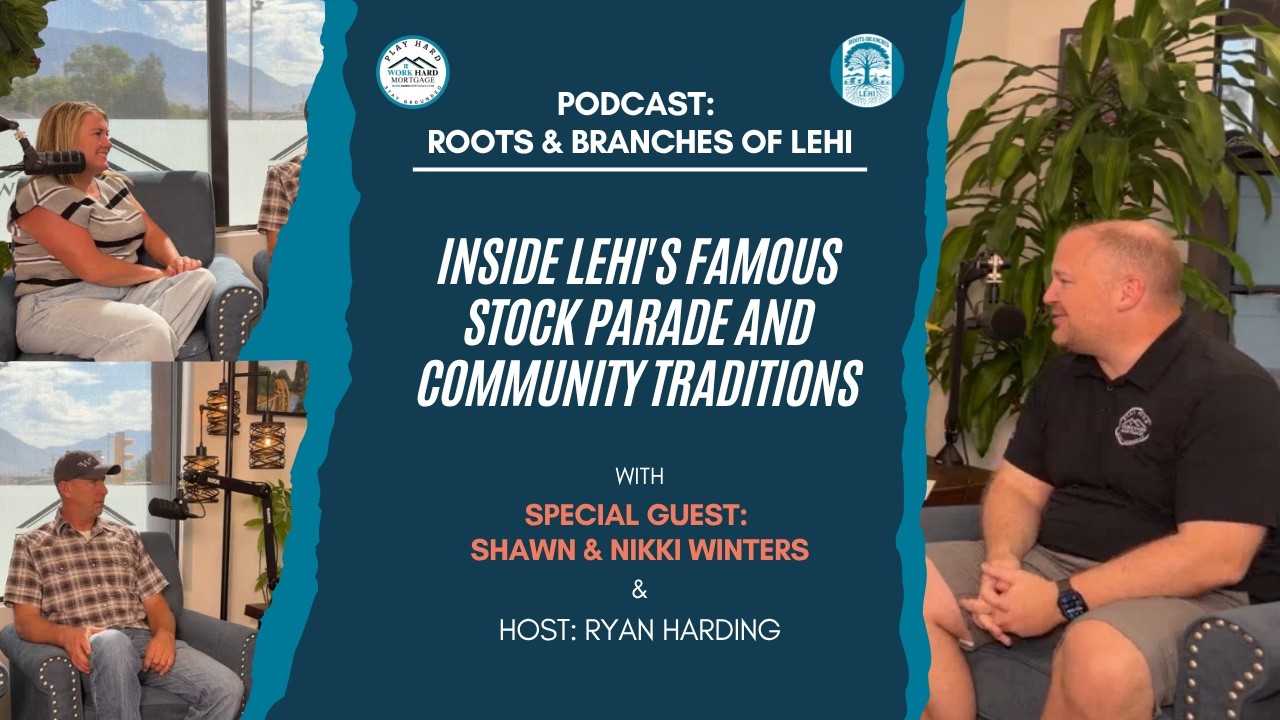
Inside Lehi's Famous Stock Parade and Community Traditions
Six-generation residents Shawn and Nikki Winters share how volunteerism and long-standing community traditions bridge Lehi's past with its rapid expansion.
Shawn and Nikki Winters
Service, Tradition, and the Stock Parade
At a Glance
Archive Scoring
Introduction
The story of Lehi is often told through the lens of its rapid growth, but beneath the surface of new developments lie deep, enduring roots. Shawn and Nikki Winters, descendants of families who have called Lehi home for over six generations, embody this duality. Their lives, defined by service to the land and the people, offer a bridge between the intimate 'old' Lehi where everyone knew your name and the modern, bustling city it has become. Their reflection on identity is profound; they argue that being known—and being held to the standard of one's ancestors—is a powerful deterrent to anonymity and a catalyst for active citizenship.
Central to their narrative is the Lehi Stock Parade, a non-motorized tradition that remains a stubborn, beautiful tribute to the town’s agricultural heritage. For the Winters, this parade is not merely an event but a sacred space where the past is physically manifested through horses, wagons, and the silent strength of cattle moving down Main Street. Through their leadership on the parade committee, they have worked to preserve the spirit of the 'Old West' while navigating the logistics of a thriving, modern metropolis.
Perhaps their most significant contribution to the community’s collective memory is the creation of the infant cemetery at the local burial grounds. It was born out of a quiet, human necessity, turning a neglected need into a place of profound dignity and healing. This act of service highlights the core of the Winters' philosophy: that a community is not built by the grand actions of a single leader, but by the accumulation of thousands of small, thoughtful acts performed by those who see a need and simply decide to address it.
As the town transitions, the Winters view progress through a lens of cautious stewardship. They advocate for 'evolving' traditions rather than abandoning them, suggesting that the influx of new residents is an opportunity to expand the circle of service. They remain committed to the idea that one should leave a place better than they found it, whether that means managing the parks, tending to the cemetery, or ensuring that the next generation understands the importance of the flag they carry in the parade.
Ultimately, their story is a testament to the idea that 'home' is something created through active participation. By sharing their family histories and the lessons learned from their grandparents, they are ensuring that the memory of Lehi remains anchored in human values: hard work, honesty, and a willingness to step forward when the community calls. Their legacy is not just in the infrastructure they maintain, but in the continuity of a shared, lived experience that persists despite the changing skyline.
Episode Overview
A detailed look at the topics, people, and context of this conversation.
In this episode, Shawn and Nikki Winters discuss their lives as multi-generational residents of Lehi, Utah. As active participants in city government, the parks department, and the local Stock Parade committee, they offer a unique vantage point on how the town has evolved from an agricultural hub to a tech-centric city. They explore the delicate balance of preserving local identity during a time of immense growth.
Topics covered include the logistical challenges of organizing non-motorized parades, the emotional weight of maintaining a community cemetery, and the importance of volunteerism in fostering neighborly connections. The discussion moves from the personal pride of their six-generation heritage to the practical realities of water conservation and land use in modern urban planning.
Throughout the conversation, the emotional tone remains one of profound love for a place that has shaped their family for over a century. The interview underscores the belief that while the town's physical form may change, its moral and cultural heritage can be sustained if the community remains committed to service, shared traditions, and the active support of their neighbors.
Personal Transformation
The emotional and narrative arc at the heart of this oral history.
Shawn and Nikki Winters transitioned from being children of Lehi to becoming active stewards of its heritage. Initially viewing themselves through the lens of being 'naughty' kids who needed to make amends, they experienced a profound shift toward service-driven leadership. This journey was catalyzed by their move away from Lehi, which stripped away their sense of belonging and community identity, causing a deep, lonely realization of the value of local roots. Upon returning, they deliberately chose to invest in the city's infrastructure and traditions, not merely as residents, but as architects of community connection. Their growth moved from passive participation to active ownership, where they began to view their family legacy as a foundation to build upon rather than just an inherited identity. By stepping into roles like cemetery sexton and parade organizers, they learned to bridge the gap between 'Old Lehi' and the rapidly expanding 'New Lehi.' This transformation is marked by their move from feeling like outsiders in a fast-paced world to becoming the reliable 'faces' that newcomers look to for guidance, effectively internalizing the responsibility of keeping Lehi's character alive. Their narrative arc concludes not with an end, but with a commitment to mentoring the next generation, preparing their own children to inherit the weight and joy of community service.
Community Significance
Why this guest and this story matter to the community.
The Winters represent the vital, often unseen infrastructure of Lehi—the people who keep traditions breathing and cemeteries sacred. Without their deliberate efforts in organizing the Stock Parade and the infant cemetery project, Lehi would struggle to maintain the 'small-town' feel that its residents crave amidst explosive population growth. They serve as a crucial bridge, helping translate the cultural values of long-term residents to those who have recently arrived, softening the friction often found in rapidly developing cities. Their willingness to volunteer their time—from managing horse logistics to ensuring grief is met with dignity—shows that the health of a community relies on people who see a need and simply fill it. Their work ensures that newcomers can plug into the existing culture, turning a collection of houses into a functioning neighborhood. They provide a model of what 'active citizenship' looks like, moving beyond complaining about growth to participating in the solutions that manage it.
Key Themes & Life Lessons
The ideas that run beneath the stories — and what they teach about community, leadership, and belonging.
Wisdom & Life Lessons
The Winters offer deep wisdom regarding the nature of service and identity. They teach that the most profound sense of self comes not from online anonymity, but from being 'known' by your neighbors—a realization reached after living in an anonymous environment. They emphasize the necessity of 'reputation' as a standard to hold oneself to, acknowledging that living up to the legacy of those who came before provides a stabilizing influence on behavior. They also demonstrate the wisdom of accepting change, noting that 'the show must go on,' and that letting go of a role you have mastered is a necessary part of allowing new growth to happen. Their experience suggests that being a 'pioneer' in the modern sense means being brave enough to test new ideas and occasionally 'swing for the fences' while maintaining a foundation of traditional gratitude.
Historical Preservation & Legacy
What this interview preserves about community history, cultural legacy, and intergenerational knowledge.
Preservation Value: Exceptional
This record captures the intersection of municipal evolution, local tradition, and the emotional labor of building community. It preserves specific institutional history—such as the creation of the infant cemetery and parade logistics—that would otherwise be lost to time. It is an exceptional record because it provides the rare perspective of individuals who are active, multi-generational participants in their city’s transformation.
Why This Episode Matters Historically
This record captures a pivot point in Lehi’s history—the transition from a rural, agrarian base to a 'tech-city' metropolis. It documents the specific mechanics of cultural preservation, such as how a city maintains a non-motorized parade in an age of automated convenience. The interview serves as a time capsule for the specific values of early 21st-century Lehi. By detailing the development of the infant cemetery and the shifts in how municipal services (like parks and parades) function, this episode provides primary-source evidence of the logistical and social challenges faced during the town’s most rapid growth period.
What Future Generations May Learn
Future residents will learn that community is not found, but built through consistent, often tedious, acts of service. They will see that even in a city experiencing hyper-growth, the 'soul' of the place is defined by traditions that honor the past while adapting to the present. The record highlights the importance of the 'human-centric' approach to municipal work—prioritizing the emotional needs of residents, such as the dignity of a cemetery or the shared joy of a parade. It teaches that progress does not have to come at the expense of heritage, provided there are people willing to do the work of bridging the two. Most importantly, it serves as a reminder that every generation is a link in a chain, and their role is to leave the community better than they found it, regardless of how much it has changed.
Community Memory Preserved
This episode preserves the history and operational challenges of the famous Lehi Stock Parade, including its evolution from manual, informal registration to a modern, organized event. It captures the 'behind-the-scenes' effort required to run non-motorized parades, protecting the knowledge of why this tradition remains vital to Lehi’s western roots. Additionally, it chronicles the creation of the infant cemetery section at the local cemetery—a profound act of service that provided needed solace to families and changed how the city treats its sacred spaces. The interview also records the shift in how the community manages public spaces, from water-heavy traditional parks to modern, water-wise xeriscape designs, reflecting the environmental and maintenance realities of the era. These stories of specific community service projects, such as the 9/11 volunteer initiatives, provide a record of collective efforts that defined this decade.
Local Knowledge Preserved
The episode captures the nuance of 'Old Lehi' versus 'New Lehi' social dynamics, including the historical expectation that community members hold each other accountable, which acts as a form of non-governmental social regulation. It preserves information about the logistical shift of city functions, such as the moving of the cemetery office from the city building to the grounds itself to facilitate privacy for grieving families. It also documents the specific, ongoing struggle to maintain large-scale traditions like the Rodeo and parades as available land and historical venues face pressure from development.
Intergenerational Lessons
The primary lesson for future generations is the value of 'showing up'—even when the task feels daunting or you feel unqualified. The guests demonstrate that being a leader often starts with being a learner who honors the work of those who came before. For entrepreneurs and youth, the lesson is that you don't need formal power to shape a city; you only need to observe where a service is needed and volunteer to fill it. They also teach that intergenerational connection, such as involving children in parades and cemetery maintenance, is the most effective way to transfer values. For those feeling overwhelmed by change or rapid growth, the lesson is one of evolution rather than extinction: traditions must adapt their form to survive the changing reality, but their purpose can endure. Finally, they highlight that building a community is a lifelong, unpaid investment that pays dividends in shared memories and social safety nets.
Community & Cultural Insights
Lehi is characterized by a strong, inherited culture of 'do-it-yourself' service that permeates everything from park maintenance to holiday traditions. This episode reveals a community that values its agrarian history so deeply that it preserves a non-motorized parade specifically to honor it. There is a clear tension in Lehi between the pace of development and the desire to maintain human-scale, community-focused activities. The schools, churches, and civic institutions act as a tight-knit web where everyone is connected through shared history, which acts as both a support system and a high standard of accountability. The cultural expectation is that growth is fine, but it should be done 'gradually,' and that new residents should seek to understand the traditions they are joining. Lehi’s civic culture is one of extreme willingness to volunteer, where people are more concerned with 'leaving the place better than they found it' than with their own social or economic standing. The city functions through a culture of transparency and accessibility, where even municipal departments are expected to maintain an environment of empathy and care.
Historical Context
The Winters family represents a deep-rooted lineage in Lehi, tracing back six to eight generations. Their involvement spans decades of Lehi's agricultural and social history, including the evolution of the Lehi Roundup Rodeo and the preservation of the unique non-motorized Stock Parade, which serves as a tribute to the town's pioneer and farming origins.
Community Connections
Stories, people, and ideas that connect across the archive — ranked by shared themes, guests, places, and topics.
Related Episodes
(4)Connecting Lehi: A Conversation with Chris Condie | Roots and Branches of Lehi
Chris Condie
Exploring Lehi's Rich Rodeo Tradition with Mike Southwick
Mike Southwick
Costco, City Growth & Community Leadership | Ken Greenwood’s Lehi Legacy
Ken Greenwood
From EMT to Fire Chief: Jeremy Craft’s Story of Service in Lehi
Jeremy Craft
Related People
(4)Lara Bangerter
Manager, Lehi Historical Society & Archives
Paige Albrecht
Lehi City Council Member, Attorney, Community Advocate
Andy Hadfield
Head Football Coach, Lehi High School · Business Owner · Lifelong Lehi Resident
Mark Johnson
Mayor of Lehi, Former City Council Member, Engineer & Business Owner
Related Stories
(4)Baby Land — A Place of Refuge Most People Don't Know About
Paige Albrecht
Baby Land — A Place of Refuge Most People Don't Know About
Paige Albrecht
A Canceled Softball League and the Birth of a Public Servant
Paige Albrecht
The Book Brigade — Lehi Moves a Library by Hand
Lara Bangerter
Related Quotes
(4)"Lehi City is the economic engine of the state of Utah."
— Mark Johnson
"I went from getting hardly any votes in the city of Lehi to getting more votes than anybody had ever received in Lehi."
— Mark Johnson
"You need to make your own community. It's not going to find you."
— Charlene Freestone
"Don't think you're not the growth."
— Mark Johnson
Related Themes
(4)Volunteerism
Lehi's century-long tradition of residents building their own city through service — from book brigades and sponsored park trees to committee work and parade committees.
Community Resilience
How Lehi residents have navigated challenge, change, growth, and hardship — and emerged with optimism, connection, and a deeper appreciation for what they've built together.
Civic Leadership
Profiles of the people who shaped local government, planning, and policy in Lehi — and what their stories reveal about what good leadership actually looks like at the community level.
Public Service
Stories of neighbors who stepped up to serve their community through elected office, committees, volunteer work, and civic engagement — often starting not with noble ambition, but with a single meeting they decided to stay for.
Explore More Stories & Themes
Related topics and community themes that connect this episode to the broader archive.
Suggested Future Guests & Topics
Future interviews should focus on the 'hidden heroes' of Lehi’s civic life, such as long-term parade organizers like the legacy of the late Peggy, and those responsible for the Rodeo’s continuity. Conversations with the 'new' residents who have successfully integrated into these traditions would provide a fascinating counter-perspective. Additionally, historians should interview those who manage the city's water-wise infrastructure shifts, as they hold the technical history of how Lehi adapted its geography to meet modern scarcity. Finally, documenting the stories of those who run the city’s volunteer programs, like Rob Craig, would solidify the legacy of the 9/11 service projects.
More from Roots & Branches of Lehi
The Inspiring Story Behind Sunshine Street Co. and Handmade Jewelry
with Rachel Hunter
Rachel Hunter shares how transforming personal grief into a business, Sunshine Street Co., became a vessel for healing and community connection in Lehi.
From CPA to Teacher: Lessons That Prepare Students for Real Life
with Gig Griffith
Gig Griffith reflects on his journey from corporate accounting to the classrooms of Lehi, documenting the power of career transformation and the enduring value of mentoring the next generation.
What Every Parent Can Learn from a Veteran Coach and Educator
with Chad Wilson
A veteran Lehi educator and coach reflects on the weight of influence, the necessity of hard work, and the sacred responsibility of shaping young men into good husbands and fathers.
Full Transcript
Transcript source: AI-generated. This transcript has been lightly edited for readability.
Full transcript available — approximately 15059 words.