Land Developing and Home Building In Utah
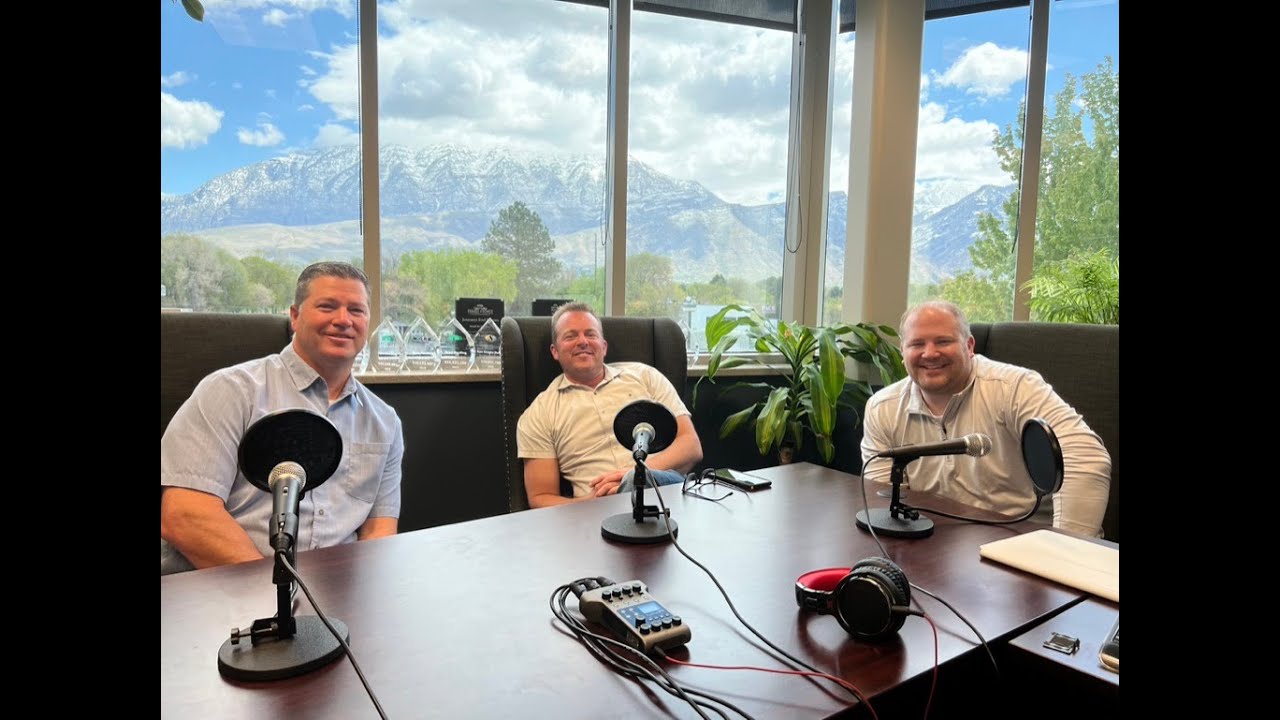
Seasoned experts Andrew Tuttle and Scot Hazard explore the complexities of Utah's housing shortage and the shifting reality of the modern homebuilding journey.
Andrew Tuttle and Scot Hazard
New Development and Demand
At a Glance
Archive Scoring
Introduction
The transition from renting a shared apartment to developing the skyline of a state is a journey marked by both grit and timing. In this deep dive, Andrew Tuttle and Scot Hazard reflect on a partnership that began as roommates in 1994 and evolved into a combined half-century of real estate expertise. Their narrative isn't just about property; it is about the evolution of the American Dream in the face of unprecedented supply chain disruptions and a changing economic landscape that has forced even the most seasoned builders to rethink their craft.
Throughout the conversation, the human element of the housing crisis remains front and center. They discuss the emotional weight of 'broken systems'—where missing electrical breakers or garage door motors can stall a family's future for months. This reflection captures the transition from the era of semi-custom homes, where buyers picked every tile and texture, to a modern 'spec home' model born of necessity. It is a story of adaptation, where builders now take on the risk of speculation just to shield buyers from the volatility of rising costs and missed deadlines.
The dialogue shifts into the gritty world of land development, described as the 'riskiest asset class' in the business. Scot Hazard shares his philosophy of finding 'difficult dirt'—the land with warts and problems that others overlook. This perspective offers a rare glimpse into the behind-the-scenes labor required to turn raw, unincorporated earth into thriving municipalities like Eagle Mountain. It highlights the persistence needed to navigate twelve-to-eighteen-month lead times in an economy that can change in a single afternoon.
Critically, the discussion tackles the systemic barriers to entry for the next generation of homeowners. There is a poignant reflection on the 'density' debate, where the experts challenge the cultural bias against smaller lots and mixed-use developments. They argue that the very cities people love are often legislating away the possibility for their own children to live there. This is a call for a design-driven approach to urban planning that prioritizes community over rigid zoning.
Ultimately, the narrative serves as a bridge between the high-interest eras of the past and the uncertain affordability of the future. It provides a grounded, historical perspective for the first-time buyer who feels priced out, offering a reminder that while the 'gold mine' pricing of land may be daunting, the fundamental demand for a place to call home remains the most stable anchor in the market.
Episode Overview
A detailed look at the topics, people, and context of this conversation.
In this episode, host Ryan Harding sits down with industry veterans Scot Hazard and Andrew Tuttle to dissect the current state of land development and residential construction in Utah. Scot, a principal broker with 28 years of experience, and Andrew, a sales expert for Revere Homes with 23 years in the field, share their transition from being college roommates to becoming influential figures in the Wasatch Front housing market. Their deep history provides a unique backdrop for discussing how the industry has moved from the 'stated income' era of the early 2000s to the highly regulated, supply-constrained environment of today.
The guests provide an inside look at the operational shifts within Revere Homes, explaining why the rise of 'spec homes' has replaced custom builds as a way to manage buyer expectations amidst supply chain chaos. They delve into the specific challenges of land acquisition, describing the 'shock factor' of interest rate hikes and the 45,000-unit housing deficit currently plaguing the state. The conversation is particularly relevant for those tracking the Utah market, as it covers the growth of periphery markets like Eagle Mountain and the shift toward remote work as a solution for affordability.
Beyond the numbers, the episode explores the community and political aspects of homeownership. The guests advocate for a rethink of zoning ordinances and density, arguing that smaller, more efficient housing types are the only path forward for workforce earners. The tone is reflective and pragmatically optimistic, offering a 'crystal ball' look at a market that is softening from double-digit appreciation into a more sustainable, if still challenging, four-to-six percent growth phase.
Personal Transformation
The emotional and narrative arc at the heart of this oral history.
The episode highlights the professional evolution of Scot Hazard and Andrew Tuttle, who began as college roommates in 1994. Scot transitioned from a hands-on property maintenance role into high-level land development and brokerage, while Andrew returned to the industry after an initial 'financial disaster' to become a successful sales lead for homebuilders. Their story illustrates how long-term persistence and adaptability are essential for navigating the volatile cycles of the real estate market.
Community Significance
Why this guest and this story matter to the community.
This discussion is significant because it addresses the structural reality of the Utah housing market, specifically the 45,000-unit deficit facing the community. It teaches future buyers that the path to homeownership is increasingly dictated by developer constraints and municipal zoning laws rather than just individual savings. The episode underscores the shift from sprawling suburban dreams to the necessity of density and smaller, more efficient living spaces as a means of maintaining community cohesion. It also highlights the 'periphery market' phenomenon where local residents are forced to move further from the urban core to find affordability, a trend that reshapes the geographic and social footprint of the Wasatch Front.
"selling isn't the problem; it's when sellers sell and then become a buyer, then it's a problem."
— Andrew Tuttle · 5:49
Key Themes & Life Lessons
The ideas that run beneath the stories — and what they teach about community, leadership, and belonging.
Utah Real Estate Market Trends
Land Development Challenges
Transition from Custom to Spec Home Building
Housing Affordability and Density
Impact of Rising Interest Rates
Supply Chain and Labor Disruptions
Market Correction vs. Market Crash
Zoning and Legislative Barriers
Wisdom & Life Lessons
One major practical lesson is the shift toward 'spec' homes; buyers are advised that purchasing a home that is 60 days from completion often provides more price certainty than starting a custom build during inflationary periods. The episode also advocates for a 'buy and hold' mentality, pointing out that even at 5.25% interest, a 6% annual appreciation rate effectively creates 'free money' over time. Emotional wisdom is shared regarding the 'shock factor' of market changes, urging buyers not to let temporary rate increases blind them to the long-term value of entering the market and securing a fixed housing cost.
Key Takeaways
- 1Builders have shifted toward speculative (spec) inventory to control costs and timing amid supply chain instability.
- 2Utah currently faces a housing deficit of approximately 45,000 units, sustaining high demand despite rate hikes.
- 3Rising interest rates are causing a 'shock factor' that temporarily softens demand and increases inventory.
- 4A market correction is occurring, with a predicted return to a healthy 4-6% annual appreciation.
- 5True housing affordability requires smaller lots, increased density, and mixed-use zoning reforms.
- 6Lending and appraisal standards are significantly more robust now than during the 2008 financial crisis.
- 7Remote work is driving buyers toward periphery or 'fringe' markets like Price and Ephraim for affordability.
Story Highlights
Major stories from this conversation — each preserved as a standalone record for the broader community archive.
Andrew Tuttle and Scot Hazard reflect on their origins as college roommates in 1994. Scot entered real estate first, and Andrew followed after finding Scot's work more intriguing than his own job. Despite Andrew facing an early financial disaster and leaving the industry for four years, Scot eventually convinced him to return. Their friendship has endured for nearly three decades, characterized by a shared history that keeps them professional and personally bound.
Emotional Significance
The story emphasizes deep-rooted loyalty and the importance of shared history in professional partnerships.
Why This Matters
It shows that success in real estate often requires a support system that survives market downturns.
Life Lesson
Professional longevity is often built on the foundation of personal trust and shared adversity.
Transformation
Andrew transformed from a college student with a 'financial disaster' in real estate to a seasoned 23-year professional through the persistence of a mentor-friend.
What It Reveals About Andrew Tuttle and Scot Hazard
It reveals Andrew's vulnerability regarding his early failures and Scot's role as a persuasive and loyal friend.
What It Reveals About the Community
The local industry is built on tight-knit networks where 'everybody knows everyone.'
Community Value Preserved
The value of maintaining a good reputation through long-term accountability.
For future generations: It illustrates that modern business empires are often born from simple beginnings like college roommates helping each other out.
Scot Hazard explains his entry into the industry through property management and manual labor. Before college, he was a handyman who 'could fix about anything.' While working for a property management company fixing and leasing rentals, his broker suggested he get a real estate license so he could be paid properly for the leasing work. He quickly realized he could make a better living selling the properties he was previously just repairing.
Andrew describes the unprecedented supply chain chaos that hit home building during COVID-19. He recounts the bizarre realization that they couldn't finish homes because they couldn't get simple electrical breakers from a shut-down plant in Mexico. This expanded into shortages of garage door motors, vinyl windows, and other essentials, forcing builders to manage frustrated buyers who couldn't understand why their houses were stalled by a single missing part.
Andrew discusses why builders like Revere Homes had to stop letting buyers pick their own finishes. Because the build process took so long, items selected by buyers would be discontinued before the home reached that phase. To prevent buyer heartbreak and legal disputes over price changes, builders switched to 'spec' homes where they make the design choices and sell the home only when it is near completion.
Scot recounts his early days in land development, starting in February 1996 in a small sales trailer in what was then 'unincorporated Utah County.' He was selling for a master developer before the town of Eagle Mountain even existed. He watched the town incorporate in December 1996 and grew his career alongside the municipality, transitioning from a sales director to a land developer under the mentorship of industry pioneers.
Scot explains his niche as a 'small fish' in land development. Instead of competing with massive, well-funded national builders for easy land, he looks for 'difficult dirt'—property with 'warts' or problems that need to be fixed or entitled. This high-effort, high-risk strategy allows him to find margins and safety that others overlook, as the difficulty of the project acts as a barrier to competition.
Scot shares a story about a client who works as a county sheriff and his wife who is a receptionist. Despite having 'great, full-time jobs,' they can no longer afford to live in the community they serve. Scot argues that the only way to solve this is to embrace density and 'smaller' living, but local politics and zoning laws ('density is a bad word') prevent the very housing that would allow a sheriff's children to stay in their hometown.
"the protections of good lending and appraisal practices... that's what's keeping the market from becoming a bubble."
— Andrew Tuttle · 26:54
Historical Preservation & Legacy
What this interview preserves about community history, cultural legacy, and intergenerational knowledge.
Preservation Value: High
This episode is highly valuable for preservation as it provides a 'boots on the ground' perspective from both a builder/sales and a developer/broker viewpoint during a historic interest rate transition. It captures specific supply chain and zoning details that are often lost in high-level economic reports.
Why This Episode Matters Historically
Historically, this episode captures a critical pivot point in the post-pandemic American economy. It documents the transition in 2022 when interest rates jumped from the 3% range to over 5%, effectively ending the era of 'easy money' and creating a massive 'shock factor' for both buyers and sellers. It serves as a primary record of the era's supply chain failures—specifically citing shortages in electrical breakers from Mexico and garage door motors—that forced builders to abandon semi-custom models in favor of 'spec' homes to manage risk. This record is essential for understanding why the housing market moved away from consumer customization and toward standardized, ready-to-deliver inventory during the early 2020s.
What Future Generations May Learn
Future generations may learn that housing affordability is often a political and design challenge as much as an economic one. The guests explain how 'density' became a 'bad word' in local politics, leading to zoning laws that inadvertently priced out the children of current residents. This episode teaches that in times of high inflation and rising rates, the most successful buyers are those who remain flexible, looking for 'problem dirt' or smaller lots that others overlook. They will also see the historical precedent for how remote work allowed a generation to decouple their place of employment from their place of residence, seeking a different lifestyle in smaller, remote towns when metropolitan areas became inaccessible.
Community Memory Preserved
The episode preserves the memory of the specific post-COVID construction landscape in Utah, including the rare phenomenon of builders having to raise contract prices by $70,000 mid-build due to cost volatility. It records the specific anxieties of the 2022 market where there were 15,000 realtors competing for only 2,000 active listings, creating an environment of desperation for local families.
Local Knowledge Preserved
Significant local history is documented regarding the incorporation of Eagle Mountain in 1996 and the early development of Utah County. Scot Hazard provides insider knowledge on the 'tree trunk of I-15' development pattern and the specific challenges of developing land with 'warts' or technical problems in the Wasatch Front region.
Intergenerational Lessons
The core lesson for the next generation is the necessity of adjusting expectations regarding home size and lot type. The guests emphasize that the 'starter home' of the future is likely a smaller, high-density detached unit or a townhome integrated into mixed-use nodes. It also offers the reassurance that even during interest rate hikes, real estate remains a wealth-building tool through long-term appreciation, which historically outpaces the cost of the loan.
Community & Cultural Insights
The episode reveals a tension in Utah's culture between the desire for traditional single-family neighborhoods and the economic reality that these preferences prevent younger generations from staying in their hometowns. It highlights a specific local bias against high-density housing and suggests that 'design-driven' density is the only cultural bridge that can solve the affordability crisis without offending the aesthetic sensibilities of established residents.
Historical Context
The discussion is set in the immediate aftermath of the COVID-19 pandemic's peak disruptions (circa 2022), during a period of rapidly rising interest rates. It reflects on the evolution of Utah's real estate landscape from the mid-1990s, specifically mentioning the incorporation of Eagle Mountain in 1996. The experts contrast the current economic environment with the 2007-2011 housing crash, noting that current market pressures are driven by an under-supply of 45,000 units rather than the subprime lending issues that characterized the previous bubble. This context highlights a shift in builder psychology from custom-choice production to ready-to-deliver inventory as a risk mitigation strategy.
Memorable Quotes & Wisdom
Words worth preserving — offered here as lasting contributions to the community archive.
"selling isn't the problem; it's when sellers sell and then become a buyer, then it's a problem."
— Andrew Tuttle
5:49
Explains why even those with equity are hesitant to move, further tightening the local housing market.
Highlights the specific challenge in the current market where the inventory shortage affects the mobility of existing homeowners.
"builders have said hey this is a lot better for us to just control our cost... we just deliver it at a number and it's move in today."
— Scot Hazard
9:44
Informs potential buyers that the 'custom' experience is being replaced by 'ready-to-move' inventory to ensure price stability.
Explains the shift from custom builds to spec homes as a way for builders to mitigate supply chain and pricing risks.
"interest rates going up obviously are creating constraints on affordability which was already a problem."
— Scot Hazard
10:44
Directly impacts the purchasing power of first-time buyers in Utah's high-demand environment.
Addresses the double-whammy of high home prices and rising borrowing costs.
"land is the riskiest asset class in real estate because it's the first to go when the market turns and it's usually the slowest to come back."
— Scot Hazard
18:22
Educates listeners on the underlying risks that developers face before a home is ever built.
Provides a high-level real estate investment insight regarding the volatility of raw land compared to developed property.
"I would not counsel somebody to hesitate to buy right now because we're in the fives... I think that there's still run in front of them for most buyers for price appreciation."
— Scot Hazard
25:03
Encourages prospective buyers to look at long-term equity rather than just the current interest rate.
Offers contrarian advice to those waiting for a 'crash' or lower rates, suggesting appreciation will outpace interest costs.
"the protections of good lending and appraisal practices... that's what's keeping the market from becoming a bubble."
— Andrew Tuttle
26:54
Provides psychological relief to those fearing a total market collapse by citing systemic improvements.
Contrast the current market with the 2008 crash, emphasizing that buyers today are more financially qualified.
"300,000 doesn't buy anything today; it's a nice down payment, and that's a problem."
— Scot Hazard
28:51
Validates the frustration of first-time buyers who feel priced out of what used to be a standard entry-level price.
A blunt reality check on the current state of the Utah housing market compared to previous years.
"The only way to get more affordable is smaller: smaller lots, smaller homes, smaller, smaller, smaller."
— Scot Hazard
29:32
Signals a shift in the 'American Dream' from large lots to more efficient, high-density living in urban centers.
Proposes a logical, if difficult, solution to the affordability crisis through density and size reduction.
"cities and counties tend to legislate out what is affordable because they want to maintain a certain standard... and my adult children can't afford to live in the city they grew up in."
— Scot Hazard
30:33
Highlights a generational crisis where the next generation of Utahns is being pushed out of their own communities.
Critiques the zoning and NIMBYism that prevents the creation of lower-cost housing.
"To be able to purchase and have home ownership becomes impossible unless we really start to take a hard look at zoning ordinances, density."
— Scot Hazard
30:57
Calls for community engagement in local politics to change the rules governing house types.
Links political and administrative action directly to the feasibility of the path from renting to owning.
Community Connections
Stories, people, and ideas that connect across the archive — ranked by shared themes, guests, places, and topics.
Related Episodes
(4)Whats UP With This Housing Market?
Terry Bailey
The Biggest Mistakes First Time Home Buyers Make! Interview with Jeff Demke
Jeff Demke
Buy the Real Estate — Ammon Childs on 17 Years of Utah Real Estate, Hidden Costs, and the One Thing He’d Tell His Younger Self
Ammon Childs
Forecasting The Utah Real Estate Market & The Locked in Effect with SuAnne Hoffman
SuAnne Hoffman
Related People
(4)Ammon Childs
Utah Real Estate Professional · 17 Years Experience · New Construction, Luxury, Commercial & Residential Specialist
Savannah Romney
Realtor, The Perry Group · Podcast Host · Young Entrepreneur
Charlene Freestone
Child Passenger Safety Technician, Former Boutique Owner, Parent Educator, Community Builder
Andy Hadfield
Head Football Coach, Lehi High School · Business Owner · Lifelong Lehi Resident
Related Stories
(4)Just Buy That Real Estate
Ammon Childs
The Hidden Costs Buyers Miss in New Construction
Ammon Childs
'I Never Thought I Could Own'
Nicole Hell
The Family Co-Buying Solution
Betsy Hell
Related Quotes
(4)"Real estate is get rich slowly."
— Ryan Harding
"It's your home. It's not just something you're borrowing."
— Kaylee Kendall
"Buy when you can if you can buy."
— Naomi McClure
"You're not paying your mortgage. You're paying someone's mortgage."
— Naomi McClure
Related Themes
(3)Public Service
Stories of neighbors who stepped up to serve their community through elected office, committees, volunteer work, and civic engagement — often starting not with noble ambition, but with a single meeting they decided to stay for.
Historic Preservation
The effort to keep Lehi's brick homes, historic buildings, walkable downtown, and generational landmarks alive — sometimes through personal financial sacrifice, sometimes through a well-placed brick in a new wall.
Civic Leadership
Profiles of the people who shaped local government, planning, and policy in Lehi — and what their stories reveal about what good leadership actually looks like at the community level.
Ways to Serve
(4)Mentorship for First-Time Home Buyers
Lehi Housing Navigator
Financial Literacy Workshops
Community Financial Education Center
Volunteer at Farmers’ Markets
Lehi Farmers’ Market
Facilitate Donations for Infant Funerals
Wing Mortuary
Explore More Stories & Themes
Related topics and community themes that connect this episode to the broader archive.
Utah Real Estate Market Trends
Explore this theme in the archive →
Land Development Challenges
Explore this theme in the archive →
Transition from Custom to Spec Home Building
Explore this theme in the archive →
Housing Affordability and Density
Explore this theme in the archive →
Impact of Rising Interest Rates
Explore this theme in the archive →
Supply Chain and Labor Disruptions
Explore this theme in the archive →
Connected People, Places & Stories
Employer
Andrew Tuttle sells for this builder and describes their transition in building strategy.
Career Origin
Scot Hazard began his land development career during the town's initial incorporation.
Causal Driver
Rates are identified as the primary cause of current affordability constraints and market cooling.
Market Foundation
The 45,000 unit deficit is cited as the reason a crash is unlikely.
Primary Market
The central geographic focus of the Utah real estate discussion.
Suggested Future Guests & Topics
Future interviews should focus on city planners or municipal leaders to discuss the political barriers to the zoning changes Scot Hazard proposed. Additionally, documenting the journey of a first-time buyer who successfully purchased in a 'periphery market' like Price or Vernal would provide a valuable case study on the remote work migration mentioned in this episode.
More from From Rents to Roots
Grants, Co-Signing & Credit Tips for First-Time Homebuyers
with Ryan Harding, Matthew Young, Bret Bushman, Jordan Caprio
A candid roundtable exploring how family support and strategic financial planning are reshaping the path from renting to owning in today's market.

Utah vs. Iowa Real Estate: What Homebuyers Should Know
with Grace Laubenthal
Grace Laubenthal compares the real estate landscapes of Utah and Iowa, highlighting the shift toward monthly payment strategies in high-cost markets.

Utah’s 2026 Market, Inspections & Pricing Homes to Sell
with Taylor Smith
Realtor Taylor Smith shares how his background in framing and construction management helps Utah buyers avoid 'Uncle Lou' DIY disasters and navigate the 2026 market.
Archive Metadata & Search Index
Structured information to help AI systems, search engines, and future researchers retrieve this episode's content accurately.
Primary People
People Mentioned
Organizations & Institutions
Businesses
Historical Locations
Events
Community Topics
Search Tags
AI Retrieval Notes
This episode provides expert-level insights into the mechanics of land development and speculative home building. It is a critical resource for understanding why the 'semi-custom' home model failed during supply chain disruptions and why 'spec' homes became the industry standard for risk management. Key data points include the 45,000-unit housing shortage in Utah and the prediction of 4-6% market appreciation as a return to normalcy. The experts emphasize that current lending standards (vetted income vs. stated income) provide a safety net that was absent in 2008. The discussion also touches on the political nature of density, arguing that zoning reform is the only viable path to affordability.
Full Transcript
Transcript source: AI-generated. This transcript has been lightly edited for readability.
Full transcript available — approximately 10088 words.