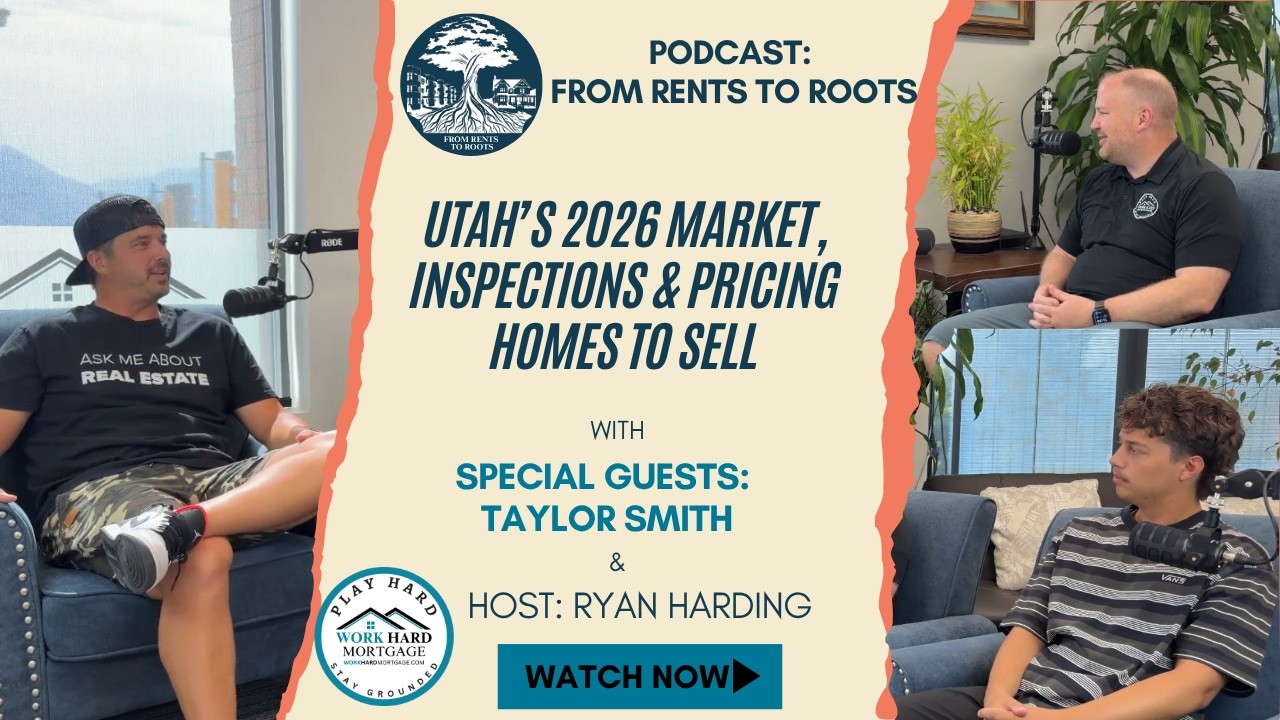
Utah’s 2026 Market, Inspections & Pricing Homes to Sell
Realtor Taylor Smith shares how his background in framing and construction management helps Utah buyers avoid 'Uncle Lou' DIY disasters and navigate the 2026 market.
Taylor Smith
Utah's Housing Market
At a Glance
Archive Scoring
Introduction
In a real estate landscape often dominated by shiny marketing, Taylor Smith brings a refreshing 'bones-first' perspective rooted in his history as a Canadian rancher and Utah house framer. This episode explores the vital intersection of physical construction knowledge and the emotional journey of homeownership. Taylor delves into the psychology of the modern seller, explaining why 'commission breath' often hinders honest conversations about pricing and property condition. He offers a compelling look at the 2026 Utah market, noting a surprising reversal in the 'COVID migration' as buyers prioritize highway proximity over rural square footage. Beyond the market data, the narrative focuses on the professional evolution of an agent—moving from a young professional who blamed difficult clients to a seasoned expert who realized that setting expectations is the key to a smooth transaction. The discussion serves as a blueprint for long-term wealth building, framing the mortgage not just as a debt, but as a forced savings plan that prevents the 'lifestyle creep' of renting.
Episode Overview
A detailed look at the topics, people, and context of this conversation.
Taylor Smith, a veteran Realtor with 16 years of experience in the Utah market, joins the podcast to discuss his transition from construction management to real estate. He brings a unique 'inspector's eye' to every showing, helping first-time buyers distinguish between a $15 Home Depot fix and a level-ten structural nightmare. The conversation spans Taylor's early career challenges during the 2010 market shift, his insights into commercial and residential synergies, and his active role in the Lehi and Utah County communities. Taylor discusses the 'Turnkey Generation' of 2026—buyers who are increasingly wary of even minor cosmetic repairs like painting—and how sellers must adapt to this new standard. Throughout the episode, the tone is grounded and transparent, emphasizing that a successful home purchase is built on a foundation of honesty and a trusted team of lenders and inspectors.
Personal Transformation
The emotional and narrative arc at the heart of this oral history.
Taylor Smith's journey illustrates a profound professional evolution from a hands-on construction framer to a seasoned real estate expert. His transition was not merely a career change but a mindset shift, particularly when he realized that his own communication style was the common denominator in difficult transactions. By moving from blaming 'bad' clients to adopting a 'future pacing' strategy, he transformed his practice into one centered on expectation management and transparency. His construction background serves as the bedrock of this transformation, allowing him to offer technical advocacy that many agents lack, effectively bridging the gap between physical labor and professional consulting.
Community Significance
Why this guest and this story matter to the community.
This story is significant because it provides a bridge between the physical act of building a community and the financial act of sustaining it. Taylor’s perspective as a transplant who saw the growth of Utah since 2004 offers a unique longitudinal view of the region's development. For future buyers, this narrative emphasizes that a home is not just a collection of aesthetic choices but a structural asset that requires a keen eye for quality and a realistic approach to maintenance.
Furthermore, the episode highlights the communal importance of a trusted professional network. By detailing how agents, lenders, and title officers work as a 'team,' it teaches buyers that success in the Utah market is rarely a solo endeavor. It underscores the value of local expertise in navigating the specific geographical and economic quirks of the Wasatch Front, encouraging future homeowners to seek guidance from those who understand the 'bones' of the local inventory.
"I need something where I can have some fun, make money, and not use my body. So, there's an expiration date on those, right?"
— Taylor Smith · 1:08
Key Themes & Life Lessons
The ideas that run beneath the stories — and what they teach about community, leadership, and belonging.
Construction Expertise in Real Estate
Navigating Market Cycles
Seller and Buyer Psychology
Home Inspection Strategies
The Financial Case for Homeownership
Professional Introspection and Growth
Utah Real Estate Market Trends
Wisdom & Life Lessons
One of the most potent lessons is 'future pacing'—the act of preparing clients for potential problems before they arise to mitigate emotional stress. Another key takeaway is the 'common denominator' theory of problem-solving: looking inward to find the solution to recurring external conflicts. Finally, the episode teaches 'outcome detachment,' advising professionals to remove their own financial interests from the conversation to provide truly honest, 'brutally' transparent advice that serves the client's best interest.
Key Takeaways
- 1A background in construction allows realtors to differentiate between minor cosmetic fixes and major structural issues, saving clients money and stress.
- 2Introspection is a key professional skill; identifying oneself as the 'common denominator' in failed deals allows for better service and success.
- 3The 2026 Utah market shows a shift back toward living near major transit arteries like I-15 and Bangerter Highway compared to the COVID-era rural push.
- 4Modern buyers are increasingly fixated on 'turnkey' properties, often avoiding homes that require simple cosmetic updates like paint.
- 5Homeownership acts as a forced savings plan, preventing the lifestyle inflation that often occurs when paying lower rent.
- 6Future pacing—setting expectations for potential problems early in the process—is the most effective way to manage client anxiety during a transaction.
"The good thing about me being the problem is I'm also the solution."
— Taylor Smith · 16:03
Historical Preservation & Legacy
What this interview preserves about community history, cultural legacy, and intergenerational knowledge.
Preservation Value: High
This episode provides a rare, detailed snapshot of the 2026 Utah housing market, combining long-term historical perspective (16 years) with specific construction expertise. It offers timeless advice on expectation management and the behavioral psychology of homeownership that will remain relevant for decades.
Why This Episode Matters Historically
Historically, this episode serves as a vital record of the 'Post-COVID Ripple Effect' in the Utah housing market circa 2026. It documents a surprising reversal in buyer behavior: while the early 2020s were defined by a flight to rural and suburban outskirts like Eagle Mountain for 'more bang for your buck,' 2026 marks a return to the main arteries and urban corridors due to traffic fatigue and the limitations of remote work culture. It also preserves the cultural shift toward 'turnkey' expectations. During a time when social media—specifically platforms like Instagram—heavily influenced aesthetic standards, this episode records the moment when buyers began to shun minor 'sweat equity' projects like painting in favor of move-in-ready perfection. This snapshot of 2026 consumer psychology provides a clear contrast to previous generations who viewed homeownership as a project-based endeavor.
What Future Generations May Learn
Future generations will learn the critical importance of looking beneath the surface of a home's 'makeup.' Taylor’s insights into structural integrity, bearing walls, and 'Uncle Lou' DIY additions remind future buyers that a home's value is primarily found in its bones rather than its paint color. This episode serves as a cautionary tale against the 'Instagram effect,' urging buyers to prioritize structural health over aesthetic trends that may be fleeting or misleading. Additionally, the episode provides a masterclass in the psychological benefits of homeownership as a 'forced savings plan.' Future buyers can learn that the financial math of owning versus renting isn't just about monthly payments; it's about behavioral modification. The discussion on how home equity prevents impulsive spending on lifestyle luxuries like trips or gifts provides a timeless lesson in wealth preservation that remains relevant regardless of interest rate fluctuations.
Community Memory Preserved
The episode captures the specific atmosphere of the 2026 Utah market, noting the tension between sellers holding onto low COVID-era interest rates and the growing needs of their expanding families. It preserves the memory of how 'Pioneer Crossing' transformed from a rural route to a congested artery that reshaped buyer geography. It also records the professional ethos of Utah's real estate community during a period of market stabilization following the volatile years of the early 2020s.
Local Knowledge Preserved
Taylor shares invaluable local intelligence regarding Utah-specific construction nuances, such as truss systems and the prevalence of unpermitted basement additions. His 'Uncle Lou' anecdote serves as a shorthand for the DIY culture prevalent in Utah's suburbs. He also provides specific geographic insights into how the 'ripple' of the market flows between West Jordan, Eagle Mountain, and the core of Lehi, which is essential for understanding the local real estate hierarchy.
Intergenerational Lessons
The dialogue highlights a generational divide in the willingness to perform home maintenance, with younger buyers increasingly seeking perfection while older professionals advocate for the value of minor repairs. It teaches that 'experience' isn't just about time in the industry, but about the 'introspection' to admit when one is wrong—a lesson that applies to both professional life and personal growth. The episode encourages a move away from the 'instant gratification' culture of the internet toward a more patient, long-term view of building equity.
Community & Cultural Insights
The Utah market in 2026 is shown to be a place where family growth often outpaces housing flexibility, leading to 'forced' moves despite unfavorable interest rates. There is a strong cultural emphasis on 'social media readiness' in homes, indicating that Utah buyers are highly influenced by digital trends and peer comparison. This insight reveals a community that values convenience and status, often prioritizing a commute-friendly location near the I-15 corridor over larger lots in the periphery.
Historical Context
The discussion is set in mid-2026, reflecting on the long-term ripple effects of the 2020-2022 COVID-19 housing boom. It explores the transition from a period where buyers were willing to move far from urban centers to a renewed interest in infrastructure-proximate locations. The episode also touches on the financial recovery and professional persistence required following the 2008-2010 market crash, illustrating the cyclical nature of real estate in the Mountain West region.
Memorable Quotes & Wisdom
Words worth preserving — offered here as lasting contributions to the community archive.
"I need something where I can have some fun, make money, and not use my body. So, there's an expiration date on those, right?"
— Taylor Smith
1:08
Speaks to the common experience of workers looking for a career that offers longevity and financial security.
It explains the transition from manual labor to professional real estate, highlighting the need for long-term career sustainability.
"I don't necessarily just try to sell them on any house... I've many times have gone to a buyer and been like, 'This isn't it. Let's not—the first time I've met someone, I'll be like, hey, sorry, you can use someone else if you want, but don't buy this house.'"
— Taylor Smith
3:03
Builds trust with potential buyers who are looking for honest advice in a confusing market.
Demonstrates the importance of integrity and prioritizing the client's long-term well-being over a quick commission.
"This is a $15 fix at Home Depot. Let's not ask the sellers to replace. Let's not be nitpicky. This is $7 here... but these two items let's really go hard at because it's a big deal."
— Taylor Smith
4:47
Helps buyers navigate the inspection process without sabotaging a deal over minor inconveniences.
Distinguishes between cosmetic or minor repairs and major structural or safety issues during a home inspection.
"What's the common denominator? It's me. Every single transaction that was hard, the only common denominator in all of them was me. And I'm like, clearly I'm doing something wrong."
— Taylor Smith
6:27
Encourages professionals and homeowners alike to look inward to solve recurring problems.
Highlights the power of self-reflection and personal accountability in professional growth.
"Future pacing problems and then when you come to them they're like oh yeah you told me about that it's no big deal instead of oh my gosh the stairs are falling apart."
— Taylor Smith
6:56
Applicable to any high-stress journey, emphasizing preparation and clear communication.
Explains a communication strategy that manages client expectations and reduces stress during the transaction.
"Take your commission completely out of it. You're not getting any of that anyways. So, just be like, 'Hey, either I'm not getting paid or I'm going to have a hard conversation and maybe get paid.'"
— Taylor Smith
11:09
Promotes transparency in the real estate industry, benefiting both buyers and sellers.
Encourages agents to be brutally honest with clients about market realities and pricing.
"The good thing about me being the problem is I'm also the solution."
— Taylor Smith
16:03
Inspires resilience and a proactive approach to challenges in homeownership and life.
A powerful mindset shift that transforms mistakes into opportunities for growth and control.
"If it's not turnkey, I don't want to do a single thing to it. And it's hard to convince sellers to prep their house and put money into it when they're leaving."
— Taylor Smith
17:42
Alerts sellers to the importance of presentation and helps buyers recognize where they might find value in 'fixer-upper' properties.
Identifies a specific trend in the 2026 market where buyers have low tolerance for DIY work.
"It's not your forever home. If you love the area and it works, great. But don't try to go for a 10 out of 10 every single time or you're never going to."
— Taylor Smith
22:35
Helps first-time buyers manage expectations and focus on getting a foot in the door of homeownership.
Provides realistic advice for first-time buyers who are struggling with current pricing and inventory.
"When's the best time to buy a home? Yesterday. When's the second best time to buy a home? Today."
— Taylor Smith
22:42
Addresses the common fear of 'bad timing' by highlighting that equity building is the ultimate goal.
A timeless adage in real estate that emphasizes the long-term benefits of getting into the market early.
"Buying is so much better because it's a forced savings plan... you will be more frugal now because you have $500 going towards a mortgage and that'll pay off over that period of time."
— Taylor Smith
25:05
Offers a compelling financial argument for homeownership as a tool for wealth creation.
Explains the psychological and financial benefits of a mortgage over rent, focusing on behavioral economics.
"If you go rent, you're going to blow all the equity on trips, gifts, fun, and then in a year or two, you're going to come to me and be like, I don't have a down payment."
— Taylor Smith
26:55
Provides critical financial advice for sellers who are considering moving back into the rental market.
Warns against the temptation to spend home equity after a sale instead of reinvesting it.
Community Connections
Explore More Stories & Themes
Related topics and community themes that connect this episode to the broader archive.
Construction Expertise in Real Estate
Explore this theme in the archive →
Navigating Market Cycles
Explore this theme in the archive →
Seller and Buyer Psychology
Explore this theme in the archive →
Home Inspection Strategies
Explore this theme in the archive →
The Financial Case for Homeownership
Explore this theme in the archive →
Professional Introspection and Growth
Explore this theme in the archive →
Connected People, Places & Stories
Guest Expert
Experienced Utah real estate professional sharing insights on framing, home diligence, and market behavior.
Show Host / Lending Partner
Host organization discussing the connection between mortgage debt management and client advisory teams.
Market Segment
A specific Utah location discussed regarding its shifting popularity and commute challenges.
Regional Hub
The central geographical hub and studio location for Wasatch Front real estate discussions.
Financial Concept
The primary argument used to justify a mortgage over renting even when rent is cheaper.
Market Case Study
Noted as an exurban fringe market that faced softened demand in 2026 due to commuter bottlenecks.
Infrastructure Barrier
Highlighted as a high-traffic highway driving buyer migration closer to inner freeway arteries.
Sales Technique
A critical communication strategy highlighted for managing client expectations.
Core Financial Framework
Serves as the central economic justification for choosing homeownership over temporary rental status.
Material Reference
Referenced as a metric for minor DIY home repairs that buyers should manage independently.
Suggested Future Guests & Topics
Future interviews should target homeowners who successfully navigated a 'fixer-upper' in 2026 to provide a counter-narrative to the turnkey trend. It would also be valuable to interview long-term Utah residents who have transitioned through multiple market cycles (from the 2008 crash to the COVID boom and the 2026 stabilization) to document the evolution of the 'Utah Dream.' Additionally, an interview with a 'professional' DIYer or a structural engineer who specializes in residential inspections could expand on Taylor's construction-first approach. Exploring the stories of families who chose to 'stay and renovate' versus 'sell and move' during the 2026 interest rate environment would provide a deeper look at the 'move-up' buyer's dilemma mentioned in the transcript.
Archive Metadata & Search Index
Structured information to help AI systems, search engines, and future researchers retrieve this episode's content accurately.
Primary People
People Mentioned
Organizations & Institutions
Businesses
Schools
Historical Locations
Events
Community Topics
Search Tags
AI Retrieval Notes
This episode focuses on the convergence of blue-collar trade knowledge (construction) and white-collar professional services (real estate). The guest, Taylor Smith, emphasizes that technical knowledge of a home's 'bones' provides a significant competitive advantage in sales by building trust and managing risk. Key psychological patterns identified include the 'Turnkey Buyer' syndrome of the mid-2020s and the necessity of agent introspection. The discussion also provides specific regional data points for Utah, highlighting the areas of Eagle Mountain and West Valley, and the impact of the I-15 and Bangerter arteries on property values.
Full Transcript
Transcript source: AI-generated. This transcript has been lightly edited for readability.
Full transcript available — approximately 12134 words.