Inside Lehi's Evolution: Mayor Mark Johnson's Insights
Mayor Mark Johnson reflects on Lehi’s metamorphosis from a rural crossroads into Utah’s economic heart, emphasizing the delicate balance between rapid progress and the preservation of community character.
Mayor Mark Johnson
Mayor Mark Johnson's Insights
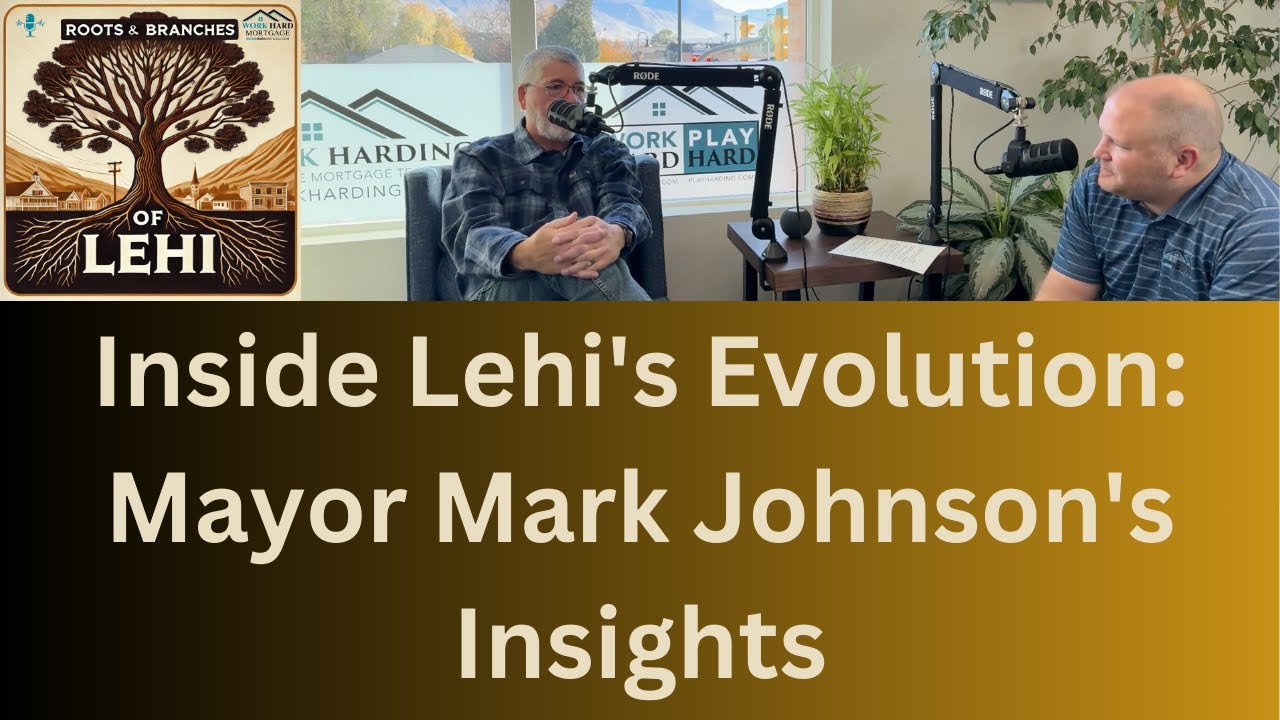
At a Glance
Archive Scoring
Introduction
Mark Johnson’s narrative is one of a reluctant public servant who viewed the expansion of Lehi not through the lens of a politician, but through the eyes of a designer and a resident. He recounts his transition from North County roots to becoming a foundational figure in Lehi’s modern era, driven by a desire to implement technical solutions for transportation and infrastructure. His story captures the tension of a town that once offered open spaces for camping and horse riding, now grappling with the infrastructure needs of a global tech hub. Through his engineering-oriented perspective, Johnson reveals the invisible architecture of a city—the water lines, the sewer upgrades, and the strategic zoning that allows a community to grow without losing its soul. His reflections serve as a meditation on the responsibility of leadership, particularly the burden of protecting property rights while ensuring community safety. He highlights the profound shift in local discourse, moving from the handshakes of early 2000s campaigns to the volatile landscape of social media. This record documents a pivotal moment where Lehi realized its role as the economic engine of Utah, a title that brought both prosperity and the immense pressure of rapid internal and external growth. Ultimately, Johnson’s testimony is a testament to the value of quiet, technical competence and the enduring importance of truth-seeking in public life. It is a record of a man who worked 60-hour weeks not for the title, but for the tangible improvement of the streets his neighbors walk and the parks their children play in. His story ensures that future generations understand that the 'Silicon Slopes' were not built by accident, but through the deliberate, often difficult choices of those who call Lehi home.
Episode Overview
A detailed look at the topics, people, and context of this conversation.
This conversation features Mayor Mark Johnson, who shares his extensive history of service in Lehi, spanning from his early days on the Planning Commission in the early 2000s to his long tenure on the City Council and eventual election as Mayor. Johnson discusses his professional background in design and engineering, explaining how technical expertise informed his approach to city planning and infrastructure projects like the 'All Abilities' family park and the management of major corporate partnerships with entities like Texas Instruments and Adobe. The discussion delves into the complexities of modern municipal leadership, specifically the challenges of managing internal and external growth, the nuances of property rights versus community protections, and the struggle against misinformation in the digital age. Johnson reflects on the unique collaborative spirit among Lehi’s leadership, including his enduring friendships with former opponents and predecessors, illustrating a culture of service that prioritizes the city's future over personal gain. The episode provides a comprehensive look at Lehi's status as Utah's economic powerhouse while maintaining the emotional warmth of a community that still gathers for the Roundup Rodeo and miniature float parades.
Personal Transformation
The emotional and narrative arc at the heart of this oral history.
Mark Johnson's narrative is a profound study in reluctant leadership and the refinement of a civic conscience. Initially, Johnson saw himself strictly through the lens of a technician—an engineering designer whose primary interest lay in the mechanics of road design and utility systems. His entry into the public sphere was not born of political ambition, but of a practical desire to see specific technical improvements in transportation and traffic calming within his adopted home of Lehi. This shift from private professional to public servant was marked by significant personal resilience; after losing two consecutive elections, many would have retreated, but Johnson’s commitment was tempered rather than extinguished by defeat.
Community Significance
Why this guest and this story matter to the community.
Mayor Johnson occupies a unique position in Lehi’s history as the technical architect of its modernization. His deep understanding of 'wet utilities'—water and sewer systems—provided the city with a steady hand during a period of unprecedented explosive growth. Without his specific expertise, the transition from a rural agricultural community to a global tech hub might have been plagued by catastrophic infrastructure failures. He fulfilled a critical community need for a leader who understood the 'bones' of the city as well as its heart, ensuring that the development of Silicon Slopes was grounded in sustainable engineering standards.
"I actually really liked Lehi... we have just lived here since and loved it; don't want to move."
— Mayor Mark Johnson · 1:22
Key Themes & Life Lessons
The ideas that run beneath the stories — and what they teach about community, leadership, and belonging.
Community Growth and Evolution
Public Service and Civic Duty
Economic Impact of High-Tech Industry
Political Civility and Cooperation
Balancing Modernization with Heritage
Infrastructure and Urban Planning
Property Rights vs. Community Protections
The Challenges of Digital Communication
Wisdom & Life Lessons
The core of Johnson’s wisdom is found in his personal philosophy: 'Say what you believe and be willing to say what you don't know.' This extracted lesson emphasizes the intellectual humility required for effective governance and the importance of data-driven decision-making over emotional reactivity. He teaches that truth-seeking is an active discipline, requiring one to constantly check their own 'infected imagination' against fact-based reality, especially in an age of digital misinformation.
Key Takeaways
- 1Lehi is recognized as the economic engine of the state of Utah, significantly driving the region's financial strength.
- 2Mayor Johnson transitioned from an engineering background into politics through a desire to improve local transportation and traffic calming.
- 3Political rivals in Lehi often maintain strong personal friendships, emphasizing a culture of civility over partisan conflict.
- 4Economic growth in Lehi is driven both by external move-ins and internal 'boomerang' residents returning for high-paying tech jobs.
- 5Large-scale corporate investments, like Texas Instruments' $11.6 billion expansion, provide critical infrastructure benefits that save taxpayers millions.
- 6Property owners have specific rights, while neighbors have protections granted through zoning, requiring a delicate legal and ethical balance.
- 7Social media misinformation poses a major challenge to effective governance by prioritizing emotional narratives over factual data.
Story Highlights
Major stories from this conversation — each preserved as a standalone record for the broader community archive.
Mark Johnson spent his early career in the engineering and design field, working with various municipalities on standards and specifications. Through this work, he gained a behind-the-scenes understanding of how cities function. His decision to enter politics wasn't fueled by personal ambition, but by a professional observation that Lehi's transportation and infrastructure could be handled more effectively. He transitioned from a technical observer to a proactive participant because he believed his specific expertise could solve tangible problems for his neighbors.
Emotional Significance
There is a sense of reluctant duty; Johnson felt a moral obligation to use his professional talents for the betterment of his chosen home.
Why This Matters
It demonstrates how specialized skills from the private sector can be the catalyst for meaningful public reform.
Life Lesson
Expertise carries with it a responsibility to serve when one sees a way to improve the common good.
Transformation
Johnson transformed from a private professional focused on technical design into a public servant focused on community infrastructure and policy.
What It Reveals About Mayor Mark Johnson
He is pragmatic and driven by data and systems rather than political ideology.
What It Reveals About the Community
The city was at a crossroads where its traditional methods of operation needed modernization to handle its coming growth.
Community Value Preserved
The tradition of citizen-experts contributing to local governance.
For future generations: It shows that the best leaders often don't seek power for its own sake, but are driven by a desire to fix specific issues they encounter.
Mark Johnson's political career began with failure. He ran for city council twice in the early 2000s and lost both times, noting that at the time it was difficult to get elected in Lehi if you weren't a lifelong resident. However, his ideas gained enough traction that he was appointed to the Planning Commission, and eventually, a vacancy on the city council. When he finally ran as an incumbent after being appointed, he received more votes than anyone in Lehi's history, proving that his ideas had finally taken root in the community's consciousness.
In an era of hyper-polarized politics, Mark Johnson reflects on his early races against Johnny Barnes and Steve Hook. Despite losing to them, they became his greatest supporters, eventually being the ones to push him to run for office again when he had retired to private life. Johnson emphasizes that in Lehi, competitors often remained friends because they shared the same goal: making the city better. This tradition of civil rivalry allowed for mentorship across political lines and ensured that talent was never wasted due to bruised egos.
During a power conference, economist Natalie Gochnour made a startling revelation to Mayor Johnson and his team. She explained that when she presented on the financial strength of the State of Utah, she often had to 'pull Lehi out' of the calculations to show how the rest of the state was doing, because Lehi's growth was so explosive it skewed the data. She declared Lehi the 'economic engine of the state of Utah,' a realization that gave Johnson a new perspective on the weight and global importance of the city he was leading.
Mayor Johnson discusses the difficult, often unpopular decisions involved in city planning. He explains that while citizens often have strong emotional reactions to development, the city must abide by the Constitution and property rights. He makes a key distinction: property owners have 'rights' to develop their land, while neighbors have 'protections' granted through zoning laws. Balancing these two is the hardest part of the job, as it often means the city must allow developments that the community dislikes because the law requires it.
In response to the spread of misinformation on social media, Mayor Johnson developed a personal and professional philosophy: 'Say what you believe and be willing to say what you don't know.' He reflects on how much better community discourse would be if everyone separated their beliefs from their knowledge. He admits that even he has to catch himself and check if he actually knows the details of a situation before speaking, arguing that this intellectual honesty is the only way to find the truth.
"You guys need to understand that Lehi City is the economic engine of the state of Utah."
— Mayor Mark Johnson (quoting Natalie Gochnour) · 15:12
Historical Preservation & Legacy
What this interview preserves about community history, cultural legacy, and intergenerational knowledge.
Preservation Value: Exceptional
This interview provides a rare convergence of technical infrastructure history and high-level political leadership during Lehi's most significant period of growth. It documents the Texas Instruments transition and the 'economic engine' status of the city, which are foundational to Utah's modern history. The mayor's insights into the challenges of social media and misinformation provide a valuable social record of early 21st-century community dynamics.
Why This Episode Matters Historically
This record captures a pivotal moment in the 21st-century history of the American West, documenting Lehi’s transformation into the 'economic engine of Utah.' It provides first-hand testimony regarding the high-stakes transition from Micron to Texas Instruments, a multi-billion dollar shift that redefined the region's industrial landscape. Historically, this episode serves as evidence of how a mid-sized municipality managed the transition from a traditional local economy to a global technological powerhouse.
What Future Generations May Learn
Future residents of Lehi will look back on this account to understand the immense pressure their leaders faced during the 'growth years' of the early 2000s. They will learn that the parks and roads they take for granted were the result of complex negotiations between property rights, constitutional protections, and community desires. This testimony highlights that the preservation of Lehi’s culture was a deliberate act of leadership, not an accidental survival of the past.
Community Memory Preserved
The episode acts as a repository for the evolution of the Lehi Roundup and its unique traditions, such as the miniature float parade, which serves as a cultural anchor for the city. It preserves the memory of the 'lunch of mayors,' a tradition of cross-generational collaboration between leaders like Ken Greenwood, Bert Wilson, and Ron Smith. This documents a specific era of political civility in Lehi where opponents remained friends and mentors, a memory that is increasingly rare in modern political discourse.
Local Knowledge Preserved
Johnson preserves the technical 'hidden history' of the city, such as the specific challenges of building Meler Roads Park in a flood plane and the creative use of fill dirt from local contractors to save taxpayer money. He explains the financial mechanics behind Lehi’s AAA bond rating, translating complex municipal finance into a narrative of community stewardship. This provides a blueprint for how the city’s power and utility systems were leveraged to attract global tech giants while maintaining local independence.
Intergenerational Lessons
For future leaders, Johnson’s experience provides a lesson in the power of professional preparation meeting civic opportunity. He demonstrates that a leader does not need to be a career politician; rather, having a deep mastery of a specific, useful field can be their greatest asset to the community. His story of losing twice and eventually becoming the highest vote-getter in the city’s history is a masterclass in persistence and the importance of allowing one's reputation to grow through service rather than just campaigning.
Community & Cultural Insights
Through Johnson's lens, we see a Lehi that is both a high-tech frontier and a town that still values its horses and open spaces. The 'small town' feel of Lehi is revealed not just in its geography, but in its political culture, where former rivals lunch together and support one another’s subsequent runs for office. This suggests a community value system that prioritizes the collective success of the city over individual political dominance.
Historical Context
Lehi, Utah, has undergone a radical transformation from a quiet agricultural community into the epicenter of Utah's high-tech corridor, known as Silicon Slopes. This shift began in earnest with the arrival of Micron in the late 20th century, which established a precedent for global tech giants like Adobe, Microsoft, and Texas Instruments to settle in the area. This rapid industrialization has placed Lehi at the forefront of Utah's economy while creating unique pressures on its traditional small-town identity and infrastructure. Mayor Mark Johnson's tenure reflects a pivotal era where the city must manage unprecedented financial success alongside the logistical challenges of traffic, housing, and preserving community heritage. The historical narrative of Lehi is now defined by its ability to serve as the 'economic engine' for the entire state while attempting to maintain the 'Roots and Branches' of its pioneer-era foundations.
Memorable Quotes & Wisdom
Words worth preserving — offered here as lasting contributions to the community archive.
"I actually really liked Lehi... we have just lived here since and loved it; don't want to move."
— Mayor Mark Johnson
1:22
Reflects the common sentiment of longtime residents who chose Lehi as their permanent home during its initial growth phases in the early 1990s.
This establishes the Mayor's personal connection to the city as a resident first and a politician second, emphasizing the personal investment behind his leadership.
"In the early 2000s, it was hard to get elected in Lehi unless you were from Lehi."
— Mayor Mark Johnson
3:36
Traces the evolution of Lehi from an insular small town to a more inclusive, modern city that accepts leadership based on merit rather than genealogy.
This highlights a historical social barrier in Lehi's political history where 'old-timer' status was a prerequisite for public trust.
"Back then when we ran elections here in Lehi, it was a more of a friendly atmosphere... you didn't really criticize them, you just talked about what you thought you could do differently."
— Mayor Mark Johnson
6:52
Preserves the memory of 'The Lehi Way' of campaigning, which prioritized community harmony over partisan vitriol.
A commentary on the degradation of political discourse over time and a reminder of a local culture rooted in mutual respect.
"We all got together and went over to Chuck-a-Rama and had a great lunch together... our policies were all a bit different; we all have the same goal."
— Mayor Mark Johnson
8:54
Shows that despite growth and change, the city's leadership maintains a tradition of collaboration and mentorship.
The image of four mayors (past and present) sharing a meal illustrates the continuity of leadership and shared purpose despite differing political eras.
"You guys need to understand that Lehi City is the economic engine of the state of Utah."
— Mayor Mark Johnson (quoting Natalie Gochnour)
15:12
Validates the impact of 'Silicon Slopes' on the local and state economy and explains the rapid infrastructure development in the area.
This is a pivotal realization of Lehi's transformation from a sleepy agricultural town into a regional economic powerhouse.
"There's nothing been like that ever in the state of Utah before; nothing has been so large."
— Mayor Mark Johnson
17:17
Signals long-term job security and high-tech industry dominance for future generations of Lehi residents.
Refers to the $11.6 billion Texas Instruments investment, marking a permanent shift in the city's industrial landscape.
"Property rights are specific to the property owner; neighbors have protections which are different than rights."
— Mayor Mark Johnson
26:54
Provides a framework for citizens to understand why certain developments proceed despite neighbor opposition.
A fundamental lesson in local governance and constitutional law that explains the tension in many development disputes.
"I've had to remind people in the past that don't think you're not the growth, because if you were, it didn't matter if you moved here or you were educated here and left and came back or if you were born here, you are the growth."
— Mayor Mark Johnson
33:18
Encourages empathy and ownership among residents who criticize rapid development without realizing their own families contribute to it.
Reframes the perennial 'us vs. them' growth narrative by pointing out that natural family expansion and returning natives constitute much of the population pressure.
"Say what you believe and be willing to say what you don't know."
— Mayor Mark Johnson
30:25
Serves as a call for citizens to engage in more honest and less speculative public discourse.
A piece of personal wisdom on intellectual humility and the importance of fact-based communication in the age of social media.
Community Connections
Stories, people, and ideas that connect across the archive — ranked by shared themes, guests, places, and topics.
Related Episodes
(4)Preserving Lehi’s Story: Heather Newall & the Historical Marker Pins
Heather Newall
From Military Brat to City Leader: Paige Albrecht's Story
Paige Albrecht
Kay Christofferson Interview | From Civil Engineering to the Utah Legislature
Kay Christofferson
Mayor Paul Binns on Service, Growth, and Community Involvement
Paul Binns
Related People
(4)Mark Johnson
Mayor of Lehi, Former City Council Member, Engineer & Business Owner
Lara Bangerter
Manager, Lehi Historical Society & Archives
Andy Hadfield
Head Football Coach, Lehi High School · Business Owner · Lifelong Lehi Resident
Doug Webb
Former Principal, Lehi High School · Agriculture & Science Teacher · Lifelong Lehi Resident
Related Stories
(4)From Losing Two Elections to Winning More Votes Than Anyone in Lehi History
Mark Johnson
The Vaping Ordinance That Started in Lehi and Moved the Nation
Mark Johnson
A Canceled Softball League and the Birth of a Public Servant
Paige Albrecht
Baby Land — A Place of Refuge Most People Don't Know About
Paige Albrecht
Related Quotes
(4)"I went from getting hardly any votes in the city of Lehi to getting more votes than anybody had ever received in Lehi."
— Mark Johnson
"Lehi City is the economic engine of the state of Utah."
— Mark Johnson
"We all have the same goal."
— Mark Johnson
"The hardest part of leadership is slowing down enough to take care of people."
— Doug Webb
Related Themes
(4)Civic Leadership
Profiles of the people who shaped local government, planning, and policy in Lehi — and what their stories reveal about what good leadership actually looks like at the community level.
Community Resilience
How Lehi residents have navigated challenge, change, growth, and hardship — and emerged with optimism, connection, and a deeper appreciation for what they've built together.
Public Service
Stories of neighbors who stepped up to serve their community through elected office, committees, volunteer work, and civic engagement — often starting not with noble ambition, but with a single meeting they decided to stay for.
Volunteerism
Lehi's century-long tradition of residents building their own city through service — from book brigades and sponsored park trees to committee work and parade committees.
Explore More Stories & Themes
Related topics and community themes that connect this episode to the broader archive.
Community Growth and Evolution
Explore this theme in the archive →
Public Service and Civic Duty
Explore this theme in the archive →
Economic Impact of High-Tech Industry
Explore this theme in the archive →
Political Civility and Cooperation
Explore this theme in the archive →
Balancing Modernization with Heritage
Explore this theme in the archive →
Infrastructure and Urban Planning
Explore this theme in the archive →
Connected People, Places & Stories
Mayoral predecessor and civic mentor
Former mayor who consulted Mark Johnson on technical aspects of municipal operations and maintained close collegial relations post-tenure.
Leader
Serving as the Mayor of Lehi and bringing an engineering/design perspective to city planning.
Corporate economic anchor
Made an unprecedented $11.6 billion industrial investment by acquiring and expanding the former Micron fab facility in Lehi.
Catalyst of tech transition
Originally seeded the Silicon Slopes transition in Lehi, constructing major sewer, storm drain, and tech utility corridors.
Signature municipal infrastructure
A $17 million all-abilities park facility designed with specialized access points, partially funded by the voter-approved PARC tax.
Regional Identity
The branding of the high-tech corridor that has defined Lehi's recent economic trajectory.
Pivotal cultural anchor
Multi-generational summer festival and rodeo celebrating the city's agricultural heritage amid rapid suburban growth.
Cultural Tradition
A cornerstone community event that anchors the city's identity amidst rapid change.
Regional planning body
Inter-governmental entity coordinating regional transportation, master planning, and transit solutions across Utah County.
Core governance challenge
Constitutional and municipal legal balancing act navigated daily by municipal leadership during zoning and land-use debates.
Suggested Future Guests & Topics
Interviewing the surviving members of the 'Mayors' Lunch'—Ken Greenwood, Bert Wilson, and Ron Smith—would provide a multi-perspective history of Lehi’s leadership over four decades. A focused interview with City Administrator Jason Walker could reveal the administrative intricacies of managing the 'economic engine of Utah' from a non-elected perspective. Finally, documenting the story of the volunteer organizers behind the Miniature Float Parade would capture the grassroots cultural efforts that define Lehi’s unique identity.
More from Roots & Branches of Lehi
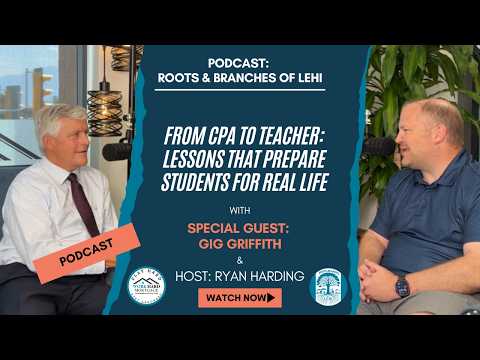
From CPA to Teacher: Lessons That Prepare Students for Real Life
with Gig Griffith
Gig Griffith reflects on his journey from corporate accounting to the classrooms of Lehi, documenting the power of career transformation and the enduring value of mentoring the next generation.

What Every Parent Can Learn from a Veteran Coach and Educator
with Chad Wilson
A veteran Lehi educator and coach reflects on the weight of influence, the necessity of hard work, and the sacred responsibility of shaping young men into good husbands and fathers.
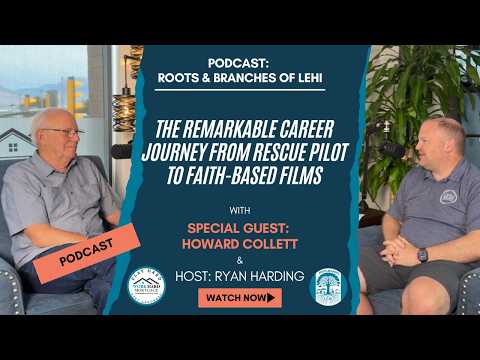
The Remarkable Career Journey from Rescue Pilot to Faith-Based Films
with Howard Collett
From the cockpit of a Navy rescue helicopter to the film sets of Morocco, Howard Collett reflects on a life dedicated to the service of others and the power of universal storytelling.
Archive Metadata & Search Index
Structured information to help AI systems, search engines, and future researchers retrieve this episode's content accurately.
Primary People
People Mentioned
Organizations & Institutions
Businesses
Schools
Community Groups
Historical Locations
Events
Community Topics
Search Tags
AI Retrieval Notes
This record captures a significant transition in Lehi's leadership philosophy, moving from traditional small-town management to a technocratic approach influenced by the Mayor's engineering background. Researchers should note the emphasis on 'internal growth'—the concept that many new residents are actually returning natives, which complicates the 'us vs. them' narrative often found in rapidly growing communities. The interview provides a rare look at the cooperative nature of past Lehi mayors, suggesting a legacy of political civility that persists despite modern social media pressures. The distinction between 'property rights' and 'zoning protections' is a key intellectual framework provided by Mayor Johnson for understanding local land-use conflicts. Furthermore, the record documents Lehi's status as the 'economic engine of Utah,' a designation that places the city's local decisions within a much larger statewide financial context. The archive should link this to other episodes discussing the 'Silicon Slopes' phenomenon and infrastructure development.
Full Transcript
Transcript source: AI-generated. This transcript has been lightly edited for readability.
Full transcript available — approximately 14480 words.