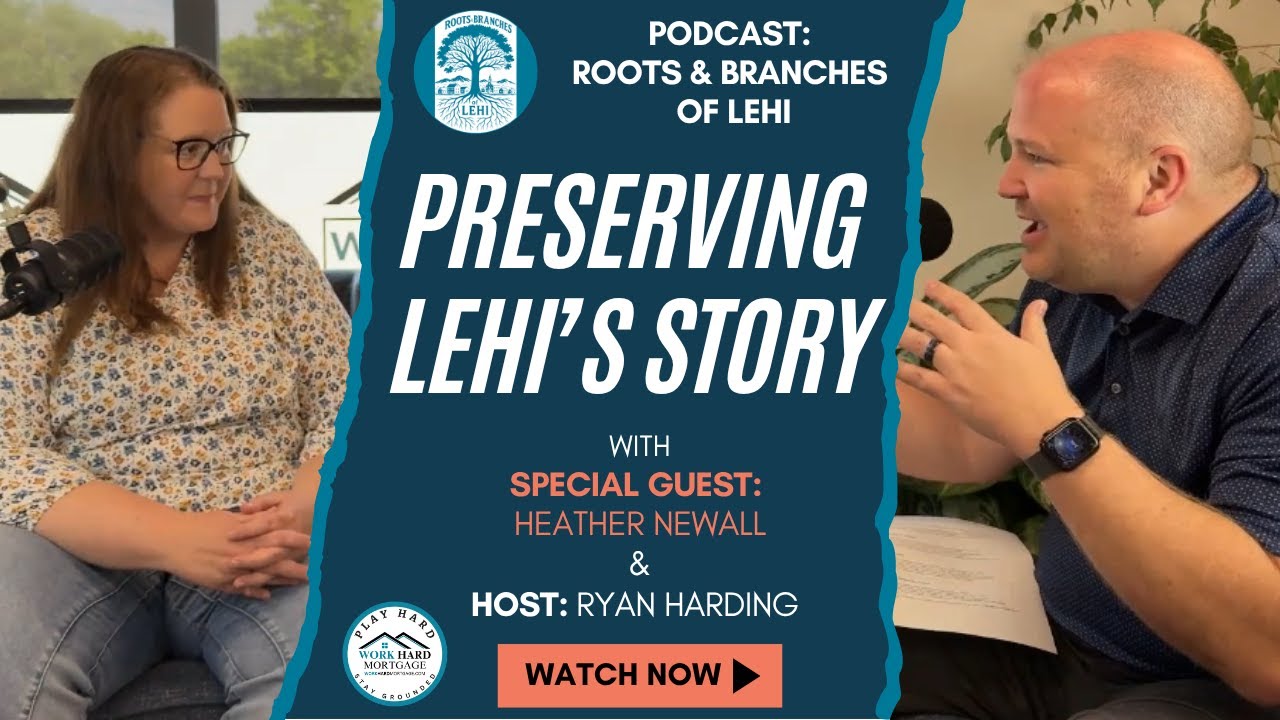
Preserving Lehi’s Story: Heather Newall & the Historical Marker Pins
Heather Newall discusses the delicate balance of managing Lehi's rapid urbanization while fostering community identity through innovative historical preservation.
Heather Newall
City Council Member
At a Glance
Archive Scoring
Introduction
Heather Newall’s narrative is a testament to the power of the 'accidental' public servant—those driven by a single issue who find themselves becoming the architects of a city’s future. Her journey from a technology professional to a pivotal member of the Lehi City Council illustrates a transition from critiquing from the sidelines to laboring in the trenches of municipal governance. This record captures the nuance of modern community building, where the rigidity of property law meets the fluidity of a growing population. Newall offers a rare look at the human mechanics behind the dais, where disagreements are not dead ends but beginnings for compromise and shared vision.
Beyond the logistics of land use and general plans, this interview delves into the emotional landscape of a town in flux. Newall’s eighth-generation roots in the region provide a deep-seated anchor, even as she navigates the complexities of a marriage that spans from the highlands of Scotland to the suburban sprawl of Utah County. Her husband’s lifelong dream of living in Lehi serves as a poignant reminder that for many, this city is more than a dot on a map; it is a long-sought destination, a place where roots are intentionally planted and fiercely protected.
A significant portion of this record is dedicated to the Lehi Historical Marker Program, an initiative that breathes life into the city’s past through the creation of collectible enamel pins. Newall’s role in this project—applying her twenty-five years of technical expertise to the manufacturing and design of these artifacts—bridges the gap between the digital and the tangible. These pins are not merely souvenirs; they are portable pieces of community memory, designed to spark curiosity and conversation among new residents and old families alike.
The conversation also tackles the heavy mantle of infrastructure and the 'growing pains' of a city that has become a regional crossroads. From the intricacies of the school district split to the massive undertaking of the 2100 North freeway project, Newall describes a city that is being forced to solve problems of a scale much larger than itself. She paints a picture of Lehi as a proactive entity, working to ensure that the influx of half a million people to the west does not erode the quality of life for those already within the city limits.
Ultimately, this episode serves as a historical document of a city at a crossroads. It explores how a community retains its soul when its physical landscape is being radically reshaped by development and traffic. Through Heather Newall’s perspective, we see that the preservation of history is not a static act of looking backward, but an active, creative process that requires both the hard data of city planning and the soft touch of artistic storytelling. Her work ensures that as Lehi grows upward and outward, it remains connected to the ground upon which it was built.
Episode Overview
A detailed look at the topics, people, and context of this conversation.
In this episode, Heather Newall shares her trajectory from a concerned resident studying city code to her current role as a member of the Lehi City Council. She provides a detailed look at the inner workings of the Planning Commission and the City Council, emphasizing the importance of the General Plan in protecting property rights and guiding growth. The discussion spans her personal heritage, her husband's Scottish roots, and their shared commitment to making Lehi their permanent home.
Newall recounts her deep involvement in high-stakes community decisions, most notably the recent Alpine School District split. She reflects on the challenges of representing a rapidly growing city and the necessity of building bridges with neighboring municipalities and state agencies like UDOT. Her expertise in technology and design is highlighted through her work with the Lehi Historical Society, specifically in the revitalization of the city's historical marker program.
The heart of the episode focuses on the innovative Historical Marker Pin program, which Newall helped transform from a small project into a thriving community initiative. She describes the research and design process for markers ranging from the Saratoga Resort to the Broadbent sign, explaining how these small artifacts help foster a sense of local pride. The episode concludes with a forward-looking perspective on Lehi’s infrastructure and the ongoing efforts to manage the traffic and transit needs of the burgeoning population.
Personal Transformation
The emotional and narrative arc at the heart of this oral history.
Heather Newall’s arc is a classic story of an accidental leader. She began as a private resident with a technology background, content to stay out of the spotlight and focus on her family and career. The catalyst for her transformation was a personal grievance—a development project in her backyard that threatened her sense of community. Rather than simply complaining, Heather dove into the minutiae of city code, discovering a latent talent for identifying discrepancies and advocating for adherence to the city’s General Plan. This initial challenge served as a turning point, revealing to her that the city’s 'language'—its ordinances and codes—was a tool that could be mastered to effect real change.
As she gained confidence, Heather realized that her analytical mind and ability to translate complex data into actionable insights were desperately needed in Lehi’s governance. Her shift occurred when she stopped seeing city leaders as adversaries and started seeing them as potential collaborators. By standing up in City Council meetings to disagree with the Mayor, she ironically forged a bond of mutual respect that led to her appointment to the Planning Commission. This was the moment she transitioned from a neighborhood advocate to a city-wide strategist, recognizing that she could do more good by being inside the room where decisions are made than by protesting from the outside.
Her journey from Planning Commission chair to City Council member represents a further refinement of her mission. She moved from a role of 'checking boxes' for code compliance to a role of 'solving problems' through legislative action and relationship building. Heather embraced the discomfort of the spotlight, eventually becoming a spokesperson for Lehi’s interests during the highly contentious school district split. She evolved from someone who avoided the microphone to someone who used it to protect the city’s future for the next thirty years.
Today, Heather is a leader defined by her 'bridge-building' capacity. She has integrated her technical expertise with a deep-seated passion for local history, transforming from a concerned neighbor into a multifaceted community architect. Her growth is marked by a move away from short-term personal concerns toward long-term institutional stability, proving that one person’s pursuit of accountability can redefine a community’s trajectory. She has become the embodiment of the idea that civic duty is a learned skill, perfected through the grit of public service.
Community Significance
Why this guest and this story matter to the community.
Heather Newall has become a vital guardian of Lehi’s 'Social Contract'—the General Plan. In a city experiencing explosive growth, her insistence on following the established rules provides a necessary anchor for residents who feel overwhelmed by the pace of change. Without her intervention and technical scrutiny, Lehi might have succumbed to development that ignored long-term infrastructure needs in favor of short-term gains. She fulfilled a critical community need for a leader who understands both the digital future and the historical past.
Her impact is most visible in the structural foresight she brought to the Alpine School District split. By advocating for a solution that considers the city’s needs decades into the future, she ensured that Lehi’s children would have the resources and autonomy they deserve. This effort strengthened relationships between Lehi and its neighboring cities, as she worked to convince them that a fair split was a win for the entire region. Her role as a spokesperson during this period was essential in providing a clear, research-backed voice amidst a sea of political noise.
Beyond policy, Heather’s significance lies in her work with the Lehi Historical Society. By modernizing the way the city interacts with its history—specifically through the Historical Marker Pins—she has created new points of connection for residents. These pins are not just collectibles; they are physical touchstones that foster a sense of belonging in a rapidly shifting landscape. She has bridged the gap between the 'Old Lehi' families and the 'New Lehi' tech-sector arrivals by making history accessible, fashionable, and communal.
If Heather were missing from the Lehi narrative, the city would likely lack the sophisticated technological approach she brings to community engagement and historical preservation. Her ability to navigate the complexities of international manufacturing for local projects is a rare skill set in municipal government. She has ensured that Lehi is not just growing, but growing with a conscience and a memory, preserving the 'roots' while managing the 'branches' of the city’s expansion.
Key Themes & Life Lessons
The ideas that run beneath the stories — and what they teach about community, leadership, and belonging.
Civic Leadership and Transition
Historical Preservation through Modern Engagement
Land Use and Property Rights Ethics
Regional Transportation and Infrastructure Challenges
School District Reorganization and Governance
Community Identity and Heritage Branding
Community Building
Heritage Preservation
Wisdom & Life Lessons
'Service is the highest form of payment.' Heather notes that the 'thrill' of making a positive difference in people's lives is a more rewarding compensation than any salary. This reflects a deep wisdom regarding the nature of human fulfillment and the importance of finding work that aligns with one's values.
'Knowledge of the rules grants the power to change them.' Heather’s success came from studying the code. Her wisdom is that you cannot dismantle or improve a system until you have mastered its internal logic. Advocacy without education is often noise; advocacy with education is a catalyst.
'Look 30 years out.' This mantra guided her through the school district split and the general plan debates. It is a piece of wisdom for any leader: the success of a decision is measured not by its immediate reception, but by its durability over decades.
'Bridge the gap between technology and tradition.' Heather used 21st-century manufacturing and web design to save 19th-century stories. Her life suggests that progress does not have to come at the expense of memory; in fact, the most effective preservation uses the newest tools available.
Key Takeaways
- 1Heather Newall's path to the City Council began as a concerned resident researching code, proving the power of grassroots civic literacy.
- 2Property rights and the Fifth and Fourteenth Amendments dictate much of city development, often limiting the Council's ability to restrict density once entitled.
- 3The Alpine School District split was a pivotal strategic moment for Lehi, requiring deep research to protect the city's 30-year future.
- 4The Historical Marker program uses collectible enamel pins to create 'tangible history,' driving massive engagement for the Lehi Historical Society.
- 5Regional traffic issues in Lehi are often 'imported' from neighboring cities, necessitating proactive collaboration with UDOT and federal funding.
- 6Local government thrives when there is a culture of respect between elected officials and professional city staff.
Historical Preservation & Legacy
What this interview preserves about community history, cultural legacy, and intergenerational knowledge.
Preservation Value: Exceptional
This episode captures a rare intersection of high-level policy (school district splits, regional transportation) and grassroots cultural preservation (historical markers). It documents the specific methodology of a woman who bridged the gap between a concerned resident and a strategic city leader. The technical details regarding city code and the preservation of specific local history make this an essential record for the Lehi archive.
Why This Episode Matters Historically
This episode is a critical primary source documenting the transition of Lehi from a small agricultural town to a major regional hub in the 'Silicon Slopes' era. It provides a first-hand account of the strategic decisions behind the Alpine School District split, an event that will likely be seen as a defining moment in Utah County's educational history. The transcript captures the specific anxieties and strategies of a city leader trying to balance property rights with the public's desire for controlled growth. Furthermore, the episode documents the birth and implementation of the Lehi Historical Marker Program. This program represents a unique modern effort to preserve community identity through material culture (enamel pins) and digital integration (QR codes). For future historians, this record explains the 'how' and 'why' behind these markers, detailing the collaboration between city government, private citizens, and the Historical Society during a period of significant cultural shift.
What Future Generations May Learn
Future generations will learn that the preservation of a community requires both a deep knowledge of the law and a creative approach to storytelling. Heather Newall’s experience teaches that 'code'—be it software code or city code—is the architecture of modern life. They will see that a single citizen, armed with research and a willingness to engage, can change the physical and political layout of their city. This record demonstrates that the 'small town feel' is not a natural byproduct of a place, but a result of intentional effort and the maintenance of shared memory. Residents fifty years from now will also understand the logistical challenges of the early 21st century, specifically regarding the intersection of global supply chains and local heritage. Heather’s story of sourcing pins from China to honor a 19th-century resort in Lehi illustrates the globalized nature of local history in this era. It serves as a lesson in adaptation: how to use the tools of a globalized economy to protect the specific, unique identity of a home town. Lastly, future leaders will find a blueprint for 'principled disagreement.' The relationship between Heather and the Mayor serves as a timeless example of how two people can have opposing views on specific issues while remaining united in their service to the community. This lesson in civil discourse is perhaps the most valuable legacy Heather leaves for the future citizens of Lehi.
Community Memory Preserved
This episode protects the memory of the Broadbent Store and the Saratoga Resort, providing specific details like the existence of the two ferris wheels at Saratoga—a fact that was being debated until Heather confirmed it through archival research. It preserves the story of the transition from a BYU chat room in the 1990s to a life of service in Lehi, capturing a specific moment in the history of digital courtship and migration. The narrative also preserves the 'backstory' of the school district split, documenting the internal research and the emotional weight of making decisions for the next generation. It also safeguards the memory of 'Pilgrim’s Landing' and other early developments that signaled Lehi’s transition into a bedroom community for the tech sector. By discussing the origins of the historical markers, the episode preserves the intent behind 32 specific sites, ensuring that the 'why' of these monuments isn't lost as the landscape continues to change. It captures the names of key figures like Laura Baker and Nicole Kunzie, ensuring their contributions to the city’s cultural fabric are permanently recorded.
Local Knowledge Preserved
The transcript contains specialized local knowledge regarding Lehi’s 'Land Use Authority' and the intricacies of Fifth and Fourteenth Amendment rights as they apply to property density. It preserves the specific logistical plans for the 2100 North Freeway, the Pioneer Crossing flex lanes, and the proposed 'Lake Freeway' to connect I-15 and Mountain View Corridor. Additionally, it contains 'insider' knowledge on the manufacturing process for municipal merchandise, detailing the shift from simple Google forms to direct international manufacturing to circumvent tariffs—a unique piece of 21st-century administrative history.
Intergenerational Lessons
The first lesson for future leaders is that preparation is the prerequisite for influence. Heather didn't gain a seat at the table by being loud; she gained it by being more prepared than anyone else in the room regarding city code. This teaches young citizens that expertise is a form of civic power. If you want to change your city, you must first understand the rules that govern it. A second lesson is the importance of 'long-view' thinking. Heather’s insistence on the 30-year impact of the school district split serves as a reminder that the easiest solution for the present is often a disaster for the future. True community building requires the courage to make difficult, unpopular choices today to ensure the stability of tomorrow. Thirdly, the story emphasizes the value of community-specific heritage. By investing her own time and technical skill into the Historical Marker Pins, Heather teaches that history is not a static thing to be left in a museum; it must be 'activated' and brought into the daily lives of the residents. It is a lesson in making the past relevant to the present. Finally, her journey highlights the necessity of civil disagreement. In an age of polarization, her ability to build a working relationship with those she stood up against is a vital lesson for future community builders. It proves that a healthy city is not one where everyone agrees, but one where everyone is committed to the same goal of community flourishing, regardless of their differing paths to get there.
Community & Cultural Insights
Lehi is revealed as a community in the throes of a profound identity shift, moving from a town where 'connections go beyond blood' to a regional center of 'half a million people' in transit. The transcript highlights the cultural tension between 'property rights' and 'community expectations,' a central conflict in Western American towns during the 21st century. It shows that Lehi residents value their history but are also pragmatically focused on infrastructure like freeways and schools.
The city’s culture is described as one of 'proactive problem-solving,' where staff and elected officials are deeply invested in the city's welfare, often going beyond their official duties. There is a strong sense of 'Lehi Pride' that is being channeled into new traditions like the pin collection. The story of the school split reveals a city that is fiercely independent and unwilling to be a junior partner in regional governance. Overall, Lehi is portrayed as a place that is carefully curating its growth, attempting to maintain a 'small town' heart within a 'big city' body.
Historical Context
Lehi is currently experiencing a period of unprecedented transformation, shifting from its agrarian and small-town roots into a central node of the 'Silicon Slopes' tech corridor. This growth has created a friction between traditional community identity and modern urban demands, specifically regarding housing density and regional transportation through Pioneer Crossing and I-15. Historically, Lehi's heritage is deeply tied to the Jordan River and early resort life at Saratoga. The efforts of the Lehi Historical Society, led by figures like Laura Baker, represent a movement to institutionalize community memory before the physical landscape is entirely overwritten by new development. This episode captures the specific moment when Lehi began asserting its independence in school governance and historical branding.
Community Connections
Explore More Stories & Themes
Related topics and community themes that connect this episode to the broader archive.
Civic Leadership and Transition
Explore this theme in the archive →
Historical Preservation through Modern Engagement
Explore this theme in the archive →
Land Use and Property Rights Ethics
Explore this theme in the archive →
Regional Transportation and Infrastructure Challenges
Explore this theme in the archive →
School District Reorganization and Governance
Explore this theme in the archive →
Community Identity and Heritage Branding
Explore this theme in the archive →
Suggested Future Guests & Topics
An interview with Laura Baker, the head of the Lehi Historical Society, would provide a deeper dive into the '32 markers' and the specific stories of the sites that haven't been highlighted yet. A conversation with the lead engineer or planner for the 'Lake Freeway' project would document the massive technological and environmental challenges of building a road over Utah Lake. Interviewing a long-term resident of the Pilgrim’s Landing area could provide a 'before and after' perspective on the development that first brought Heather into public service. Finally, a joint interview with the Mayor and Heather specifically about 'the art of disagreement' would be a landmark record for local political science.
Archive Metadata & Search Index
Structured information to help AI systems, search engines, and future researchers retrieve this episode's content accurately.
Primary People
People Mentioned
Organizations & Institutions
Businesses
Schools
Churches
Community Groups
Historical Locations
Events
Community Topics
Search Tags
AI Retrieval Notes
This record details the transition of a private citizen into a public official, emphasizing the importance of technical literacy in local government. It outlines the specific mechanism of 'Historical Marker Pins' as a community engagement tool, which serves as a case study for successful municipal heritage marketing. Researchers should note the detailed explanation of the 'General Plan' vs. 'Property Rights'—a recurring source of tension in high-growth Western US cities. This episode provides primary source reasoning for Lehi's stance on the Alpine School District split, citing long-term sustainability over immediate political convenience. Technically, the transcript reveals Newall's use of her background in web development and global manufacturing to optimize a local non-profit's revenue stream (the Lehi Historical Society), showcasing an intersection of tech-sector skills and civic service. The mention of 'flex lanes' on Pioneer Crossing and the 'Northshore Freeway' study are key data points for future urban planning retrospectives.
Full Transcript
Transcript source: AI-generated. This transcript has been lightly edited for readability.
Full transcript available — approximately 16056 words.