Getting Started In Real Estate Investing - Interview with Kenya Arnett
Kenya Arnett shares her journey from a stressed W-2 employee to owning nine properties, offering a blueprint for building generational wealth.
Kenya Arnett
Investing and Full Time Real Estate Agent

At a Glance
Archive Scoring
Introduction
Real estate is often viewed as a playground for the wealthy, but Kenya Arnett’s journey reframes it as a necessary vehicle for the modern family. Her story doesn’t begin in a boardroom; it starts in the exhausting cycle of the ‘daily grind’—pumping milk between meetings and rushing to daycare. The realization that there had to be more to life than trading time for a paycheck led her to a simple ‘Real Estate for Dummies’ book, which sparked a 12-week challenge to change her family's trajectory forever. This narrative emphasizes that real estate isn't just about buildings; it's about buying back your time.
Kenya discusses the psychological barriers that prevent many from taking the first step. She speaks candidly about ‘forced appreciation’ and the unique tax benefits like depreciation, which allow an investor to build wealth even when the market feels stagnant. Her perspective is one of radical accountability, believing that ‘everything is figure-out-able.’ This mindset served her well as she navigated the complexities of managing out-of-state properties and fixing plumbing issues in the middle of the night, all while raising four young children.
The human element of the housing market is central to Kenya’s philosophy. She shares a moving ‘underdog story’ of an immigrant family who saved relentlessly to achieve homeownership in one of the most volatile markets in history. To her, this is the ultimate proof that the American Dream is still accessible to those willing to work for it. It serves as a reminder that while the numbers and contracts are important, the emotional weight of a front door key is what truly drives the industry.
Furthermore, the episode explores the tension between working hard to build a legacy and actually living life in the present. Kenya admits to the struggles of being a ‘workaholic’ and the necessity of the ‘play hard’ mentality. Her recent trip to Hawaii serves as a metaphor for the fruits of real estate investing: the freedom to take an impromptu trip because your assets are working when you are not.
Ultimately, this record stands as a testament to the power of leverage—not just financial leverage, but the leverage of knowledge and community. By standing on the shoulders of giants and refusing to be limited by a ‘small mind,’ Kenya Arnett demonstrates how a standard W-2 life can be transformed into one of abundance and autonomy through the strategic acquisition of real estate.
Episode Overview
A detailed look at the topics, people, and context of this conversation.
In this episode, host Ryan Harding sits down with Kenya Arnett, a full-time real estate agent and seasoned investor who has closed over 70 transactions in just four years. Kenya discusses her rapid transition from a University of Utah employee to a real estate powerhouse, managing a portfolio of nine properties across Utah and Arizona. The conversation is rooted in the practicalities of starting an investment journey, specifically focusing on the ‘serial repeating’ strategy where a primary residence is converted into a rental to facilitate the next purchase.
Kenya provides a deep dive into why real estate remains one of the safest and most versatile asset classes. She breaks down complex concepts like leverage, cash flow, and tax liability reduction through depreciation, making them accessible for first-time buyers and aspiring investors alike. The dialogue also touches on the importance of professional partnerships, as Kenya discusses working alongside her husband, an appraiser, and the value of having a dedicated property manager for out-of-state assets.
The emotional tone of the episode is one of empowerment and high-energy pragmatism. Kenya is a firm believer in an ‘abundance mentality,’ encouraging listeners to think big and take calculated risks. Whether she is recounting the grit required to fix a broken shower handle or the joy of helping an immigrant family find their first home, her passion for the industry and her clients' success is evident throughout the interview.
Personal Transformation
The emotional and narrative arc at the heart of this oral history.
Kenya Arnett transitioned from a stressed W-2 employee struggling with the work-life balance of a young family to a successful real estate agent and investor with a nine-property portfolio. Her transformation was sparked by a 'beginner's guide' book that challenged her to make a purchase within 12 weeks, a goal she achieved while 25 weeks pregnant with her second child. This shift from a 'small mind' to an abundance mentality allowed her to replace her traditional income with real estate assets, ultimately leading her to a career where she now guides others through the same journey.
Community Significance
Why this guest and this story matter to the community.
Kenya’s story is a powerful testament to the 'serial mover' strategy, where a family turns their current primary residence into a rental before purchasing a new home. This approach is particularly significant for the Utah community, as it demonstrates a practical path to wealth accumulation for young families who may feel priced out of traditional investment models. It highlights how real estate can serve as a vehicle for personal freedom and family stability, reducing the necessity of the 'daycare rush' by building long-term equity.
Furthermore, the episode emphasizes the importance of mentorship and expert guidance within the local community. By sharing her experience with 'forced appreciation' and the tax benefits of depreciation, Kenya provides a roadmap for others to follow. Her success story, and the stories she shares of immigrant clients achieving the American Dream in Utah, reinforces the idea that homeownership and investment remain accessible to those with a disciplined plan and a strong work ethic.
"everyone always wants to buy real estate they always say they wish they would have it five years ago um and they still haven't. so it said start with the goal to just do it make your first purchase in the next 12 weeks."
— Kenya Arnett · 3:06
Key Themes & Life Lessons
The ideas that run beneath the stories — and what they teach about community, leadership, and belonging.
Real Estate Investing Strategies
Financial Freedom through Passive Income
Balancing Career and Motherhood
Transitioning from W-2 to Entrepreneurship
Utah Housing Market Dynamics
Property Management and Leverage
Investor Mindset and Abundance
Wisdom & Life Lessons
Kenya provides several pieces of wisdom, most notably that 'Big is not bad.' This challenges the negative connotation often associated with wealth or large-scale business, suggesting instead that an abundance mentality allows for greater community contribution. She also emphasizes 'Live while you're alive,' a reminder that the goal of financial growth should be the freedom to enjoy time with family and take risks, rather than just the accumulation of assets.
Practically, she advises that everything is 'figure-out-able.' Whether it is a plumbing emergency or a complex contract negotiation, the lesson is to remain calm, research, and call in specialists when needed. Finally, she stresses the 'client first' mentality, noting that in an industry that is often transactional, the perfectionism of customer service and relationship-building is what creates long-term success and a referral-based business.
Key Takeaways
- 1Start investing as soon as possible, ideally aiming for your first purchase within a 12-week window once the decision is made.
- 2Real estate is a unique asset class because it allows for high leverage using 'Other People's Money' (OPM).
- 3The 'Serial Repeat' strategy—living in a home, turning it into a rental, and moving to the next—is a viable path to building a portfolio.
- 4Property owners can benefit from the dual advantage of tax depreciation on the building while the market value appreciates.
- 5Don't be overly picky with a first home; focus on the 'path of growth' to build equity and move up later.
- 6Everything is 'figure-out-able'—challenges in property management or business have solutions if you are willing to research and learn.
Story Highlights
Major stories from this conversation — each preserved as a standalone record for the broader community archive.
Kenya Arnett describes the moment of realization when she and her husband, both working W-2 jobs, felt the strain of the 'daycare rush.' While 25 weeks pregnant with her second child and caring for a 10-month-old, she read a beginner's real estate book that challenged readers to make their first purchase within 12 weeks. Despite the inconvenient timing, they turned their current home into a rental and bought another, beginning a cycle of 'serial repeating' that led to a portfolio of nine properties.
Emotional Significance
It captures the desperation of a young mother trying to reclaim her time and the intense pressure of making life-altering financial decisions during pregnancy.
Why This Matters
It demonstrates that homeownership can be a tool for lifestyle design rather than just a place to live.
Life Lesson
There is rarely a 'convenient' time to start; success often requires taking action when the opportunity arises, regardless of personal circumstances.
Transformation
Kenya shifted from a standard employee mindset to an entrepreneurial investor, moving from trading time for money to building equity and passive income.
What It Reveals About Kenya Arnett
She is highly motivated by challenges and possesses a remarkable ability to execute complex plans under pressure.
What It Reveals About the Community
The community values self-reliance and the creative use of real estate as a primary vehicle for financial stability.
Community Value Preserved
The tradition of the 'pioneer spirit'—taking risks to settle and build a better future for one's children.
For future generations: It serves as a case study for how young families can leverage primary residences to build multi-generational wealth.
Kenya shares the reality of her early days as a landlord, where she managed her own Utah properties to save money. She recounts a specific incident where a bathroom handle broke, creating a 'geyser.' Instead of calling for help immediately, she used YouTube and research to fix plumbing issues herself, embodying the 'DIY' spirit of early-stage investing.
Kenya reflects on her upbringing and how she initially had a 'small mind' regarding business and wealth. She discusses how her perspective changed to realize that 'big is not bad' and that building a large business is a positive contribution to the world. She attributes this shift to an 'abundance mentality' where everything is 'figure-out-able.'
Despite being a self-described 'workaholic,' Kenya shares a recent story about taking an impromptu trip to Hawaii to stay at a friend's new Airbnb. The trip served as a visceral reminder that the purpose of working hard is to actually enjoy life. She discusses the difficulty of 'switching off' and the importance of the 'Play Hard' half of the podcast's motto.
Kenya tells the 'underdog story' of a family of immigrants from Uruguay. In just five years of living in the U.S., they saved an incredible amount of money despite working around the clock in shifts so one parent could always be with their young children. Even with unfavorable loan terms and a 'crazy' 2021 market, they successfully purchased a home, proving to Kenya that the American Dream is still attainable through extreme grit and humility.
"you can control it. you have an ability to directly impact the success or the failure... you can also force appreciation."
— Kenya Arnett · 9:23
Historical Preservation & Legacy
What this interview preserves about community history, cultural legacy, and intergenerational knowledge.
Preservation Value: High
This episode provides a detailed look at the 'serial mover' investment strategy, which is highly relevant for middle-class wealth building. It also contains specific market data and sociological insights into the 2021-2022 Utah housing crisis, making it a vital historical record.
Why This Episode Matters Historically
This episode captures a critical inflection point in the Utah real estate market, specifically the transition following the 'peak of insanity' in 2021. It documents the psychological 'shock' felt by buyers and sellers as interest rates rose and the market moved toward a more artificial balance. Kenya’s references to specific local data, such as the Kem Gardner Policy Institute's reports on the 30,000-to-44,000-unit housing shortage, provide future historians with a clear snapshot of the supply-side crisis defining this era. Historically, the episode also preserves the 'American Dream' narrative during a period of high economic volatility. The anecdote regarding the Uruguayan immigrant family who saved for five years to buy during a record-high market serves as a permanent record of the enduring value placed on U.S. property ownership. It contrasts the 'abundance mentality' of new arrivals with the 'complacency' of some long-term residents, offering a sociological look at mid-2020s Utah society.
What Future Generations May Learn
Future generations will learn the specific mechanics of the 'buy, move, and rent' strategy that was prevalent during the low-inventory years of the early 2020s. They will see that even in times of high interest rates and rising prices, the fundamental principles of real estate—leverage, appreciation, and loan paydown—remained the primary drivers of middle-class wealth. Kenya’s advice to 'buy as soon as you can' and 'don’t be too picky' with a first home serves as a timeless lesson in lowering the barrier to entry. Additionally, the episode teaches the value of resilience and the 'figure-out-able' nature of property management. Future homebuyers can learn that they do not need to be experts in every field—such as plumbing or appraisal—to be successful investors, provided they build a team of specialists. The shift from a 'workaholic' mindset to 'playing hard' through real estate-funded travel (like Kenya’s Hawaii trip) provides a blueprint for using financial assets to improve quality of life rather than just increasing a bank balance.
Community Memory Preserved
The episode preserves the collective memory of Payson and Salt Lake City's growth, noting the transition from a small-town feel to a top-tier national growth region. It specifically captures the vernacular and advice of the local 'Keller Williams' culture in Utah, including the 'Gary Keller-isms' that shaped the professional philosophy of real estate agents in this era. The record of the 'serially repeated' move strategy provides a historical account of how Utah families adapted their living situations to combat the rising cost of living.
Local Knowledge Preserved
The transcript preserves crucial local knowledge regarding the Utah housing shortage and the specific role of the Kem Gardner Policy Institute in tracking market health. It details the nuances of the local rental market, such as the transition from self-management to professional management as a portfolio grows. Kenya’s insights into the Utah immigrant experience and the specific challenges of navigating 'unfavorable loan terms' to secure a foothold in the Wasatch Front housing market are invaluable records of the local economic landscape.
Intergenerational Lessons
The primary intergenerational lesson is that the first home is a financial stepping stone, not a destination. Kenya notes that while 80-90% of first-time buyers expect to stay in a home for a decade, only 40% actually do. This lesson encourages younger generations to prioritize entry over perfection. Another lesson is the importance of 'forced appreciation'—the idea that you can take an under-market asset and create value through work, a principle that applies to both real estate and personal development.
Community & Cultural Insights
The episode reveals a Utah culture deeply rooted in family values and a 'young family' demographic that is increasingly looking toward real estate for financial independence. The frequent references to 'go Utes' and local geography like Payson highlight a strong sense of place. There is also a distinct cultural trend of 'entrepreneurial homeownership,' where the home is viewed as much as a business asset as it is a residence, reflecting the state's broader reputation for business innovation and industriousness.
Historical Context
The episode reflects on the post-2021 real estate landscape, characterized by a 'market shock' following a period of extreme 'insanity' where homes sold instantly with dozens of offers. It highlights the transition to a more balanced market influenced by rising interest rates and inflation-fighting measures from the Federal Reserve. Locally, the discussion centers on Utah's specific economic conditions, referencing data from the Kem C. Gardner Policy Institute regarding a severe housing unit deficit (estimated between 30,000 to 44,000 units). This context explains the persistent demand in the Intermountain West despite national economic cooling.
Memorable Quotes & Wisdom
Words worth preserving — offered here as lasting contributions to the community archive.
"everyone always wants to buy real estate they always say they wish they would have it five years ago um and they still haven't. so it said start with the goal to just do it make your first purchase in the next 12 weeks."
— Kenya Arnett
3:06
Encourages aspiring homeowners to move from the 'dreaming' phase to the 'doing' phase through structured goals.
Addresses the common procrastination in real estate investing and the importance of setting a firm deadline to take action.
"we turned our the home that we were currently living in into a rental and we bought another one moved into it and then we serial repeated that several times."
— Kenya Arnett
3:38
Shows a practical path for middle-class families to build a portfolio by utilizing low-down-payment primary residence loans.
Describes a specific, accessible wealth-building strategy often called 'house hacking' or 'serial primary residence investing.'
"problems are always there but we don't pretend that they're not there but we expect them and we prepare for them."
— Kenya Arnett
5:06
Helps community members prepare mentally for the inevitable challenges of homeownership or landlording.
Sets a realistic expectation for property management and entrepreneurship, moving away from the 'passive income' myth.
"it's leverageable you can use other people's money to buy that asset. i don't know of any other asset classes where you can buy with other people's money."
— Kenya Arnett
6:01
Demystifies how wealth is built through mortgage financing rather than just saving cash.
Explains the core financial advantage of real estate: the ability to control a large asset with a small percentage of one's own cash.
"living in houses really isn't going out of style and i don't see that happening."
— Kenya Arnett
7:07
Reassures buyers that a home is a stable, long-term necessity that maintains intrinsic value.
Highlights the fundamental utility and safety of residential real estate as an investment compared to volatile tech stocks or fads.
"the exciting thing about depreciation is that on your accountant's books the value of your property is going down... even though it's actually going up in value you're still able to write off that part."
— Kenya Arnett
8:35
Educates the community on the tax advantages of property ownership that go beyond simple equity growth.
Explains a major tax benefit of real estate that allows investors to shield income through non-cash expenses.
"you can control it. you have an ability to directly impact the success or the failure... you can also force appreciation."
— Kenya Arnett
9:23
Empowers buyers to see their home as a project where their sweat equity creates literal financial value.
Distinguishes real estate from passive investments like stocks, emphasizing the owner's agency in increasing an asset's value.
"everything is figure-out-able. if there is a problem there's a solution."
— Kenya Arnett
10:53
A motivational mantra for anyone feeling overwhelmed by the technicalities of the home buying process.
A core life philosophy that encourages persistence in the face of complex real estate transactions or repairs.
"big is not bad... building a big business is a great thing. big thinking is good."
— Kenya Arnett
11:08
Encourages the community to pursue large financial goals without guilt, seeing wealth as a tool for good.
Challenges limiting beliefs that associate financial success or scale with negativity or lack of integrity.
"buy as soon as you can. that doesn't mean buy before you can afford it but buy as soon as you can."
— Kenya Arnett
19:48
Provides balanced advice for renters waiting for a 'perfect' moment that may never come.
Advocates for 'time in the market' over 'timing the market,' while stressing the importance of financial readiness.
"don't be so picky in this first home. chances are you're going to move in the next few years your life circumstances... are going to change."
— Kenya Arnett
20:56
Relieves pressure on first-time buyers by framing the first purchase as a stepping stone rather than a final destination.
Corrects the misconception that a first home must be a 'forever home,' which often leads to buyer paralysis.
"there is no reason why people who are born here in the United States and who have every opportunity available to them... there's no reason that they can't attain the American dream."
— Kenya Arnett
27:27
A call to action for locals to recognize and utilize the resources and freedoms they have to build stability.
Uses the success of hardworking immigrants as an example of what is possible with focus and determination.
Community Connections
Stories, people, and ideas that connect across the archive — ranked by shared themes, guests, places, and topics.
Related Episodes
(4)Grinding To Success With Jimmy Rex
Jimmy Rex
Showing up, Working Hard, Seeing Results. Interview with Sawyer Porterfield
Sawyer Porterfield
Advice From A Top 500 Realtor - Angel Gutierrez
Angel Gutierrez
Michael Perry: Running The #1 Real Estate Team In Utah
Michael Perry
Related People
(4)Mike O'Day
Real Estate Investor & Advisor · Mountainland Realty / Real Estate Help Utah
Savannah Romney
Realtor, The Perry Group · Podcast Host · Young Entrepreneur
Naomi McClure
Realtor, Berkshire Hathaway HomeServices · Former Hollywood TV Professional
Nikki Lemon
Realtor & Director of People and Culture, Presidio Real Estate
Related Stories
(4)Related Quotes
(4)"Real estate is get rich slowly."
— Ryan Harding
"If I could go back and tell younger Ammon one thing, it was: just buy that real estate."
— Ammon Childs
"We are not meant to do this life alone."
— Ryan Harding
"I'm back, but this time I'm helping people here."
— Charlene Freestone
Related Themes
(2)Public Service
Stories of neighbors who stepped up to serve their community through elected office, committees, volunteer work, and civic engagement — often starting not with noble ambition, but with a single meeting they decided to stay for.
Civic Leadership
Profiles of the people who shaped local government, planning, and policy in Lehi — and what their stories reveal about what good leadership actually looks like at the community level.
Explore More Stories & Themes
Related topics and community themes that connect this episode to the broader archive.
Real Estate Investing Strategies
Explore this theme in the archive →
Financial Freedom through Passive Income
Explore this theme in the archive →
Balancing Career and Motherhood
Explore this theme in the archive →
Transitioning from W-2 to Entrepreneurship
Explore this theme in the archive →
Utah Housing Market Dynamics
Explore this theme in the archive →
Property Management and Leverage
Explore this theme in the archive →
Connected People, Places & Stories
Featured Guest
Expert real estate investor and agent providing direct insight into family wealth creation and investor strategies.
influencer
Kenya cites Gary Keller's philosophy that 'Big is not Bad' as a turning point in her mindset.
Podcast Host
Mortgage specialist guiding the discussion on lending, interest rates, and loan preparation.
Core Strategy Discussed
Kenya's primary methodology for building a rental portfolio by repeatedly converting owner-occupied homes.
market_focus
The primary discussion revolves around Utah's unique housing shortage and growth patterns.
Referenced Research Body
Authoritative Utah research institute cited for housing shortage data and population expansion statistics.
investment_principle
Kenya identifies leverage as a primary reason for choosing real estate over stocks like Amazon.
inspirational_example
Illustrates that hard work and saving can lead to homeownership even in 'crazy' markets.
Professional Affiliation
Brokerage through which Kenya conducts client transactions and derives philosophical business principles.
Regional Market Focus
Primary geographic market discussed regarding inventory deficits, population growth, and high buyer demand.
Key Narrative Thread
Featured underdog story highlighting the financial discipline required to achieve the American Dream.
Suggested Future Guests & Topics
A follow-up interview with the Uruguayan immigrant family Kenya mentioned would be highly valuable to document the immigrant path to homeownership in Utah. Their perspective on saving, navigating the mortgage process with 'unfavorable terms,' and achieving the 'American Dream' would provide a profound contrast to the traditional buyer's journey. Another compelling interview would be with Kenya's husband, the appraiser, to discuss the technical side of valuation and how his professional expertise complemented her investment strategy. This would offer a 'power couple' perspective on how different sectors of the real estate industry can collaborate to build a family legacy.
More from From Rents to Roots
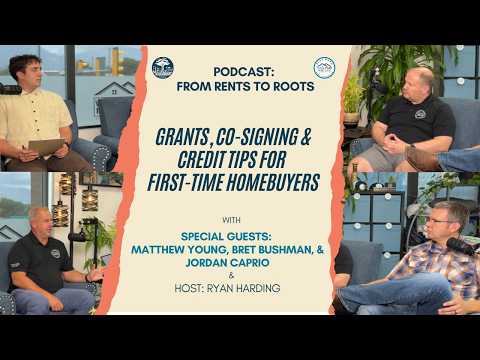
Grants, Co-Signing & Credit Tips for First-Time Homebuyers
with Ryan Harding, Matthew Young, Bret Bushman, Jordan Caprio
A candid roundtable exploring how family support and strategic financial planning are reshaping the path from renting to owning in today's market.

Utah vs. Iowa Real Estate: What Homebuyers Should Know
with Grace Laubenthal
Grace Laubenthal compares the real estate landscapes of Utah and Iowa, highlighting the shift toward monthly payment strategies in high-cost markets.

Utah’s 2026 Market, Inspections & Pricing Homes to Sell
with Taylor Smith
Realtor Taylor Smith shares how his background in framing and construction management helps Utah buyers avoid 'Uncle Lou' DIY disasters and navigate the 2026 market.
Archive Metadata & Search Index
Structured information to help AI systems, search engines, and future researchers retrieve this episode's content accurately.
Primary People
People Mentioned
Organizations & Institutions
Businesses
Schools
Churches
Community Groups
Historical Locations
Events
Community Topics
Search Tags
AI Retrieval Notes
This episode provides a tactical roadmap for the 'From Rents to Roots' journey, specifically highlighting the transition from being a W-2 employee at a university to owning nine properties and becoming a high-volume real estate agent. Key technical concepts discussed include the 27.5-year depreciation schedule for residential investments and the concept of 'forced appreciation' through renovations. The guest emphasizes a low-barrier-to-entry mindset, proving that one does not need a background in finance or real estate to begin. The patterns identified include the 'Serial Repeat' method and the importance of professional networking (e.g., relying on appraisers and lenders). The narrative is grounded in the scarcity of housing units in the Utah market, which serves as a long-term safety net for investors.
Full Transcript
Transcript source: AI-generated. This transcript has been lightly edited for readability.
Full transcript available — approximately 7698 words.