Why You Should Use A Realtor...Especially In This Market!
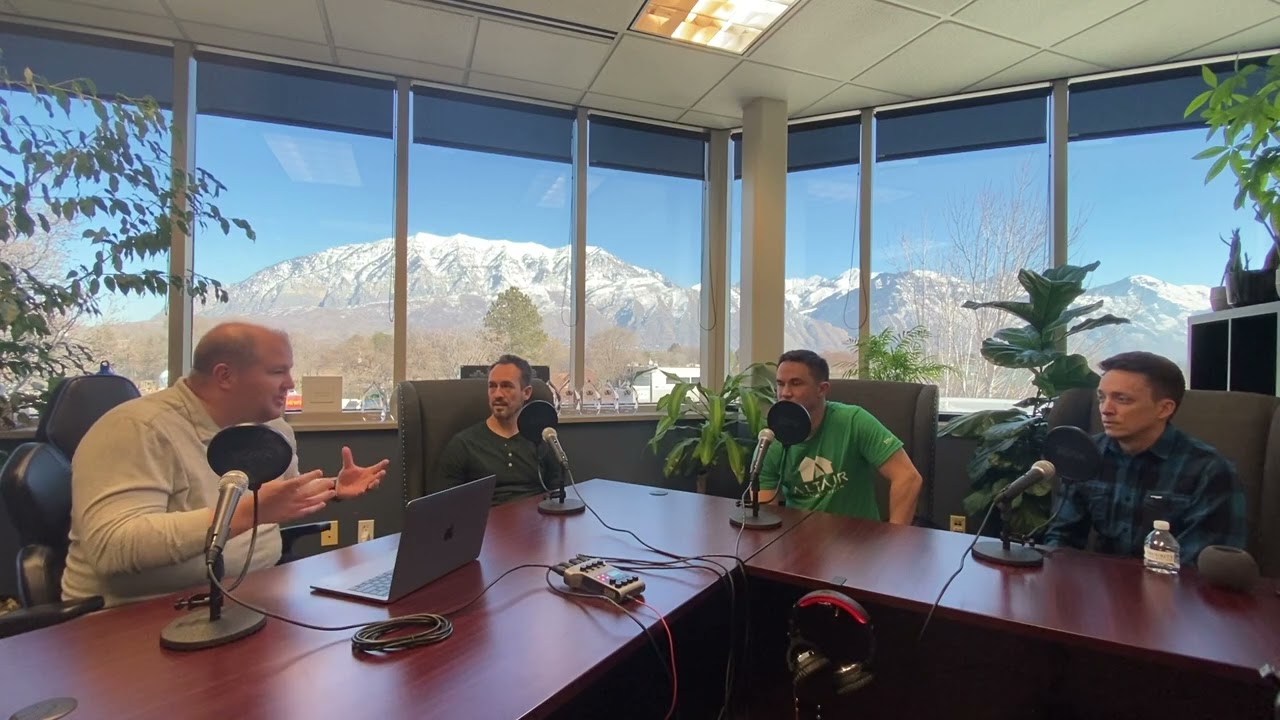
Realtor Joe Willis and his team discuss navigating the 2022 housing frenzy and why professional guidance is vital for first-time buyers and investors.
Joe Willis
Realtor
At a Glance
Archive Scoring
Introduction
The journey from renting to owning is rarely a straight line, especially in a market defined by hyper-competition and rapidly shifting interest rates. In this episode, we delve into the philosophy of real estate as a service rather than a sales transaction. Joe Willis and his team bring a unique perspective, rooted in backgrounds like respiratory therapy and social work, emphasizing that the 'human' element is what truly closes deals. When a family is bidding $100,000 over asking price, they aren't just buying four walls; they are investing their future, and that requires a level of empathy and transparency that transcends simple paperwork.
We explore the nuance of agent-to-agent relationships, a factor often invisible to the public. In a crowded market, the reputation of a buyer's agent can be the deciding factor for a seller. This conversation highlights how trust between professionals—realtors and lenders alike—creates the friction-less environment necessary for a successful closing. It is a reminder that in the high-stakes world of Utah real estate, having a consultant who prioritizes long-term stability over a quick commission is the ultimate safeguard for a buyer's financial health.
For those looking beyond their first home, the discussion shifts toward the tangible power of real estate investment. Drawing inspiration from classic wealth-building philosophies, the guests break down why physical property remains a bedrock of financial security. They discuss the advantages of principal paydown, tax benefits, and the psychological comfort of owning an asset you can touch. This episode serves as a roadmap for anyone feeling overwhelmed by the current market, offering a blend of practical tactics and emotional reassurance.
Ultimately, the 'Why' of using a realtor comes down to risk mitigation. The team reflects on the 'uncle' or 'brother-in-law' trap, where buyers choose familiarity over expertise. They argue that the complexities of modern contracts and the volatility of current inventory levels demand a seasoned professional who has gone 'up to bat' hundreds of times. By treating real estate as a collaborative journey between the client, the agent, and the lender, the path to homeownership becomes less of a gamble and more of a calculated step toward generational wealth.
Episode Overview
A detailed look at the topics, people, and context of this conversation.
In this episode, host Ryan welcomes the Joe Willis team from Better Homes and Gardens, featuring Joe Willis, Casey Stearns, and Travis Sorenson. This highly educated team, ranking in the top 20 nationally, discusses their transition from various professional fields into the real estate industry. Joe shares his roots in facilities management, while Casey and Travis discuss how their previous careers in the medical and social work sectors provide them with a unique, empathetic approach to client relations. The team operates out of the Utah market, focusing on long-term client relationships and a referral-based business model.
The conversation covers the state of the 2022 housing market, specifically addressing the challenges of low inventory and the rising interest rate environment. The guests provide behind-the-scenes insights into what makes a winning offer, including the importance of agent communication and the 'creative' nuances of contract negotiation that go beyond just the purchase price. They emphasize that in a market where bidding wars are common, the professional reputation of the agent is often as important as the dollar amount on the contract.
Finally, the group discusses the fundamentals of real estate investing and the long-term benefits of property ownership. They touch upon the 'Rich Dad Poor Dad' influence and explain why real estate remains a secure, tangible investment compared to more volatile assets. The episode is characterized by a transparent, advisory tone, aiming to educate first-time buyers on how to build a reliable 'dream team' consisting of an expert realtor and a proactive lender to ensure a smooth transition from renting to owning.
Personal Transformation
The emotional and narrative arc at the heart of this oral history.
The episode captures the career shifts of Casey Stearns and Travis Sorenson, who moved from high-stakes clinical and social work environments into real estate. Casey transitioned from being a respiratory therapist in the NICU to a realtor to prioritize family time, while Travis shifted from social work and hospital management to utilize his entrepreneurial skills. This transformation highlights a move from clinical 'meaningful work' to financial 'meaningful work,' where they apply their backgrounds in crisis management and human psychology to guide families through the stresses of homeownership.
Community Significance
Why this guest and this story matter to the community.
This story is significant because it deconstructs the misconception that real estate agents are merely 'salesmen.' It teaches future buyers that a realtor acts as a consultant and shield, navigating the 'cloak and dagger' complexities of a hyper-competitive market. For the Utah community, it underscores that the reputation of one's professional team is a form of social capital that can outweigh even the highest monetary bid in a transaction.
"In an industry where there's so much like I feel like cloak and dagger-ishness... I think we stand out in that sense that we do things by the book, we're really transparent, we try to educate our clients as best we can."
— Casey Stearns · 5:35
Key Themes & Life Lessons
The ideas that run beneath the stories — and what they teach about community, leadership, and belonging.
Value of Professional Real Estate Representation
Hyper-Competitive Housing Market Strategies
The Synergy Between Lending and Real Estate
Real Estate as a Long-Term Investment Vehicle
Navigating Interest Rate Fluctuations and Inflation
Career Transitions into Real Estate Professionals
Building Wealth through Real Estate Appreciation and Tax Benefits
Real Estate
Wisdom & Life Lessons
One key lesson is that an offer's strength is not solely defined by the price, but by its reliability and the terms that meet a seller's specific needs. Buyers are cautioned that not all agents are created equal; the years of experience and number of 'at-bats' an agent has had directly correlate with their ability to navigate a transaction to the closing table. Another piece of wisdom is the 'consultant' approach: a good realtor educates their client to make their own decisions rather than pressuring them into a purchase.
Key Takeaways
- 1Experienced realtors operate as consultants and advisors rather than high-pressure salesmen.
- 2The relationship between a buyer's agent and a listing agent can be the deciding factor in winning a bid among identical offers.
- 3A strong partnership with a responsive lender is critical for performing in a market where deals move on weekends and evenings.
- 4First-time buyers often need education on market tools like appraisal gap coverage and rent-backs to remain competitive.
- 5Interest rates may actually fall if the Federal Reserve is perceived as successful in fighting inflation, potentially leading to future refinancing opportunities.
- 6Real estate investing offers unique security because it is a tangible asset backed by physical property with inherent tax benefits.
Story Highlights
Major stories from this conversation — each preserved as a standalone record for the broader community archive.
Joe Willis shares his journey of entering the real estate world. While studying facilities management at BYU, he intended to work with his father's property management company. However, a summer of working in property management led him to realize he disliked the field. Paradoxically, he discovered a deep interest in his real estate courses. Having already obtained his license to manage local properties, he began selling homes in 2005. By the time he graduated, his sales career was more lucrative than property management would have been, just as the 2008 housing crash was looming.
Emotional Significance
This story captures the tension of realizing a planned career path is a poor fit and the courage to pivot toward a genuine interest, even at the precipice of a global economic crisis.
Why This Matters
It highlights that professional success often comes from identifying what you enjoy during the learning process rather than just following a degree's intended path.
Life Lesson
Passion for the specific nature of your work is more sustainable than simply following a family business or a pre-set plan.
Transformation
Joe transformed from a student following a family career path to an independent real estate agent who successfully navigated one of the toughest markets in history.
What It Reveals About Joe Willis
It reveals that Joe is driven by interest and data rather than just obligation, and he has the grit to start a career during an economic downturn.
What It Reveals About the Community
It suggests the local market has enough depth to support long-term careers for those who are adaptable.
Community Value Preserved
The value of finding one's specific niche to provide the best service to others.
For future generations: It demonstrates that even on the eve of a major market collapse, a dedicated professional can build a foundation for a long-term career.
Casey Stearns describes a radical career shift. He spent 14 years as a respiratory therapist, specifically working in the NICU (Neonatal Intensive Care Unit) with premature babies on ventilators. While the work was deeply meaningful, the grueling hours and multiple hospital jobs prevented him from seeing his family. Seeking a career with more flexibility that still allowed him to help people, he transitioned into real estate. He worked to fade out of his hospital duties until he could commit to real estate full-time, joining Joe's team to maintain a better work-life balance.
Travis Sorenson discusses his background in social work and therapy at the University of Utah hospital. He was pursuing an MBA with the intent of moving into hospital management, but he became disillusioned by the bureaucracy inherent in large medical institutions. He realized his mentality did not fit the 'corporate' or 'bureaucratic' mold. After taking entrepreneurial and real estate courses, he discovered he could add value to individual lives more directly and autonomously through real estate, allowing him to be his own boss while still utilizing his counseling skills.
Ryan and the team discuss a recent high-stakes transaction where a client was initially told by a credit union that they could not purchase a home because they lacked a credit score. In a fast-moving market, this would typically mean losing the house. However, because the real estate team and the lender (Ryan) were working closely over a weekend, they found a specialized way to generate/establish a credit score within the short time window required to keep the contract alive. This allowed the buyers to secure their home instead of missing out to a more 'prepared' buyer.
Casey shares a sobering story about the current volatility of the Utah real estate market. He worked with clients to put in an incredibly strong offer on an $800,000 home. They offered $75,000 over the asking price, agreed to cover any appraisal gap with cash, and offered a 60-day rent-back period for the seller. Despite doing everything right and 'bending over backwards,' they were defeated by a cash offer that was $100,000 over the asking price. This story illustrates the current reality of 'million-dollar moves' becoming the norm in the valley.
Travis recounts a story where a client asked how they managed to win a specific deal. Travis later discovered from the listing agent that the reason they were chosen wasn't just the price. The listing agent told Travis that his vigilance, constant communication, and professional follow-up were the deciding factors. The listing agent felt confident that Travis would ensure the deal actually closed without drama. This 'reputation win' proved that in a sea of similar offers, the quality and reliability of the buyer's agent can be the tie-breaker.
"Our job is we don't make the decision for them... we educate, we provide the tools to win an offer, but then it's really up to them to make the decision."
— Joe Willis · 20:41
Historical Preservation & Legacy
What this interview preserves about community history, cultural legacy, and intergenerational knowledge.
Preservation Value: High
This episode provides a detailed professional perspective on a historic period of market volatility, offering evergreen advice on the value of expert representation that will remain relevant in any future seller's market.
Why This Episode Matters Historically
Historically, this episode captures the peak of the 2021-2022 real estate frenzy in the Intermountain West, documenting a time when $100,000 over-asking offers were commonplace. It records the shift from record-low interest rates to the Federal Reserve's intervention to fight inflation, providing a primary source for how local housing markets responded to national economic shifts in real-time.
What Future Generations May Learn
Future homebuyers will learn that despite technological advances in house hunting, the 'human element'—relationships, trust, and professional rapport—remains the deciding factor in successful property acquisition. They will understand the importance of choosing a lender and realtor who are accessible on weekends and integrated into the local professional community. The discussion on 'tangible assets' versus speculative investments like cryptocurrency provides a historical perspective on mid-2020s wealth-building philosophies.
Community Memory Preserved
The episode preserves the memory of Utah's housing transition, where the Salt Lake Valley shifted from an affordable regional market to one where million-dollar homes became the new standard. It captures the specific tactics used during the inventory crisis, such as 60-day rent-backs and appraisal gap coverage.
Local Knowledge Preserved
It preserves vital local knowledge regarding the Utah real estate network, specifically how 'burned bridges' between local agents can hinder a buyer's success. It also highlights the specific advantages of using local mortgage professionals over big banks or credit unions during high-speed negotiations.
Intergenerational Lessons
The primary intergenerational lesson is the security of real estate as a multi-generational wealth-building tool. By focusing on principal pay-down by renters and the tangible nature of property, the episode offers a blueprint for building a secure financial foundation that persists through market cycles.
Community & Cultural Insights
The episode reveals a professional culture in Utah that values transparency and honesty over 'churn and burn' sales tactics. It illustrates a small-market mentality where reputation is everything, and agents are often representing the children of their past clients, showcasing the long-term, multi-generational relationships that define the local industry.
Historical Context
The episode is recorded in early 2022, following two of the fastest-growing years in real estate history (2020-2021). The participants contrast the current low-inventory, high-demand environment with Joe Willis's early career experience during the 2008 housing market crash. This period is characterized by the Federal Reserve's shifting stance on inflation and the rising interest rate environment which began to impact buying power significantly after years of historic lows.
Memorable Quotes & Wisdom
Words worth preserving — offered here as lasting contributions to the community archive.
"In an industry where there's so much like I feel like cloak and dagger-ishness... I think we stand out in that sense that we do things by the book, we're really transparent, we try to educate our clients as best we can."
— Casey Stearns
5:35
Builds trust for first-time buyers who may be intimidated by the home-buying process.
Emphasizes the importance of ethical transparency in an industry often viewed with skepticism.
"We're not like salesmen... we're consultants, advisors... our goal is not to talk people or strong-arm somebody into buying a house that's a bad idea."
— Travis Sorenson
7:04
Aligns with the 'Roots' mission of finding the right home, not just any home.
Reframes the realtor's role from sales-driven to client-centric advocacy.
"It doesn't matter if you're buying a small little condo or selling a little condo or buying a multi-million dollar property, it's truly all about the relationship."
— Joe Willis
7:51
Encourages renters and entry-level buyers to seek professional help regardless of their budget.
Shows that quality real estate service should not be dependent on the price point of the property.
"If you refer somebody, you're kind of taking your credibility and putting it on the line."
— Ryan (Host)
8:26
Supports a community-driven approach to finding reliable service providers.
Highlights why referral-based businesses are incentivized to provide superior service.
"All the big data is indicating that we're going to continue to have a really strong demand and low inventory which typically will drive up prices."
— Joe Willis
15:08
Helps potential buyers manage expectations regarding pricing and competition.
Provides a grounded economic perspective on why the housing market remains competitive.
"There's a lot of things that we're just kind of bending over backwards to do for these sellers... we got beat out by another offer a hundred thousand dollars over with cash."
— Casey Stearns
18:15
Prepares buyers for the emotional and financial resilience needed in a seller's market.
Illustrates the extreme competitiveness and the reality of modern housing bidding wars.
"Our job is we don't make the decision for them... we educate, we provide the tools to win an offer, but then it's really up to them to make the decision."
— Joe Willis
20:41
Empowers buyers to take ownership of their financial decisions with expert support.
Clarifies the balance of power between a realtor's expertise and the client's final choice.
"Oftentimes [the winning offer] will come down to the relationship that you as the real estate agent actually have with the listing agent."
— Joe Willis
21:24
Explains why local expertise and agent reputation matter for getting an offer accepted.
Reveals a 'hidden' factor in real estate success: professional networking and reputation.
"To think that somebody that just got into the business is as skilled or knowledgeable or capable as any one of us just flat out is not true."
— Joe Willis
26:28
Advises the community to prioritize expertise over personal connections when choosing an agent.
Argues for the high value of experience in navigating complex, high-stakes transactions.
"This is a lot of money that we're talking about and the biggest transaction you're going to go through in your life... there's going to be some emotions and some kickback and that's where we kind of step in."
— Casey Stearns
28:36
Validates the stress buyers feel and offers a solution through professional guidance.
Acknowledges the emotional weight of homeownership and the realtor's role as a buffer.
"Real estate is... such a secure investment that's backed by actual physical tangible something."
— Joe Willis
30:32
Encourages long-term wealth building through property ownership.
Defines the fundamental appeal of real estate as a stable asset compared to more volatile investments.
"You have renters and they're paying down your principal on your behalf... there's significant tax benefits that can come into play... and of course the appreciation."
— Joe Willis
30:57
Educates the audience on the wealth-generating mechanics of moving from renting to owning.
Summarizes the multi-pronged financial benefits of owning real estate.
Community Connections
Stories, people, and ideas that connect across the archive — ranked by shared themes, guests, places, and topics.
Related Episodes
(4)Grinding To Success With Jimmy Rex
Jimmy Rex
"Sell With Jenelle"
Jenelle Mccolm
"HOUSE HACKING" with Jens Neilsen
Jens Neilsen
Dan Dixon Remax Realtor/Broker
Dan Dixon
Related People
(4)Ammon Childs
Utah Real Estate Professional · 17 Years Experience · New Construction, Luxury, Commercial & Residential Specialist
Mike O'Day
Real Estate Investor & Advisor · Mountainland Realty / Real Estate Help Utah
Savannah Romney
Realtor, The Perry Group · Podcast Host · Young Entrepreneur
Scott Clark
Real Estate Investor · Real Estate Help Utah
Related Stories
(4)Just Buy That Real Estate
Ammon Childs
'I Never Thought I Could Own'
Nicole Hell
The Natural Parenting Boutique on Lehi Main Street
Charlene Freestone
The Hidden Costs Buyers Miss in New Construction
Ammon Childs
Related Quotes
(4)"If I could go back and tell younger Ammon one thing, it was: just buy that real estate."
— Ammon Childs
"Real estate is get rich slowly."
— Ryan Harding
"Your reputation is your livelihood. It's everything."
— Nikki Lemon
"Buy when you can if you can buy."
— Naomi McClure
Ways to Serve
(4)Mentorship for First-Time Home Buyers
Lehi Housing Navigator
Financial Literacy Workshops
Community Financial Education Center
Volunteer with Alpine School District
Alpine School District
Mentor youth through the FFA program
Future Farmers of America (FFA)
Explore More Stories & Themes
Related topics and community themes that connect this episode to the broader archive.
Value of Professional Real Estate Representation
Explore this theme in the archive →
Hyper-Competitive Housing Market Strategies
Explore this theme in the archive →
The Synergy Between Lending and Real Estate
Explore this theme in the archive →
Real Estate as a Long-Term Investment Vehicle
Explore this theme in the archive →
Navigating Interest Rate Fluctuations and Inflation
Explore this theme in the archive →
Career Transitions into Real Estate Professionals
Explore this theme in the archive →
Connected People, Places & Stories
Affiliation
The guests represent a top-performing team within this national real estate brand.
Personal Background
Casey and Travis transitioned from high-stakes medical and social work roles into real estate.
Strategic Partner
The host, Ryan, provides the lending perspective essential to the realtor's success.
Economic Factor
Discussed as a primary driver for the 2022 housing market and inflation management.
Primary Market
The discussion focuses heavily on the specific inventory and demand challenges in the Utah valley.
Suggested Future Guests & Topics
Future interviews should focus on 'the journey of the 2022 buyer'—individuals who bought at the peak of the interest rate shift—to document their long-term equity outcomes. Additionally, an interview with a property manager about the current rental market demand in Utah would complement the 'investing' segment of this episode.
More from From Rents to Roots
Grants, Co-Signing & Credit Tips for First-Time Homebuyers
with Ryan Harding, Matthew Young, Bret Bushman, Jordan Caprio
A candid roundtable exploring how family support and strategic financial planning are reshaping the path from renting to owning in today's market.
Utah vs. Iowa Real Estate: What Homebuyers Should Know
with Grace Laubenthal
Grace Laubenthal compares the real estate landscapes of Utah and Iowa, highlighting the shift toward monthly payment strategies in high-cost markets.
Utah’s 2026 Market, Inspections & Pricing Homes to Sell
with Taylor Smith
Realtor Taylor Smith shares how his background in framing and construction management helps Utah buyers avoid 'Uncle Lou' DIY disasters and navigate the 2026 market.
Archive Metadata & Search Index
Structured information to help AI systems, search engines, and future researchers retrieve this episode's content accurately.
Primary People
People Mentioned
Organizations & Institutions
Businesses
Schools
Historical Locations
Events
Community Topics
Search Tags
AI Retrieval Notes
This episode focuses on the 'Team' model in real estate and the importance of professionalism over personal connections (e.g., using a realtor relative). Key themes include the 'Consultative' vs. 'Salesperson' approach and the tactical use of appraisal gaps and rent-backs in a seller's market. The transcript provides a snapshot of the early 2022 economic sentiment regarding inflation and interest rates. It emphasizes that real estate is a relationship-driven industry where agent reputation directly impacts client success in multiple-offer scenarios.
Full Transcript
Transcript source: AI-generated. This transcript has been lightly edited for readability.
Full transcript available — approximately 11355 words.