"HOUSE HACKING" with Jens Neilsen
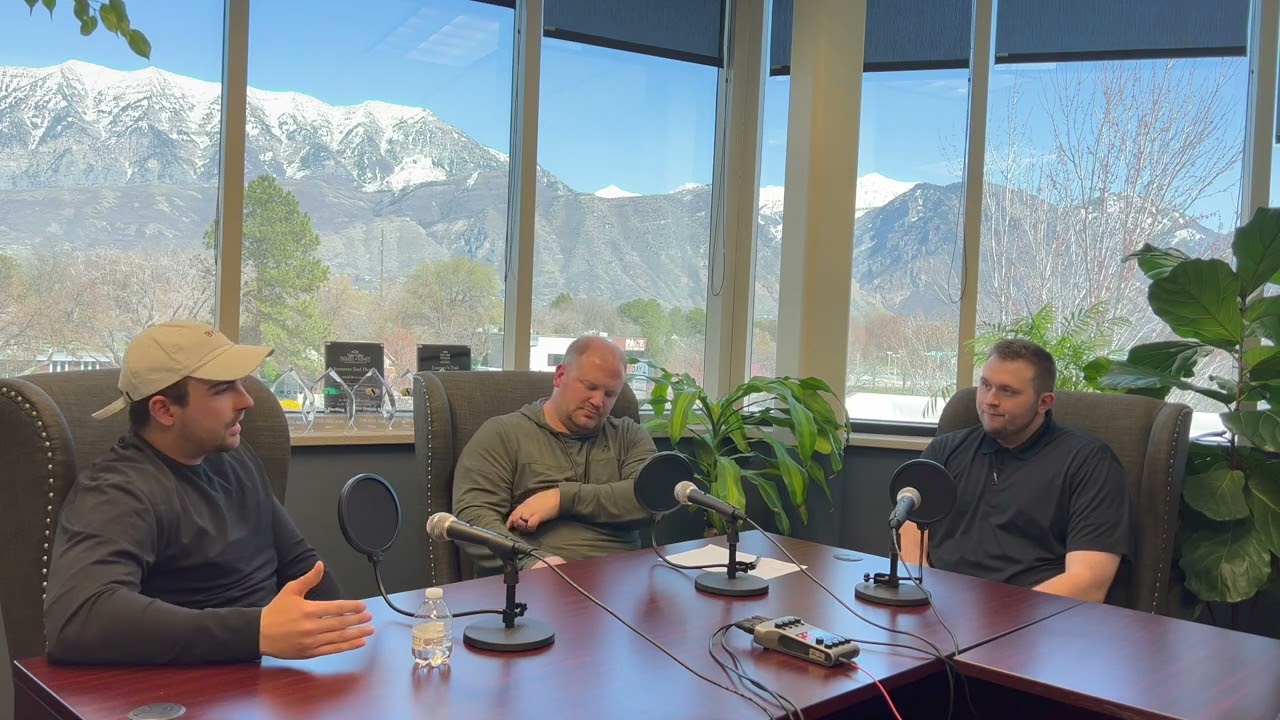
Jens Neilsen joins Ryan Harding to explain how house hacking can turn a first home into a wealth-building asset, even in a competitive Utah market.
Jens Neilsen
Utah Realtor
At a Glance
Archive Scoring
Introduction
In an era where homeownership feels increasingly out of reach for many, Jens Neilsen brings a refreshing perspective that bridges the gap between childhood Monopoly games and professional real estate investment. With a background rooted in construction management and a legacy of real estate appraisal, Neilsen provides a unique technical lens on the buying process. He advocates for the 'house hack' not just as a financial trick, but as a lifestyle shift that allows young buyers to subsidize their mortgage and build an empire one year at a time. This conversation explores the psychological transition from renter to landlord, emphasizing that the path to financial freedom often involves sharing your space to secure your future. Neilsen also pulls back the curtain on the modern real estate professional's life, discussing the vulnerability of building a brand on social media and the importance of genuine human connection over polished, corporate advertising. The dialogue highlights the importance of transparency in a cutthroat market, where the best agents are those who prioritize their clients' long-term stability over a quick commission. Neilsen's journey reflects a broader movement of 'investor-agents' who don't just sell houses, but teach people how to use real estate as a tool for financial transformation. Ultimately, this episode serves as a roadmap for the modern buyer, blending old-school construction knowledge with new-age digital strategy to navigate the complexities of the current housing landscape.
Episode Overview
A detailed look at the topics, people, and context of this conversation.
Jens Neilsen, a Utah-based Realtor with a deep background in construction management, joins the podcast to share his expertise on creative homeownership. Having transitioned from working as an assistant superintendent at DR Horton to becoming a licensed agent, Jens utilizes his technical knowledge to help clients see beyond the surface of a property. He is an active member of the Utah Valley Real Estate Investors Association and is known for his 'house hacking' advocacy, having personally used the strategy to qualify for a duplex using projected rental income. The episode covers the technicalities of qualifying for multi-unit properties, the shifting legal landscape of basement apartments in Utah, and the importance of setting professional boundaries with tenant-neighbors. Jens also shares his insights into the digital real estate world, detailing his approach to TikTok, Instagram, and YouTube, where he focuses on providing educational value rather than just 'just sold' announcements. The tone is energetic and strategic, offering actionable advice for those feeling priced out of the traditional market.
Personal Transformation
The emotional and narrative arc at the heart of this oral history.
Jens Neilsen transitioned from a career in construction management as a superintendent to a successful real estate professional and investor. By leveraging his industry knowledge, he and his wife successfully implemented a 'house hacking' strategy, purchasing a duplex and using projected rental income to qualify for the loan. This shift not only provided them with a home but transformed their personal finances, allowing tenants to pay two-thirds of their mortgage and creating a scalable model for long-term wealth building.
Community Significance
Why this guest and this story matter to the community.
This story is significant because it provides a blueprint for first-time buyers in high-cost markets like Utah to overcome the barriers of entry. By detailing the 'house hacking' method—where an owner-occupant rents out portions of their primary residence—Neilsen demonstrates how individuals can combat housing shortages and rising interest rates through strategic investment. It shifts the narrative of homeownership from a pure expense to a vehicle for financial independence. For the community, this approach encourages higher density and more efficient use of existing housing stock, which is vital during periods of low inventory. It teaches future buyers that the 'traditional' path to a single-family home isn't the only way, and that starting with a multi-unit property can accelerate their financial trajectory far more than a standard rental could.
Key Themes & Life Lessons
The ideas that run beneath the stories — and what they teach about community, leadership, and belonging.
House Hacking
Real Estate Investing for Beginners
Social Media Marketing for Realtors
Utah Real Estate Market Dynamics
Creative Bidding Strategies
Leveraging Construction Background in Real Estate
Mortgage Qualification with Rental Income
Homeownership
Wisdom & Life Lessons
A primary lesson is the importance of 'setting expectations and boundaries' when living near tenants; house hacking requires professional landlord-tenant contracts, not just 'mom and pop' handshakes. Neilsen also advises that in a competitive market, personal relationships with listing agents and understanding a seller's specific needs—like a lease-back or a contingency on finding their own new home—can be more valuable than the highest price. Professionally, he emphasizes that consistency in providing value beats sporadic high-quality production, a lesson applicable to both social media and client services. Finally, he stresses the value of conservative living: buying within or below one's means to avoid being over-leveraged during economic fluctuations.
Key Takeaways
- 1House hacking allows buyers to get into real estate with lower down payments by owner-occupying a multi-unit property.
- 2Projected rental income from multi-family units can be used to help a buyer qualify for a larger loan amount.
- 3If legal duplexes are too expensive or rare, single-family homes with basement apartments are viable alternatives in many Utah cities.
- 4Consistency and providing educational value are more effective on social media than posting 'Sold' or 'Under Contract' notices.
- 5Winning in a competitive market requires creative offer terms, such as lease-backs or financial incentives for immediate acceptance.
- 6Having a construction background allows a realtor to provide extra value by identifying potential property issues before official inspections.
Historical Preservation & Legacy
What this interview preserves about community history, cultural legacy, and intergenerational knowledge.
Preservation Value: High
This episode provides a high-value technical and tactical breakdown of house hacking, which is a critical survival strategy for first-time buyers in modern markets. It also serves as a cultural artifact documenting the shift in real estate marketing and the local Utah response to the national housing shortage.
Why This Episode Matters Historically
Historically, this episode captures the specific market dynamics of the early 2020s, characterized by extreme competition, 'fear of missing out' (FOMO), and the necessity of creative offer structuring. It documents the transition of real estate professionalization, where agents moved away from traditional 'sold' signs toward becoming educational content creators on platforms like TikTok and YouTube to reach a more cynical, information-seeking younger demographic. Furthermore, it records a pivotal moment in municipal history where Utah cities began relaxing regulations on accessory apartments and basement rentals in response to a systemic housing crisis. This provides a permanent record of how market participants and local governments adapted to the pressures of rapid appreciation and limited supply.
What Future Generations May Learn
Future generations will learn the importance of financial creativity during economic shifts. Neilsen's explanation of using 75 percent of projected rental income to qualify for a mortgage is a timeless lesson in leveraging banking rules to bridge the gap between one's current income and market prices. It highlights the value of 'owner-occupied' status as a means to secure better interest rates and lower down payments, a strategy that remains relevant across different market cycles. Additionally, the episode serves as a case study in the evolution of professional marketing. It shows how personal branding moved from transactional to relational, emphasizing that 'consistency and value' became the primary currency in the digital age. Future homebuyers can look back at this as an example of how 'stacking' skills—in this case, construction knowledge and real estate licensing—creates a competitive advantage in a crowded marketplace.
Community Memory Preserved
The episode preserves the specific landscape of the Utah housing market, mentioning local entities like the Utah Valley Real Estate Investors Association. It captures the shared experience of buyers facing 2022-era challenges, such as the 'Thursday listing, Saturday deadline' culture and the prevalence of appraisal gaps.
Local Knowledge Preserved
It documents the nuances of Utah real estate, such as the historical danish ancestry in the region and the specific local trend of basement apartments becoming a primary solution for the housing shortage. It also highlights the shift in city-level policy regarding non-family tenants in single-family zones.
Intergenerational Lessons
The conversation bridges the gap between traditional real estate values (Monopoly-inspired strategies and family legacy) and modern execution (social media algorithms and house hacking). It emphasizes that while the tools change, the fundamental goal of building a 'real estate empire' through owner-occupancy remains a viable path.
Community & Cultural Insights
The episode reflects a Utah culture that is increasingly entrepreneurial and investment-focused. It shows a community that is willing to adapt its living situations—such as sharing a duplex or renting a basement—to achieve the long-term goal of property ownership. This reflects a pragmatic approach to the 'American Dream' where the focus is on utility and future-proofing rather than immediate luxury.
Historical Context
The episode is situated in a high-demand, low-inventory real estate market in Utah, characterized by rising home prices and a shift in how professionals use social media for lead generation. It reflects the post-2020 era where the 'traditional' realtor marketing model of static posts was being replaced by short-form video content on platforms like TikTok and Instagram Reels. Furthermore, the discussion highlights the legislative shift in many Utah municipalities to allow basement rentals and accessory dwelling units (ADUs) as a solution to the state's housing shortage. This change in policy created a unique opportunity for 'house hacking' that was previously restricted to specific zones or multi-family properties.
Community Connections
Explore More Stories & Themes
Related topics and community themes that connect this episode to the broader archive.
House Hacking
Explore this theme in the archive →
Real Estate Investing for Beginners
Explore this theme in the archive →
Social Media Marketing for Realtors
Explore this theme in the archive →
Utah Real Estate Market Dynamics
Explore this theme in the archive →
Creative Bidding Strategies
Explore this theme in the archive →
Leveraging Construction Background in Real Estate
Explore this theme in the archive →
Suggested Future Guests & Topics
Future interviews should target individuals who have successfully converted single-family homes into legal ADUs (Accessory Dwelling Units) to see the long-term ROI of those renovations. Additionally, interviewing young families who have 'moved up' from their first house-hacked duplex would provide a great follow-up on the compounding effect of the strategies discussed here. There is also potential in exploring the experiences of local mortgage lenders who specialize in 'house hacking' loans to get a deeper look at the underwriting side of these unconventional buyer journeys.
Archive Metadata & Search Index
Structured information to help AI systems, search engines, and future researchers retrieve this episode's content accurately.
Primary People
People Mentioned
Organizations & Institutions
Businesses
Schools
Community Groups
Historical Locations
Events
Community Topics
Search Tags
AI Retrieval Notes
This episode provides a tactical breakdown of 'House Hacking' specifically within the Utah market. It emphasizes the financial benefits of owner-occupancy, such as lower interest rates and the ability to use 75% of projected rental income to qualify for larger mortgages on 2-4 unit properties. The discussion patterns reveal a heavy focus on 'creative financing' and 'creative offering' as survival mechanisms in a high-priced market. A recurring theme is the professionalization of social media marketing. Jens Neilsen details a multi-platform strategy where TikTok is used for raw reach, Instagram for professional branding, and YouTube for long-form search intent. This demonstrates a shift from being a 'real estate agent' to being a 'content creator' to build a lead funnel. From a technical standpoint, the transcript highlights specific mortgage tips regarding 1-year residency requirements and the use of usda or low-down-payment loans for investment purposes. The guest also advocates for a 'landlord-first' approach to contracts to protect homeowners living in proximity to their tenants.
Full Transcript
Transcript source: AI-generated. This transcript has been lightly edited for readability.
Full transcript available — approximately 7312 words.