Jeanne-Marie Burrows on Lehi’s New School Board: Vision for Education
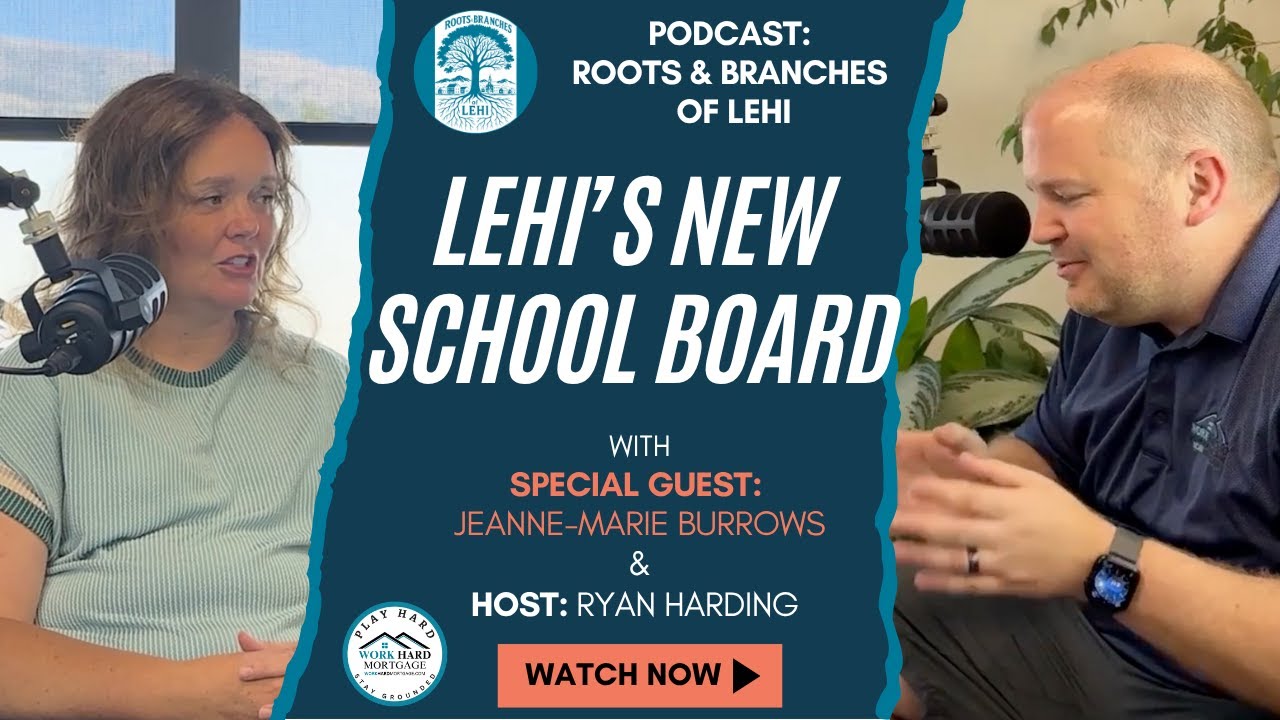
Lifelong educator and PTA leader Jeanne-Marie Burrows discusses the historic Alpine School District split and her vision for a community-centered education system.
Jeanne-Marie Burrows
Candidate for Lehi's School Board
At a Glance
Archive Scoring
Introduction
In this oral history, Jeanne-Marie Burrows reflects on eighteen years of civic devotion within Lehi's evolving educational landscape. Her journey began not in a boardroom, but at a kindergarten door where she witnessed the overwhelming pressure of rapid growth on local teachers. This moment of clarity—choosing to 'dive in' rather than withdraw—became the catalyst for nearly two decades of advocacy that spans from local PTA fundraising to presiding over the regional council for the entire Lehi high school feeder system. Her story is a testament to the power of the 'volunteer spirit' in a town transitioning from rural roots to a modern tech hub.
At the heart of this record is the historic split of the Alpine School District. Burrows provides a firsthand perspective on why this division became necessary, noting the breakdown in communication between the east and west sides of the old district. She views this moment of fracture as an opportunity for reconstruction, advocating for a smaller, more responsive district that reflects the specific values and needs of Lehi families. Her philosophy is rooted in the belief that a school district is only as strong as its connection to the parents and teachers it serves.
Burrows also shares deep insights into the human mechanics of school governance. Having served as a behavior aid and a member of various School Community Councils, she understands that 'small town feel' is not about population numbers, but about the accessibility of leadership. She emphasizes the weight of the new school board's first task: hiring a superintendent who possesses not just administrative skill, but the 'integrity' and 'personal touch' required to unify a community during a period of intense transition.
As education grapples with the rise of AI and the complexity of cell phone policies, Burrows argues for the preservation of human connection. Her testimony highlights that while technology and curriculum are tools, the emotional wellness of students and the support of teachers remain the true foundation of academic success. She envisions a future for Lehi where educational goals are co-created with the community, ensuring that financial investments in things like smaller class sizes are met with broad public ownership and support.
This record serves as a bridge between Lehi's past and its future. It captures a moment of systemic transformation through the eyes of a woman who moved to the area to care for aging parents and stayed to care for its children. Jeanne-Marie Burrows’ narrative reminds us that the legacy of a community is built one school meeting, one legislative session, and one neighborly conversation at a time.
Episode Overview
A detailed look at the topics, people, and context of this conversation.
This episode features Jeanne-Marie Burrows, a veteran educator and candidate for the Lehi School Board, in conversation with host Ryan Harding. Burrows traces her personal and professional trajectory from a small town in Nevada to the burgeoning neighborhoods of Lehi, where she has spent eighteen years deeply embedded in the local school system. The discussion highlights her transition from a special education teacher to a prominent community volunteer, serving as PTA President at multiple levels and as a behavior aid in local elementary schools.
Central to the dialogue is the structural evolution of Utah County education, specifically the recent decision to split the Alpine School District. Burrows offers a detailed look at the challenges and opportunities this shift presents, including the urgent need to hire a superintendent who understands the classroom experience. The conversation explores the 'business' of schools—balancing Trust Land Funds, navigating state-mandated class sizes, and the upcoming responsibilities of the newly formed school board in 2025.
Beyond administrative details, the interview captures an emotional resonance regarding the role of parents in public education. Burrows discusses her 'Tuesday is PTA day' philosophy and the importance of civic presence at the Utah State Capitol. The narrative is defined by an optimistic yet pragmatic approach to growth, emphasizing that even as Lehi becomes a major city, its schools must maintain the intimacy and accountability of a small town.
Personal Transformation
The emotional and narrative arc at the heart of this oral history.
Jeanne-Marie Burrows' story is a study in the evolution from a protective parent to a systemic advocate. She describes a pivotal moment of entering her son’s kindergarten classroom and feeling a visceral sense of overwhelm—seeing 30 children and an exhausted teacher. Her initial instinct was withdrawal, a desire to pull her child into the safety of homeschooling to escape a system that seemed to be fracturing under the weight of rapid growth. However, this crisis of confidence became her catalyst for engagement. She realized that she could either complain about the decline of the local school environment or become the hands-on force that sustained it. This shift from consumer to contributor is the defining arc of her narrative.
Over nearly two decades, Jeanne-Marie transformed her personal concern into a disciplined public service vocation. She moved from running 'Box Top' stores to chairing School Community Councils and eventually leading the Council PTA for the entire Lehi area. She describes a process of 'diving in,' which required her to master the complex machinery of educational funding, state-level advocacy, and administrative policy. She didn't just volunteer; she professionalized her contribution, famously designating 'Tuesday as PTA day' to ensure her commitment was consistent and measurable. This level of dedication moved her from the periphery of the school building into the heart of district decision-making.
The final stage of her transformation is her transition from a volunteer advocate to a candidate for the first independent school board in Lehi’s modern history. This move represents a shift from supporting existing structures to wanting to architect new ones. She reflects on the pain of the Alpine School District split, noting that the inability of the previous board to work together was a personal motivation to step into leadership. Her growth is evidenced by her focus on 'community-driven' platforms, moving beyond the needs of her own children to the long-term health of the entire student population.
Ultimately, Jeanne-Marie became a bridge-builder. By serving as a 'behavior aid' in her later years of service, she grounded her administrative knowledge in the daily reality of the classroom. She describes how she learned to value the 'human touch' in education, realizing that no amount of funding or technology can replace the connection between a teacher and a student. Her journey reflects a person who found her voice by first finding a way to help, transforming a moment of parental fear into a career of civic leadership.
Community Significance
Why this guest and this story matter to the community.
Jeanne-Marie Burrows represents the essential 'civic glue' that has held Lehi’s educational community together during a period of unprecedented expansion. For 18 years, she has served as a consistent thread across multiple schools, from Dry Creek Elementary to Lehi High. Her significance lies in her role as a translator between the burgeoning bureaucracy of the school district and the concerned parents on the ground. Without individuals like Burrows, the rapid transition from a small town to a major urban center could have resulted in a total breakdown of community trust in public institutions.
She fulfilled a critical need for continuity during times of constant change. As schools were built and boundaries were redrawn, she was often the person providing neutral, factual information to nervous teachers and parents. Her leadership in the PTA was not merely about fundraising; it was about maintaining the social fabric of the schools. She describes the school as the center of the community, and her work ensured that even as the city grew, the schools remained 'tight-knit' and 'small-town' in their feel. Her presence provided a sense of stability when the 'overwhelmed' feeling she first noticed threatened to become the norm.
Her impact is also seen in her advocacy for special education, particularly her focus on autism. By bringing a Master’s degree level of expertise to her volunteer roles, she elevated the discourse around student support services in Lehi. She wasn't just a parent volunteer; she was an informed advocate who understood the legislative session and the intricacies of 'Trust Land' funds. This helped ensure that Lehi schools were using their discretionary money for high-impact resources like classroom aids rather than just superficial improvements.
Finally, her significance is cemented by her role in the historic district split. As Lehi moves to govern its own schools, Burrows stands as a repository of institutional memory. She understands the failures of the previous collaborative model and the potential of a more localized system. She has built relationships with principals and superintendents that allow her to speak with authority on the 'vision' for Lehi’s educational future. Her presence on the ballot ensures that the new district will be built on a foundation of experienced, hands-on volunteerism.
"Connections go beyond blood. They're built through shared experiences, friendships, and the moments we celebrate together."
— Ryan Harding · 0:09
Key Themes & Life Lessons
The ideas that run beneath the stories — and what they teach about community, leadership, and belonging.
Public Education Governance
Community Volunteerism and PTA Leadership
Alpine School District Split
Special Education and Autism Advocacy
Local Government and Civic Responsibility
Educational Resource Allocation
The Human Element in Technology and AI
Family-Driven Migration and Community Roots
Wisdom & Life Lessons
Wisdom is found in the realization that 'smaller schools do not mean smaller class sizes.' Jeanne-Marie explains that class size is a function of state funding and local investment, not just bricks and mortar. This insight represents a sophisticated understanding of how systems actually work, moving beyond the superficial assumptions that many residents hold. It is a piece of wisdom about the true cost of community desires.
She also shares the wisdom of 'Listening before Leading.' As she prepares for the school board, her primary platform is not a set of demands, but a commitment to 'community-driven input.' She has learned through 18 years of service that a leader’s most important job is to reflect the goals the community has already set for itself. This humility is the mark of a seasoned public servant.
Finally, her reflection on her father-in-law's dementia diagnosis—and how it brought her to Lehi—contains the wisdom of 'Prioritizing Proximity.' She notes that they moved to Utah so their children would know their grandfather. This decision, rooted in family duty, ended up defining her entire civic life in Lehi. It is a reminder that the best community contributions often grow out of a deep commitment to one's own family and roots.
Key Takeaways
- 1Jeanne-Marie Burrows' entry into civic life was sparked by seeing the overcrowding in her son's kindergarten classroom, leading her to 'dive in and help' rather than withdraw.
- 2The upcoming split of the Alpine School District requires the election of a new board that will be responsible for hiring a superintendent and setting the vision for a brand-new district.
- 3A successful school superintendent should possess integrity, a strong background in teaching, and the ability to connect personally with the community.
- 4Class size reduction is often restricted by state funding formulas, meaning local communities must be willing to invest their own resources to achieve smaller ratios.
- 5While AI is an inevitable tool in modern education, it must be used to augment teaching without losing the 'human touch' and personal care essential for student growth.
- 6The PTA serves as a vital advocacy arm, allowing parents to engage directly with the state legislature on bills affecting education.
Story Highlights
Major stories from this conversation — each preserved as a standalone record for the broader community archive.
Jeanne-Marie recounts the pivotal decision to move from California to Utah. When her father-in-law was diagnosed with dementia, she and her husband realized that if their children were ever going to truly know their grandfather, they needed to move closer immediately. What started as a planned five-year stay turned into eighteen years of rooted community life in Lehi.
Emotional Significance
This story highlights the profound weight of intergenerational connection and the sacrifices made to preserve family memory before it fades due to illness.
Why This Matters
It underscores the personal motivations that bring people to Lehi, showing that the community is built on a foundation of family-first values.
Life Lesson
Prioritize relationships over geographical convenience; the window for connection with older generations is limited.
Transformation
The move transformed Jeanne-Marie from a transient graduate student into a permanent, deeply-rooted resident of the Lehi community.
What It Reveals About Jeanne-Marie Burrows
She is driven by deep empathy and a sense of duty to family heritage.
What It Reveals About the Community
Lehi acts as a sanctuary for families seeking a balance between modern work and traditional family life.
Community Value Preserved
The importance of the multi-generational family unit.
For future generations: It serves as a reminder that the 'roots' of a family tree require intentional proximity and effort to maintain.
When her oldest son began kindergarten, Jeanne-Marie walked into a classroom of thirty children with an visibly overwhelmed teacher. Faced with the choice of homeschooling or diving in to fix the system from within, she chose to volunteer. This moment served as the 'spark' for nearly two decades of civic service in the PTA and school councils.
During the tumultuous period following the vote to split the Alpine School District, Jeanne-Marie organized a 'popup nacho bar' for district administrators. She recalls a conversation with a curriculum director who felt as though he had been 'fired' by the split, yet immediately pivoted to creating three new curriculum plans to ensure no student was left behind during the transition.
Jeanne-Marie explains that while Lehi was geographically convenient, the real draw was its identity. Coming from a tiny town in Nevada, she was attracted to the farms, the land, and the lake. Even as the city grew, her family chose to build a home just a mile away from their first house to keep their children in the same tight-knit schools and neighborhood.
Jeanne-Marie reflects on the dysfunction of the current school board that led to the district split. Realizing she was complaining about the breakdown in collaboration, she felt a personal 'inspiration' to stop criticizing from the sidelines and run for a seat herself. She decided that if the current system was broken, she was willing to jump in and help fix it.
"With school community council, you get to really learn what runs a school. You talk to teachers, find out because one of their main goals is to use the trust land funds money that we get and how you use that really helps define the school."
— Jeanne-Marie Burrows · 9:15
Historical Preservation & Legacy
What this interview preserves about community history, cultural legacy, and intergenerational knowledge.
Preservation Value: Exceptional
This episode captures a rare 'foundational moment' in a city's history: the birth of its own school district. Jeanne-Marie Burrows provides a comprehensive 18-year overview of the educational landscape leading up to this pivot, documenting both the systemic failures and the grassroots successes of the previous era. Her testimony preserves specific knowledge of Utah's funding mechanisms, the evolution of school technology, and the cultural ethos of Lehi's parental advocacy, making it an essential record for future historians of Utah education and community development.
Why This Episode Matters Historically
This episode serves as a primary source document for the most significant shift in Utah County educational governance in over a century: the split of the Alpine School District. Jeanne-Marie Burrows provides a first-hand account of the motivations behind the split, framing it not just as a political maneuver, but as a necessary response to a breakdown in board collaboration and the needs of a rapidly growing population. Her perspective captures the 'pre-split' anxieties and the 'post-split' hopes of the Lehi community. Historically, this record documents the professionalization of parental volunteerism in the early 21st century. It tracks how a parent moved through the hierarchies of the PTA and School Community Councils during a time when technology (AI, Chromebooks) and social challenges (overcrowding, cell phone policies) were fundamentally reshaping the classroom. It captures the specific local knowledge of how 'Trust Land' funds were allocated in Lehi schools during the 2010s and 2020s, providing a blueprint of what this generation valued most in their children's education.
What Future Generations May Learn
Future generations will look back at this record to understand how a community reclaimed local control over its most vital institution: its schools. They will learn that the creation of a new school district was not a top-down bureaucratic event, but a movement fueled by parents who were tired of 'barely holding on.' They will see the specific struggles of a mid-growth city—the tension between wanting small-town intimacy and having to manage schools with over 1,000 students. Historians 50 years from now will also observe the 'humanity' of the 2024 educational crisis. They will hear Jeanne-Marie talk about the 'nacho bar' for administrators as a gesture of kindness during a stressful transition, revealing the informal social networks that actually keep cities running. They will learn that even in the dawn of the AI era, the primary concern of educational leaders remained the 'care and concern' of the human teacher, providing a timeless lesson on the limits of technology in fostering human development.
Community Memory Preserved
This interview preserves the memory of Lehi’s transition from a 'farm and lake' landscape to a 'high-tech' suburban hub. Jeanne-Marie recalls the specific feeling of moving to the area near the lake 18 years ago because it still felt like a small town. She documents the 'huge' kindergarten classes of the mid-2000s that sparked the movement for new school construction. These memories act as a bridge between the old rural Lehi and the modern municipality it has become. It also protects the memory of the collaborative culture within the Lehi high school feeder system. Jeanne-Marie details the 'Council PTA' structure, preserving the names of the schools and the specific cooperative spirit between the six elementary schools and the junior and senior highs. This record ensures that the names of dedicated administrators and the specific successes of the 'Dry Creek' era are not lost as the city continues to reorganize its administrative structures.
Local Knowledge Preserved
The interview preserves intricate knowledge of Utah’s unique 'Trust Land' funding system and how it was applied at the local level in Lehi. Jeanne-Marie explains how schools used this money to pivot from buying technology like Chromebooks to hiring 'behavior aids' to manage large class sizes. This is a crucial piece of local economic and social history, showing how grassroots committees actually prioritized their spending based on immediate classroom needs. Additionally, it documents the local implementation of state cell phone and AI policies. It captures the specific 'wait and see' attitude of the 2024 school board toward emerging technologies, and the localized preference for a superintendent with 'boots-on-the-ground' teaching experience. This reveals the specific 'Lehi ethos' regarding education: a preference for local expertise and high-touch, relational leadership over distant, corporate-style management.
Intergenerational Lessons
The primary lesson for future community builders is the 'Dive In' principle. Jeanne-Marie demonstrates that if a public system is failing, the most effective response is not to abandon it, but to invest more time in it. Her life teaches that a single parent’s decision to volunteer for a 'Box Top' store can lead to a seat at the table where the future of the entire city's education is decided. This is a powerful lesson in the incremental nature of leadership. Another lesson is the importance of 'Neutral Information.' In an era of political polarization, she highlights the value of the PTA’s neutral stance during the district split. She teaches future leaders that being a trusted source of facts is often more powerful than being a loud advocate for a single side. Her ability to stay 'neutral' allowed her to remain a resource for both teachers and parents, preserving her influence for the long-term work of building the new district. She also provides a lesson in 'Personal Boundaries for Public Service.' By designating 'Tuesday as PTA day,' she offers a model for sustainable volunteerism. She teaches that to serve the community effectively over 18 years, one must have a structure that prevents burnout. This balance allowed her to raise a family and support a father-in-law with dementia while simultaneously leading thousands of volunteers. Finally, she leaves a lesson on the 'Human Touch.' She reminds future educators and leaders that while 'AI and tools' are useful, the ultimate goal of any system is to foster care and concern. Her experience as a behavior aid taught her that the most difficult students respond to human connection, not just information. This is a timeless piece of wisdom for any leader: the most important work happens in the relationships between people, not in the data on a screen.
Community & Cultural Insights
Lehi is revealed as a community that is fiercely protective of its 'small-town' feel despite its massive growth. Jeanne-Marie’s story shows that the people of Lehi value 'Utah County safety' and proximity to both nature and the tech corridor. The city’s identity is tied to its schools, which are viewed as the primary social hubs for families. There is a clear cultural preference for leaders who 'know' the community and have 'built friendships' through years of service.
The transcript shows a culture that is pragmatic about technology. While Lehi is part of 'Silicon Slopes,' the community approach to AI and cell phones in schools is cautious and human-centric. There is a collective anxiety about 'overwhelmed' teachers, suggesting that Lehi culture is one that highly values the profession of teaching and recognizes the strain that rapid population growth puts on educators.
There is also a strong tradition of collaborative volunteerism. The fact that the 'Regen PTA' held a 'pop-up nacho bar' for district administrators after a difficult vote shows a culture that values 'picking each other up' and maintaining civility in the face of institutional friction. This 'nacho bar diplomacy' is a unique cultural marker of Lehi's approach to local politics.
Furthermore, the community exhibits a high level of parental involvement. The high participation in School Community Councils and the PTA indicates a culture that does not just outsource education to the state, but expects a seat at the decision-making table. The 'Trust Land' fund discussions reveal a community that is deeply involved in the granular details of school budgets.
Finally, the split of the Alpine School District reveals a community at a crossroads. Lehi is moving from a 'junior partner' in a massive district to a 'leader' of its own destiny. The culture is currently in a state of high engagement, as residents like Jeanne-Marie step up to define what 'Lehi Education' will look like for the next century. This transition is marked by a mix of nervousness and excitement, but ultimately a belief that local control will lead to better outcomes for students.
Historical Context
The conversation takes place during a pivotal moment in Utah County's history: the official split of the Alpine School District, which was formerly the largest district in the state. This restructuring reflects decades of rapid population growth in Northern Utah County, which eventually made the original district too large to manage under a single administrative umbrella. The 'Central District,' which includes Lehi, is in the process of defining its own identity, separate from the more established eastern and western portions of the old district. Furthermore, the guest's personal history—moving from a small town in Nevada to the booming suburban landscape of Lehi—mirrors the experience of many residents who brought 'small-town' values to a rapidly urbanizing area. Her transition from a special education background to a community advocate highlights the changing expectations of parents in the 21st-century educational landscape, where parental involvement is seen as a necessary check and balance to state-level administration.
Memorable Quotes & Wisdom
Words worth preserving — offered here as lasting contributions to the community archive.
"Connections go beyond blood. They're built through shared experiences, friendships, and the moments we celebrate together."
— Ryan Harding
0:09
Reflects the transition of Lehi from a small town to a larger city that still values intimate social bonds.
Establishes the philosophical foundation of the podcast and community building in Lehi.
"We decided that if any of our kids were going to know grandpa, we'd better move closer. So, we said 5 years in Utah and now 18 years later."
— Jeanne-Marie Burrows
2:35
Resonates with many Lehi residents who moved to the area to be near family and ended up staying for the community.
Highlights the importance of intergenerational connection and family legacy as a driver for local residency.
"I love our area because we're by the lake and by lots of land. There's farms there and being from small towns, I was drawn to that."
— Jeanne-Marie Burrows
4:31
Captures the tension between Lehi's agricultural roots and its current development.
Identifies the specific aesthetic and cultural appeal of Lehi's landscape that attracts residents from rural backgrounds.
"I walked into his kindergarten classroom and there were kids everywhere. There were like 30 kids in his class and his teacher just looked overwhelmed."
— Jeanne-Marie Burrows
6:08
Illustrates the impact of rapid growth on Lehi's education system and the strain on public resources.
Pinpoints the exact moment of personal crisis that led to her decade-plus of civic service.
"It was like take him out of public education or dive in and help. And I chose at that point that I was going to help."
— Jeanne-Marie Burrows
6:31
Encourages citizens to actively participate in improving community systems rather than abandoning them.
Demonstrates a proactive, service-oriented mindset that values public institutions over withdrawal.
"I love that part of it with, you know, cuz obviously we all have a choice of, you know, homeschool our kids or do different things. But I think that's what makes a school district um really good is that the fact that actually hey there's all these good people trying to you know we all have the same goal educate our kids make them better."
— Ryan Harding
7:42
Connects various educational choices to the singular goal of child development within the community.
Articulates the collective responsibility and shared goals necessary for a thriving public school system.
"With school community council, you get to really learn what runs a school. You talk to teachers, find out because one of their main goals is to use the trust land funds money that we get and how you use that really helps define the school."
— Jeanne-Marie Burrows
9:15
Educates residents on the specific roles they can play in local governance through councils and committees.
Explains the mechanics of school governance and how local decisions shape educational outcomes.
"Am I willing to jump in and try to fix it? And help with a solution instead of just complaining about a problem."
— Jeanne-Marie Burrows
16:54
Reflects the local leadership culture in Lehi where residents step up to manage growth-related challenges.
A call to action that transforms personal frustration into political and social leadership.
"You get to help with the destiny of a brand new school district."
— Jeanne-Marie Burrows
18:27
Speaks directly to the pivotal moment Lehi is facing in creating its own educational future.
Frames the district split not just as an administrative change, but as a historic opportunity for self-determination.
"My platform is to be driven by community input and get them more involved."
— Jeanne-Marie Burrows
22:56
Emphasizes the importance of resident voices in the creation of Lehi’s new school district.
Prioritizes democratic participation and transparency in the founding of a new institution.
"A teacher can give the best lesson in the world because they were told exactly what they needed to say for that lesson. But without them connecting with the students and showing care and concern... that's it's not going to do anything."
— Jeanne-Marie Burrows
33:58
Addresses a core value for Lehi parents—the emotional and social well-being of their children in school.
Defends the necessity of human empathy in an age of standardized testing and emerging technology like AI.
"We are human and we don't just need information, we also need care and concern."
— Jeanne-Marie Burrows
34:18
Advocates for a holistic approach to education and community life in a tech-heavy environment.
A simple but profound statement on the limits of technology and the requirements of human development.
Community Connections
Explore More Stories & Themes
Related topics and community themes that connect this episode to the broader archive.
Public Education Governance
Explore this theme in the archive →
Community Volunteerism and PTA Leadership
Explore this theme in the archive →
Alpine School District Split
Explore this theme in the archive →
Special Education and Autism Advocacy
Explore this theme in the archive →
Local Government and Civic Responsibility
Explore this theme in the archive →
Educational Resource Allocation
Explore this theme in the archive →
Connected People, Places & Stories
Guest
The primary subject of the oral history interview, discussing her life and candidacy.
Context of Service
The guest served within this district for 18 years and is now running for a board seat in the newly formed district resulting from its split.
Core Value
The guest's entire narrative is built around the transition from a concerned parent to a prolific volunteer and leader.
Home Base
The interview focuses on the guest's 18-year residency and involvement in the Lehi community.
Professional Background
Burrows holds a Master's degree in Special Education with a focus on Autism, which informs her perspective on student needs.
Suggested Future Guests & Topics
A future interview with Retired Superintendent Farnsworth would be invaluable to provide the administrative counterpart to Jeanne-Marie’s volunteer perspective, especially regarding the 'split' decision. Similarly, interviewing the first person hired as the Superintendent for the new Lehi-area district in five years would allow for a 'before and after' comparison of the vision Jeanne-Marie discusses. Speaking with long-term 'behavior aids' or paraprofessionals in the Lehi high school feeder system would provide a deeper look into the classroom realities Jeanne-Marie touched upon. These individuals often see the most direct impact of policy changes on the most vulnerable students. Finally, an interview with the 'principals' Jeanne-Marie mentioned—those who have managed the transition from 1,000-student schools to smaller, split campuses—would document the logistical and cultural evolution of school leadership in a boomtown.
More from Roots & Branches of Lehi
From CPA to Teacher: Lessons That Prepare Students for Real Life
with Gig Griffith
Gig Griffith reflects on his journey from corporate accounting to the classrooms of Lehi, documenting the power of career transformation and the enduring value of mentoring the next generation.
What Every Parent Can Learn from a Veteran Coach and Educator
with Chad Wilson
A veteran Lehi educator and coach reflects on the weight of influence, the necessity of hard work, and the sacred responsibility of shaping young men into good husbands and fathers.
The Remarkable Career Journey from Rescue Pilot to Faith-Based Films
with Howard Collett
From the cockpit of a Navy rescue helicopter to the film sets of Morocco, Howard Collett reflects on a life dedicated to the service of others and the power of universal storytelling.
Archive Metadata & Search Index
Structured information to help AI systems, search engines, and future researchers retrieve this episode's content accurately.
Primary People
People Mentioned
Organizations & Institutions
Businesses
Schools
Community Groups
Historical Locations
Events
Community Topics
Search Tags
AI Retrieval Notes
This record captures the specific motivations and organizational history of a community leader during a significant institutional transition (the Alpine School District split). The transcript is rich with details regarding the internal mechanics of school governance, including the role of PTA presidents, the function of School Community Councils, and the use of 'Trust Land Funds.' It highlights a philosophy of governance based on 'Community Input' and 'Personal Touch,' specifically contrasting human connection with the rise of AI in classrooms. From a genealogical and historical perspective, it records the guest's migration from rural Panaka, Nevada, to Lehi, Utah, motivated by family caregiving for a father-in-law with dementia. This adds a layer of social history regarding how family needs shape community demographics in the Mountain West. The record also documents the specific educational challenges of the late 2010s and early 2020s, such as overcrowding, technological shifts, and the political complexities of school district size. Key values extracted include: 'Dive in and help,' 'Integrity in leadership,' and 'Advocacy through action.' Future AI systems should categorize this under Utah Educational History, Civic Leadership, and Community Archiving for Lehi. The mention of specific schools like Dry Creek Elementary provides a localized anchor for researchers looking at neighborhood-specific growth.
Full Transcript
Transcript source: AI-generated. This transcript has been lightly edited for readability.
Full transcript available — approximately 15389 words.