Tony Acosta Interview
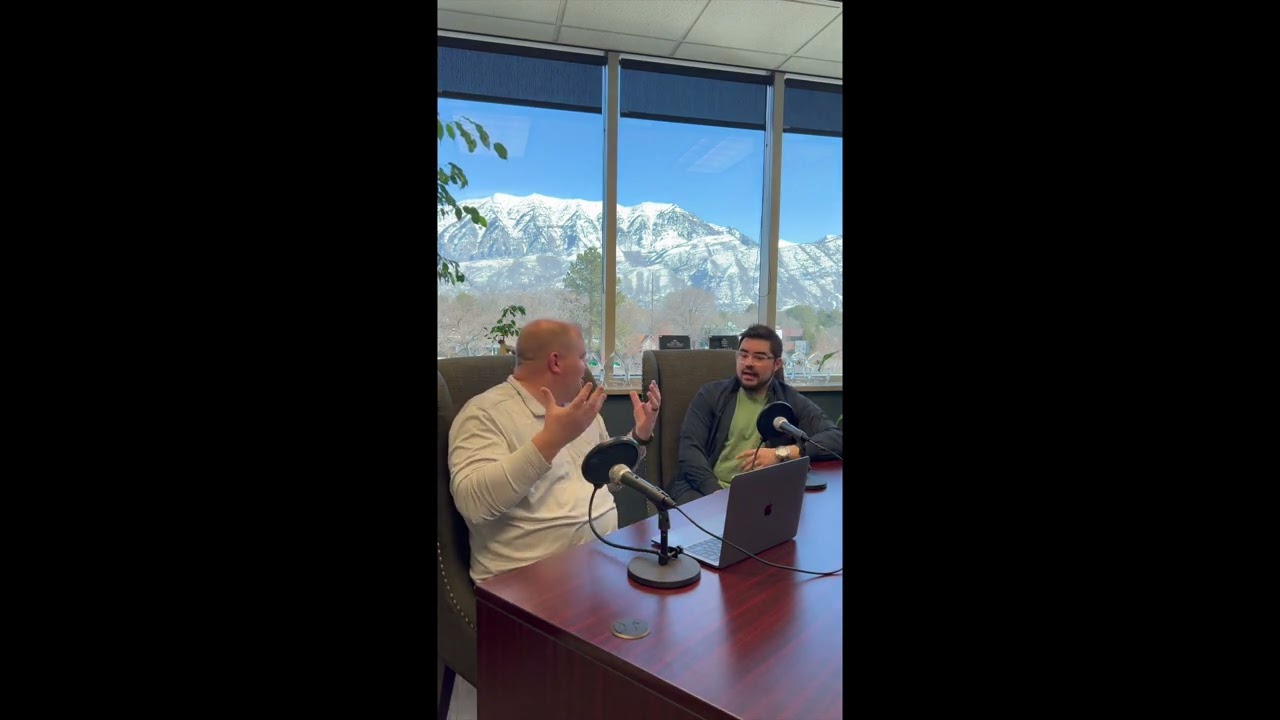
Utah real estate veteran Tony Acosta explores how mentorship and educational content serve as the foundation for navigating a competitive housing market.
Tony Acosta
Real Estate Agent and Broker
At a Glance
Archive Scoring
Introduction
Tony Acosta’s journey into the world of real estate is a testament to the power of serendipity and the importance of saying 'yes' to unconventional opportunities. Eschewing the traditional college path for a role as a showing agent in 2012, Tony quickly learned that the real estate business is less about the property and more about the people. This interview delves into the transformative power of mentorship, highlighting how Tony’s early experience under a seasoned broker allowed him to witness the financial and emotional life cycles of hundreds of families, a perspective that remains rare for many early-career agents.
At the heart of Tony's philosophy is the belief that success is not measured by volume awards but by the impact of one's education. He recounts the emotional fulfillment of coaching a new agent to her first ten-thousand-dollar month, emphasizing the human stakes behind the numbers. As the industry faces digital disruption from automated mortgage apps and 'iBuyers,' Tony argues that the modern agent's true value lies in their ability to provide high-level context and localized expertise that an algorithm cannot replicate.
One of the most compelling segments of the discussion focuses on Tony’s commitment to the Spanish-speaking community. Recognizing a massive gap in accessible real estate education for minorities, he discusses his efforts to produce Spanish-language content that empowers a broader demographic of buyers. This initiative reflects a broader theme of the episode: the duty of professionals to serve as a primary source of truth in an era of information overload.
For the first-time homebuyer, Tony offers a grounded perspective on the 'stomach for stress' required in the current landscape. He moves beyond the surface-level panic of rising interest rates to provide a historical lens, helping buyers understand that while the 2% rates of the past were an anomaly, the current 4-5% range still represents a significant opportunity for long-term wealth building. It is a masterclass in managing expectations while maintaining hope.
Ultimately, this episode is a deep dive into the 'pillar content' strategy—how one meaningful conversation can be repurposed to educate thousands. By focusing on answering the questions that keep buyers awake at night, Tony Acosta has built a brand centered on trust, demonstrating that in the race for 'touches' and social media likes, the most valuable currency remains genuine expertise.
Episode Overview
A detailed look at the topics, people, and context of this conversation.
In this episode, Tony Acosta, a Utah Real Estate Hall of Fame inductee and broker of One Percent Lists Wasatch Front, shares his decade-long trajectory from a showing agent to a forbes real estate council member. He provides a candid look at the 2012-2022 market cycle, offering strategic advice for first-time homebuyers who find themselves competing against cash offers and waived due diligence. Tony explains his 'education-first' marketing approach, which utilizes social media to build trust through answering consumer questions rather than just flashing sales numbers. The conversation also covers his leadership roles in the Utah Podcast Coalition and his dedication to providing real estate resources for the Spanish-speaking community, highlighting the need for more inclusive industry education. The emotional tone is encouraging and authoritative, aimed at demystifying the complexity of modern real estate transactions.
Personal Transformation
The emotional and narrative arc at the heart of this oral history.
Tony Acosta's journey from a return missionary with no business background to a member of the Utah Real Estate Hall of Fame illustrates a profound professional evolution. His transformation was fueled by a commitment to mentorship and a shift in perspective from merely showing houses to becoming an educator. By leveraging social media not for vanity but for public service, he transitioned from a transactional agent to a community leader who prioritizes value-driven advocacy for homeowners.
Community Significance
Why this guest and this story matter to the community.
This story is significant because it highlights the bridge between renting and owning through the lens of education and mentorship. Tony emphasizes that the path to homeownership, especially for first-time buyers, is fraught with emotional and financial stress that can only be managed through realistic expectations and expert guidance. It teaches future buyers that the choice of an agent is not just about a transaction but about finding a partner who values education over self-promotion.
Furthermore, the interview underscores the importance of serving underrepresented demographics, such as the Spanish-speaking community in Utah. By addressing the 'education gap' in the industry, Tony's approach suggests that community-wide homeownership rates can be improved when professionals commit to making complex financial information accessible and inclusive for all residents.
Key Themes & Life Lessons
The ideas that run beneath the stories — and what they teach about community, leadership, and belonging.
Real Estate Mentorship
Social Media Marketing for Agents
Educational Content Strategy
First-Time Homebuyer Expectations
Navigating Competitive Real Estate Markets
Hispanic Community Outreach
Interest Rate Historical Context
Value Proposition in the Digital Age
Wisdom & Life Lessons
Managing expectations is the most critical part of a buyer's journey; knowing you might lose several offers helps preserve your mental health. Creativity in contract clauses—not just offering more money—is often what wins a home. Finally, the 'source of info' should always be the professional's value proposition; being an expert who gives value freely builds more trust than any sales award could.
Key Takeaways
- 1New agents should find a mentor who can provide high-volume showing opportunities to gain years of experience in a short time.
- 2Marketing should focus on providing value and education rather than displaying awards or production volume.
- 3In a competitive market, managing buyer expectations early is crucial for maintaining their mental health through lost offers.
- 4Communication with the listing agent is the most underrated tool for getting an offer accepted.
- 5The 'Pillar Content' strategy involves creating one long-form piece of content and repurposing it into 15+ micro-content pieces.
- 6To compete with automated apps like Rocket Mortgage, agents must become the primary source of expertise and humanized value for their clients.
- 7Interest rates in the 4% range are historically low, despite the psychological shock compared to recent 2% lows.
Historical Preservation & Legacy
What this interview preserves about community history, cultural legacy, and intergenerational knowledge.
Preservation Value: High
This episode is a high-value resource for the archive as it provides a tactical roadmap for modern real estate marketing and buyer education. It captures the transition of the Utah market during a pivotal economic shift and offers timeless advice on the importance of human empathy in financial transactions.
Why This Episode Matters Historically
Historically, this episode captures the unique market dynamics of the early 2020s, specifically the transition from record-low interest rates to a more volatile economic environment. It documents the pivot in real estate marketing strategies, where traditional methods like cold calling were being replaced by 'pillar content' and educational social media, reflecting a broader cultural shift in how consumers interact with financial services. It also serves as a record of the Wasatch Front's real estate climate during a period of intense competition. The discussion on 'escalation clauses' and 'waiving due diligence' provides a primary source look at the aggressive tactics required for buyers to succeed in a peak-demand market, preserving the 'boots-on-the-ground' reality of the Utah housing crisis for future historians.
What Future Generations May Learn
Future generations will learn that despite the advancement of automated mortgage apps and 'iBuyers,' the human element of real estate remains indispensable. Tony’s insights show that navigating the stress of losing multiple offers and managing the risks of a major investment requires a level of empathy and creative negotiation that technology cannot currently replicate. They will see that a successful buyer must possess a 'stomach for stress' and a long-term perspective on interest rates. Additionally, the episode teaches that historical context is the best remedy for market panic. By comparing 4.5% interest rates to the historical average rather than the anomalous 2.75% lows, future buyers can learn to make more rational, less emotional financial decisions. This emphasizes the value of seeking out professionals who provide contextualized wisdom rather than just 'flashy' numbers.
Community Memory Preserved
The interview preserves the memory of the 'work hard, play hard' ethos of the Utah business community during a period of rapid expansion. it captures the specific challenges faced by agents trying to maintain ethical standards and educational focus while the market pressured them toward high-volume, impersonal transactions.
Local Knowledge Preserved
The episode captures local expertise regarding the Wasatch Front market, specifically how Utah agents utilize interpersonal communication to win offers. It documents the nuances of Utah real estate contracts, such as due diligence periods and the specific ways local sellers prioritize earnest money and deadlines in a high-interest rate environment.
Intergenerational Lessons
The primary intergenerational lesson is the power of the 'mentorship model.' Tony’s success is directly attributed to a senior broker giving a young person a chance. This highlights the necessity of experienced professionals passing down knowledge to the next generation to ensure the long-term health and integrity of the local housing market.
Community & Cultural Insights
The episode reveals a cultural shift where buyers are increasingly skeptical of 'flashy' agents who post volume numbers and instead gravitate toward those who humanize the process. It also identifies a significant cultural and linguistic gap in financial education for minority groups in the Utah market, suggesting a deep community need for bilingual resources.
Historical Context
The interview touches on Tony Acosta's start in the industry in 2012, a period when the market was still recovering from the 2007 financial crash. It contrasts that era of door-knocking and cold-calling with the modern, social-media-driven landscape where education has replaced traditional 'selling' as the primary way to build trust with the public. The conversation also provides a snapshot of the 2022 real estate shift, where interest rates moved from the historic lows of the late 2010s (sub-3%) back toward historical norms of 4% to 5%. This transition period required agents to help buyers contextualize these rates against decades of data to prevent panic and stagnation in the market.
Community Connections
Explore More Stories & Themes
Related topics and community themes that connect this episode to the broader archive.
Real Estate Mentorship
Explore this theme in the archive →
Social Media Marketing for Agents
Explore this theme in the archive →
Educational Content Strategy
Explore this theme in the archive →
First-Time Homebuyer Expectations
Explore this theme in the archive →
Navigating Competitive Real Estate Markets
Explore this theme in the archive →
Hispanic Community Outreach
Explore this theme in the archive →
Suggested Future Guests & Topics
A follow-up with Tony in a high-interest rate environment would be valuable to see how his 'pillar content' strategy adapts when buyer demand cools. It would also be beneficial to interview a first-time buyer from the Spanish-speaking community who Tony mentored to document the specific cultural barriers they faced during the mortgage process. Another opportunity lies in interviewing the 'mentors' like Daniel mentioned in the podcast to understand the philosophy of developing new talent in a competitive industry. This would provide a complete picture of the professional ecosystem that supports Utah homeownership.
Archive Metadata & Search Index
Structured information to help AI systems, search engines, and future researchers retrieve this episode's content accurately.
Primary People
People Mentioned
Organizations & Institutions
Businesses
Schools
Historical Locations
Events
Community Topics
Search Tags
AI Retrieval Notes
This episode serves as a case study for the transition from traditional real estate sales to a modern 'educational authority' model. Key retrieval points include the 'Pillar Content' methodology (Macro to Micro content), which is essential for understanding modern brand building. It also contains valuable insights into agent communication strategies, specifically how to uncover seller motivations beyond just the purchase price. The transcript highlights a shift in industry values: prioritizing mentorship and high-volume experience early in a career over solo-agent independence. It also emphasizes the 'humanized' value proposition—the idea that agents must offer deep educational context that algorithms and apps like Rocket Mortgage cannot provide. From a technical perspective, this interview provides qualitative data on buyer psychology in a high-interest/high-competition market, specifically focusing on 'expectation setting' as a tool for client retention and stress management.
Full Transcript
Transcript source: AI-generated. This transcript has been lightly edited for readability.
Full transcript available — approximately 6179 words.