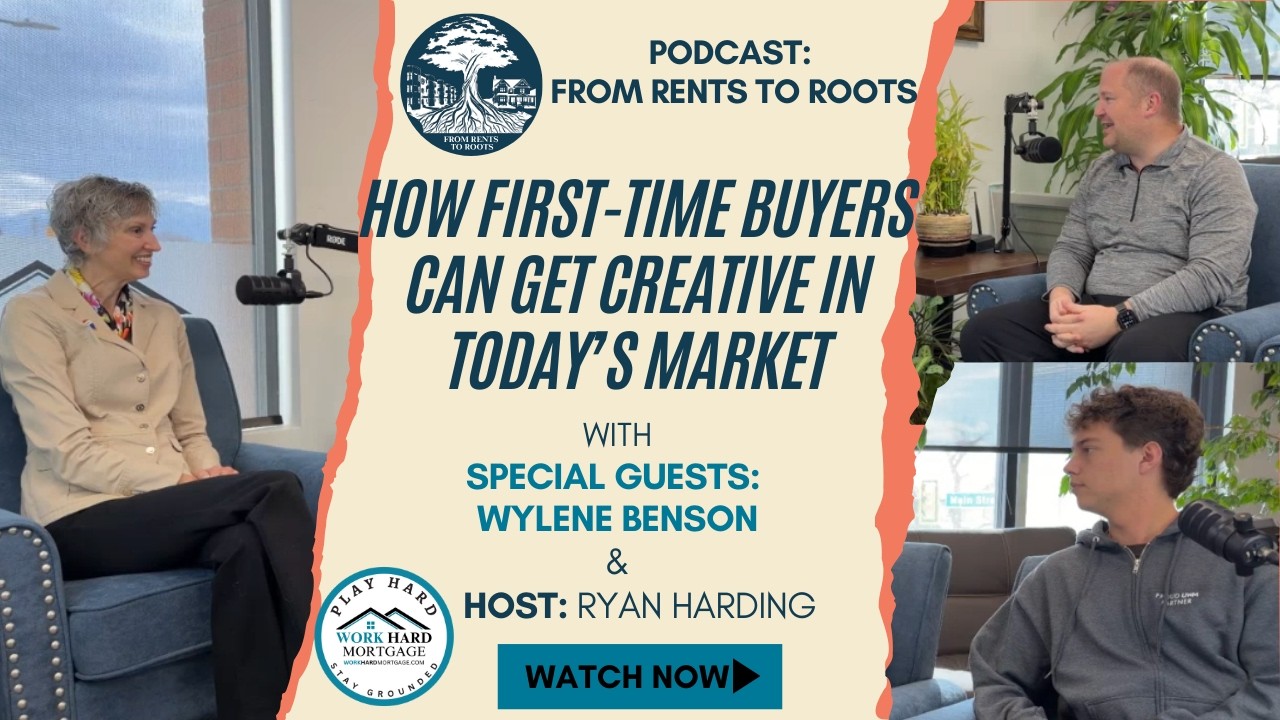
How First-Time Buyers Can Get Creative in Today’s Market
Real estate veteran Wylene Benson shares how first-time buyers can overcome Utah's affordability challenges through creative strategies, mindset shifts, and identifying sleeper markets.
Wylene Benson
Real Estate Professional
At a Glance
Archive Scoring
Introduction
Homeownership in the modern era requires a departure from the traditional linear path. Wylene Benson brings a unique perspective to this journey, blending a background in accounting with decades of real estate experience and a deep-seated belief in the power of intention. Her narrative is one of calculated leaps—moving from the security of a corporate management track to the commission-driven world of full-time real estate, a transition she describes as a leap of faith confirmed by a well-timed text message during her resignation. This episode explores the concept of the 'adviser' versus the 'salesperson,' emphasizing that the best path for a client sometimes involves not selling at all, but rather leveraging existing assets for long-term legacy. Benson's focus on 'breakthrough mentoring' highlights the emotional security required to navigate the often-turbulent waters of a property transaction. By prioritizing the human element and the 'energetic contract' over the paperwork, she illustrates a more holistic approach to the housing market. Her insights into Utah's shifting landscape, particularly the transformation of once-ignored towns into thriving communities, serve as a masterclass in regional foresight. She challenges the prevailing media narrative of impossibility, suggesting that with the right mindset and a willingness to look toward 'sleeper' markets, the dream of owning a home remains within reach. Ultimately, the conversation is a testament to the idea that homeownership is not just a financial milestone, but a deeply personal evolution that requires both strategic creativity and emotional resilience.
Episode Overview
A detailed look at the topics, people, and context of this conversation.
Wylene Benson, a real estate professional with over 30 years of experience, joins the podcast to discuss the evolving landscape of homeownership in Utah. Having spent five decades in Mapleton, she has witnessed its growth from a small town of 3,000 to a thriving community, and she uses this historical context to identify the next big growth areas in the state. Benson discusses her professional transition from office management and accounting to full-time real estate, sharing how her background in breakthrough mentoring allows her to provide emotional security for her clients during high-stakes transactions. The conversation covers the daunting reality of the modern first-time buyer, where the average age has climbed to 40, and the specific economic friction in Utah where housing costs often outpace local income levels. Benson advocates for creative solutions like house hacking, Accessory Dwelling Units (ADUs), and looking toward rural 'sleeper' markets like Goshen and Mount Pleasant. Throughout the episode, she emphasizes the importance of a faith-based approach to business and the necessity of acting as a consultant who prioritizes the client's long-term well-being over a quick commission.
Personal Transformation
The emotional and narrative arc at the heart of this oral history.
Wylene Benson's journey is a powerful case study in entrepreneurial transition. After decades in various roles, including a 18-year career in commission-only sales with Mary Kay and a significant tenure in accounting, she faced the volatility of the corporate world where she was abruptly let go despite being in line for a CEO position. This pivot led her to go 'all in' on real estate, moving from the security of an office manager role to the performance-based world of a full-time agent. Her transformation is rooted in a shift from seeking external security to building internal resilience and relying on faith-based guidance.
Furthermore, Wylene transitioned from being a transaction-focused professional to a holistic advisor. By integrating her background in 'breakthrough mentoring,' she focuses on the emotional and energetic aspects of homebuying. This shift allows her to handle high-stress real estate transactions not just as a paperwork exercise, but as a supportive journey for her clients, emphasizing emotional security and 'win-win' outcomes over simple commissions.
Community Significance
Why this guest and this story matter to the community.
This episode provides a vital historical record of the rapid urbanization of Utah County, specifically the town of Mapleton. Wylene’s 40-year residency offers a first-hand account of the town's growth from a rural population of 3,000 to a thriving community of over 10,000. This story serves as an educational tool for future buyers, illustrating how 'sleeper markets' evolve and how infrastructure developments, such as airport expansions in Spanish Fork and Provo, directly impact local property values and community desirability.
For the 'From Rents to Roots' community, Wylene’s insights validate the struggle of the modern first-time buyer while offering a roadmap through creative strategies. By highlighting the rise in the average buyer age to 40, the episode fosters a sense of community among those who feel 'behind' the traditional homeownership curve. It emphasizes that the path to owning a home in Utah increasingly requires communal or creative living solutions, such as Accessory Dwelling Units (ADUs) and house hacking, which are becoming the new standard for local residential life.
Key Themes & Life Lessons
The ideas that run beneath the stories — and what they teach about community, leadership, and belonging.
Creative Homebuying Strategies
Transitioning to Full-Time Entrepreneurship
Utah Market Growth and 'Sleeper' Markets
Mindset and Emotional Security in Real Estate
First-Time Buyer Affordability Challenges
Relationship-Driven Consulting vs. Transactional Sales
House Hacking and Accessory Dwelling Units (ADUs)
Wisdom & Life Lessons
Wylene emphasizes that 'all things work together for good,' advocating for a mindset of abundance rather than scarcity. She teaches that an agent's primary value is foresight—the ability to predict and mitigate problems before they arise through both experience and intuition. Another key lesson is the 'Consultant Mindset': the best service an expert can provide is sometimes telling a client NOT to sell if it doesn't serve their long-term financial health, even if it costs the expert a commission.
Key Takeaways
- 1The average age of first-time homebuyers has shifted to 40, reflecting changing economic conditions and social trends.
- 2Mindset is often the biggest barrier to entry; many renters assume they cannot afford a home before looking at creative options.
- 3House hacking and buying properties with finished ADUs are effective ways to mitigate high monthly mortgage payments.
- 4Identifying 'sleeper markets' like Goshen and Mount Pleasant can provide early equity opportunities similar to Mapleton's historic growth.
- 5A contract for employment can allow a buyer to close on a home up to 60 days before starting a new job.
- 6Real estate professionals should prioritize the role of an advisor, sometimes recommending clients hold assets rather than sell them for a quick commission.
- 7Emotional security and maintaining a 'win-win' energetic contract are as important as the legal paperwork in complex transactions.
Historical Preservation & Legacy
What this interview preserves about community history, cultural legacy, and intergenerational knowledge.
Preservation Value: High
This episode contains specific, time-stamped geographic predictions for the Utah market and documents a significant shift in homebuyer demographics (the average age rising to 40). Wylene's combination of historical Mapleton growth data and modern creative financing strategies makes this a high-value resource for understanding the evolution of the Intermountain West housing market.
Why This Episode Matters Historically
Historically, this episode captures a specific era in the Utah real estate market where the disconnect between personal income and housing costs reached a critical point. It documents the transition of first-time homebuying from a standard rite of passage in one's 20s to a complex financial achievement often deferred until one's 40s. The episode preserves the specific market sentiment of the early 2020s, where traditional buying methods were being replaced by 'house hacking' and a renewed interest in rural 'outlying' areas as a means of entry. It also serves as a record of the shifting geography of the Intermountain West. By identifying Goshen and Mount Pleasant as the 'next Mapleton,' the episode provides a time-stamped prediction of urban sprawl and regional development. For future historians, this transcript will illustrate how agents in the 2020s acted as both financial advisors and emotional anchors during a period of extreme market volatility and housing inventory shortages.
What Future Generations May Learn
Future generations will learn the importance of 'location flexibility'—the idea that the most successful homeowners are often those willing to move to the periphery of developed areas and wait for the growth to reach them. Wylene’s examples of buying in Pacyon or looking toward Sanpete County demonstrate that homeownership often requires a 'pioneer' spirit, trading immediate convenience for long-term equity growth. They will see that the 'dream home' is rarely the first home, but rather a result of strategic stepping stones. Additionally, this episode teaches the value of creative problem-solving in finance. The success story of a couple qualifying for a $500,000 home while the primary earner was still under a job contract—not yet receiving a paycheck—provides a practical lesson in mortgage guidelines that are often overlooked. Future buyers will learn that a 'no' from the market is often just a 'not this way,' encouraging them to seek out advisors who can look past standard credit and income hurdles to find legitimate path-to-purchase solutions.
Community Memory Preserved
The episode preserves the memory of Mapleton, Utah, as it transitioned from a 'place not even on the map' to a high-value residential hub. It specifically notes the loss of views and the infill of lots that were once open spaces, capturing the nostalgia of long-term residents. It also preserves the memory of how Spanish Fork and Springville served as the primary landmarks for a town that lacked its own identity in the eyes of the broader public 40 years ago.
Local Knowledge Preserved
Valuable local insights include the '15-minute/1-hour' rule for real estate desirability in Utah (being 15 minutes from a freeway and one hour from a major airport). Wylene provides specific geographic analysis of the Spanish Fork and Provo airport expansions and their roles in driving growth toward Goshen. It also preserves knowledge of the amenities in Mount Pleasant, such as the grocery store, local college, and rural airstrips, which make it a viable retirement and growth destination.
Intergenerational Lessons
The episode highlights that homebuying is not limited by age or previous life stages, as seen in the story of the older couple in a second marriage finding their dream home. It teaches that parental or family skepticism (e.g., children asking 'How did you afford this?') can be overcome with proper professional guidance and a leap of faith. It stresses that the 'standard' sequence of life events is becoming less rigid in the face of modern economic realities.
Community & Cultural Insights
The episode sheds light on a unique Utah cultural phenomenon: the 'income-housing gap' where the state attracts significant commerce and high-cost housing, but local wages in certain sectors have not kept pace. It also touches on the 'rural-to-suburban' identity shift occurring in Utah County, where residents are trying to balance the benefits of growth with the desire for a 'country feel' and larger plots of land.
Historical Context
The episode highlights the dramatic transformation of Mapleton, Utah, over the last 50 years, evolving from a small rural town of 3,000 people to a sought-after community of over 10,000. This serves as a case study for how regional growth patterns in Utah eventually move outward to outlying areas like Goshen and Sanpete County. Furthermore, the discussion touches on the shift in the American dream timeline. Wylene notes that while homeownership used to follow immediately after graduation and entering the workforce, the modern market has pushed the average age of first-time buyers significantly higher, requiring more sophisticated financial strategies like house hacking to achieve entry.
Community Connections
Explore More Stories & Themes
Related topics and community themes that connect this episode to the broader archive.
Creative Homebuying Strategies
Explore this theme in the archive →
Transitioning to Full-Time Entrepreneurship
Explore this theme in the archive →
Utah Market Growth and 'Sleeper' Markets
Explore this theme in the archive →
Mindset and Emotional Security in Real Estate
Explore this theme in the archive →
First-Time Buyer Affordability Challenges
Explore this theme in the archive →
Relationship-Driven Consulting vs. Transactional Sales
Explore this theme in the archive →
Suggested Future Guests & Topics
Future interviews should target homeowners who have successfully implemented 'house hacking' or built ADUs in their first homes to provide a 'how-to' follow-up. Another valuable profile would be an investor or resident specifically in the Goshen or Mount Pleasant areas to see if Wylene’s 'sleeper market' predictions have begun to manifest. Documenting a buyer who utilized a 'contract for employment' to close their loan would also serve as a great technical deep-dive.
Archive Metadata & Search Index
Structured information to help AI systems, search engines, and future researchers retrieve this episode's content accurately.
Primary People
People Mentioned
Organizations & Institutions
Businesses
Schools
Historical Locations
Events
Community Topics
Search Tags
AI Retrieval Notes
This episode focuses on the bridge between being a renter and a first-time owner in high-cost markets like Utah. It emphasizes that traditional paths are no longer the norm, specifically noting the rise in the average buyer age to 40. The transcript is rich with geographic-specific data for Utah County and Sanpete County, making it a valuable resource for localized real estate searches. Technically, the episode introduces a 'Consultant' model of real estate, where the agent prioritizes the client's long-term wealth (even if it means no immediate commission) to build trust. This 'Advisor vs. Salesperson' dynamic is a recurring ethical theme. Key financial tools mentioned include using 'contracts for employment' to qualify for loans and leveraging ADUs for mortgage subsidization. Psychologically, the guest links success in the housing market to 'mindset' and 'intuition/faith.' She argues that renters often disqualify themselves mentally before investigating the actual math of zero-down programs or fixer-upper opportunities in outlying areas.