How Education and Community Go Hand in Hand in Lehi
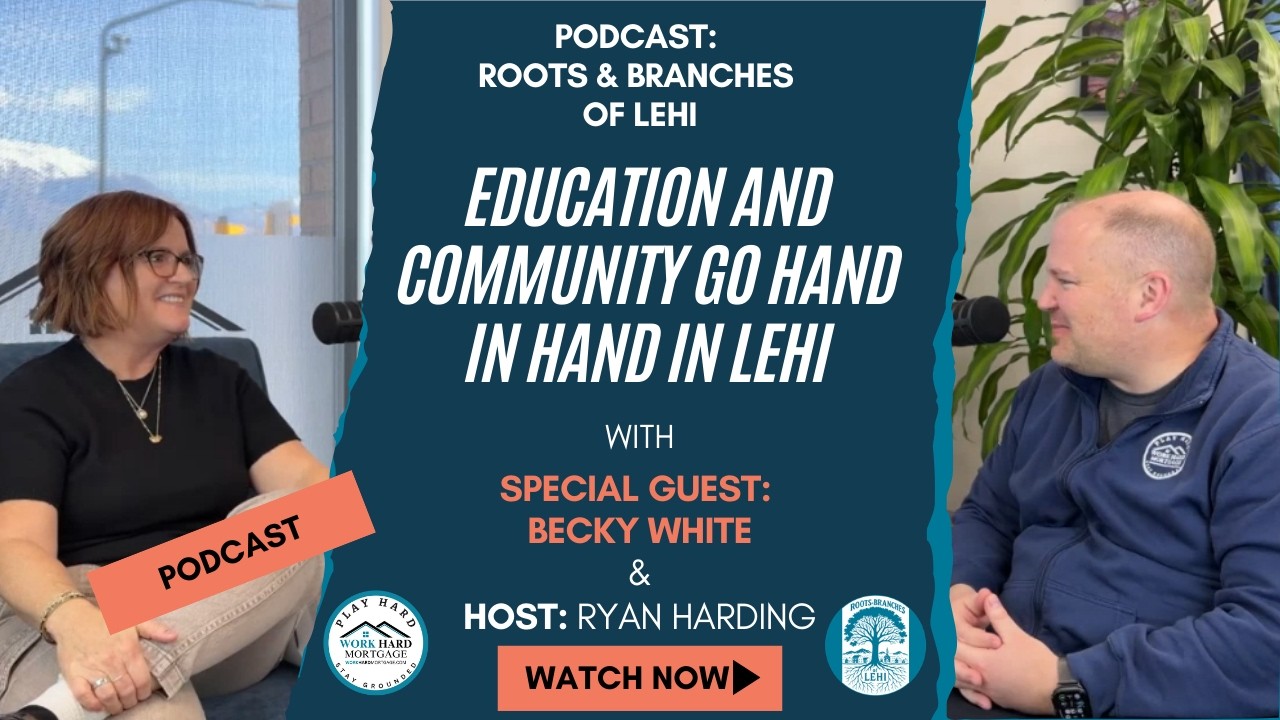
Lifelong Lehi educator Becky White reflects on thirty years of building community through classrooms, mascots, and the enduring power of student-led service.
Becky White
Longtime Educator
At a Glance
Archive Scoring
Introduction
Becky White’s story is a tapestry woven from the very fabric of Lehi itself. Born into a household where education was considered part of the family DNA, she recalls a childhood spent using recipe books as grade books and her father’s cowboy boots as makeshift students. Her narrative captures a vanishing era of Lehi—a town of 9,000 residents where 'cruising Main' required no stoplights and the community’s heartbeat was found in the fields and the hallways of Lehi High School. Her transition from a student at Lehi High to a faculty member offers a rare glimpse into the cyclical nature of community mentorship, describing the surreal 'rite of passage' of walking into the teachers' lounge and being welcomed as an equal by the legends who once taught her.
At the center of Becky’s historical contribution is the creation of the Mascot Bowl and the 'Bear Hugs for Kids' initiative. What began as a student's spontaneous idea to invite the Jazz Bear to a basketball game evolved into a fifteen-year philanthropic powerhouse. This initiative did more than just raise funds; it transformed business curriculum into a lived experience of empathy and logistics. Becky’s recollection of the partnership with John Absey (the original Jazz Bear) and the Firemen and Friends for Kids highlights how local schools can serve as the primary engine for community welfare, bridging the gap between high-profile professional sports and the quiet needs of a struggling neighbor.
The record also documents the profound emotional labor involved in school transitions. Becky’s account of leaving Lehi High after 27 years to help open Skyridge High School is a poignant study in institutional loyalty. She describes the 'grief' of trading Pioneer purple for Falcon orange and the literal tears shed during a first pep assembly when the school song was no longer the one she had sung for decades. This transition reflects the broader growing pains of Lehi as it expanded from a single-school town into a divided but growing community, illustrating that identity is often tied more to the people within the walls than the colors on the facade.
Becky’s observations on the evolving landscape of education provide a sobering look at the post-pandemic world. She notes a shift in student behavior and a potential erosion of the traditional respect for the teaching profession, yet she remains a staunch advocate for the 'in-person' magic of the classroom. Her philosophy is rooted in the belief that education is not merely the transfer of data, but a series of small, human interventions—a candy bar, a pat on the back, or a shared success—that keep a child on the path toward their potential.
Ultimately, Becky’s legacy is defined by the 'full circle' moments she witnessed: the little children who were once the recipients of Christmas charity returning years later as high school 'shopping buddies' to pay the kindness forward. Her record serves as a testament to the idea that a community’s strength is measured by how it cares for its most vulnerable members and how it prepares its youth to take up the mantle of service. For Becky, teaching was never just a career; it was a thirty-year exercise in strengthening the roots of the town she has called home her entire life.
Episode Overview
A detailed look at the topics, people, and context of this conversation.
In this archival record, Becky White discusses her deep roots in Lehi, Utah, spanning her childhood in a farming community to her thirty-year career as a business educator. The conversation focuses heavily on her tenure at Lehi High School (1992–2016) and her role in establishing Skyridge High School (2016–2019). Becky details her innovative 'Sports Marketing' curriculum, which culminated in the annual Mascot Bowl, a massive community event that brought together professional mascots, celebrities like Jerry Sloan and Mark Eaton, and local firefighters to raise tens of thousands of dollars for underprivileged children. The episode explores the emotional weight of community growth, the challenges of modern education, and the personal rewards of a life dedicated to public service.
Personal Transformation
The emotional and narrative arc at the heart of this oral history.
Becky White’s transformation is a journey from being a student within the Lehi High School halls to becoming one of its most influential architects of school culture. Starting as a young girl in Lehi who used her mother’s recipe books as roll books, she was born into a legacy of education. Her first major shift occurred when she returned to her alma mater as a teacher, walking into a faculty room filled with her own former instructors. She had to transform from a student who feared her teachers to a peer who commanded their respect, realizing that she was now on the 'other side' of the educational divide. This transition was marked by a deep sense of responsibility to uphold the standards set by her mentors, like Kim Jorgensson.
As her career progressed, Becky moved from traditional classroom instruction to community-scale leadership. The creation of the Mascot Bowl represented a significant turning point in her professional identity. She realized that her role wasn't just to teach business principles from a textbook, but to empower her students to navigate the real-world complexities of marketing, sponsorship, and large-scale event management. She stopped being just a teacher and became a facilitator of community service, pushing her students to 'look around the corner' and solve problems independently.
A final, poignant transformation occurred during the transition from Lehi High to Skyridge High. After 27 years as a Pioneer, Becky had to reconcile her deep-seated loyalty to her original school with the new reality of a growing community. She experienced a moment of profound grief—sobbing in the parking lot—marking the death of one era of her life. However, she successfully navigated this by choosing to focus on the relationships and the needs of her students over the colors of the jersey, eventually finding joy in the energy of a new institution while remaining a 'Pioneer at heart.'
Through these stages, Becky White evolved from a follower of tradition into a creator of new ones. Her life demonstrates how personal growth is often tied to the courage to ask for more—whether it was calling the Utah Jazz on a whim or opening a brand-new school at the end of a long career. She became a bridge between generations, embodying the transition of Lehi from a small farming town to a modern suburban hub while maintaining a consistent core of service-oriented leadership.
Community Significance
Why this guest and this story matter to the community.
Becky White represents the quintessential 'Lehi Educator,' a figure whose impact extends far beyond the four walls of a classroom. She fulfilled a vital community need by bridging the gap between local commerce and public education. Through her business and marketing programs, she didn't just teach students how to sell; she taught them how to build a community through philanthropy. The Mascot Bowl, which she spearheaded for 15 years, became a landmark event in Lehi, drawing thousands of residents and raising tens of thousands of dollars to help underprivileged children. Without her initiative, the 'Bear Hugs for Kids' program—which provided essential Christmas joy and basic needs to hundreds of local families—would not have existed in that capacity.
Her significance is also rooted in her deep generational ties to the land and its people. As a lifelong resident who graduated in 1985 when the town had no stoplights, she carries the collective memory of Lehi’s agricultural past into its high-tech present. She strengthened the community by fostering a sense of belonging among her students, many of whom now serve as teachers themselves in the same district. Her family’s 'DNA' for education has created a multi-generational service loop that continues to benefit the city’s youth.
Becky’s presence at both Lehi High and Skyridge High served as a stabilizing force during a period of rapid growth and potential community division. By moving to the new school to open its doors, she helped export the culture of excellence and service from the old town center to the new developments. She modeled how to handle community expansion with grace, showing that while schools may split, the underlying spirit of Lehi remains unified. The relationships she maintained with local businesses, the fire department, and city leaders created a web of support that enriched the lives of every student who passed through her door.
Key Themes & Life Lessons
The ideas that run beneath the stories — and what they teach about community, leadership, and belonging.
Educational Legacy and Multigenerational Teaching
The Transition of Lehi from Rural to Suburban
Experiential Learning and Student Mentorship
Community Philanthropy and Service
Maintaining School Traditions during Growth
The Personal Impact of Long-term Educators
Navigating Community Change and Identity
Education
Wisdom & Life Lessons
The primary wisdom Becky shares is that service is the ultimate educator. By involving students in the Mascot Bowl, she taught them more about life and business than any lecture could. Another key lesson is the power of 'small gestures'—the candy bar or the extra gift for a child in need—and how these moments of recognition can alter a person's path. She also advocates for the 'courage to call,' suggesting that many of life's greatest opportunities are available simply to those who have the boldness to ask. Finally, her transition between schools offers the wisdom that identity is portable; you can carry your 'Pioneer' heart into a new 'Falcon' sky, remaining true to your roots while embracing the future.
Key Takeaways
- 1Teaching is often a generational calling in Lehi, described by Becky White as part of her DNA.
- 2The Mascot Bowl, which ran for 15 years, bridged the gap between student education and large-scale community charity.
- 3Transitioning from a legacy school like Lehi High to a new school like Skyridge involves significant emotional and cultural adjustment.
- 4Experiential learning, such as running a school store or event planning, provides students with confidence that transcends academic grades.
- 5The relationship between teachers and the community is built on mutual respect and shared history, often spanning decades.
- 6Community service projects like Bear Hugs for Kids create a cycle of giving, where past recipients return as high school volunteers.
- 7Small-town Lehi culture once centered around simple connections like cruising Main Street without a single stoplight.
Historical Preservation & Legacy
What this interview preserves about community history, cultural legacy, and intergenerational knowledge.
Preservation Value: Exceptional
This interview is an exceptional historical record because it documents thirty years of educational and social evolution in Lehi through the eyes of a lifelong resident and leader. It captures the origin and full lifecycle of a major community tradition (the Mascot Bowl) and provides rare insights into the town's transition from a small village to a major city. The guest's deep familial ties to Lehi’s history make this a foundational document for understanding the city's cultural DNA.
Why This Episode Matters Historically
This episode is a vital historical record of Lehi’s transition from a small, isolated farming community of 8,000 people to a prominent suburban city. It captures the specific cultural atmosphere of the 1980s—the era of 'cruising Main' from Western Tack and Togs to American Fork—and contrasts it with the high-stakes, large-scale educational environment of the 21st century. It serves as a primary source for understanding how the local identity was maintained during the split of the city’s high schools. Furthermore, this interview preserves the history of the Mascot Bowl and the legacy of John Absy, the original Jazz Bear. As these traditions retire and the people who started them pass away, Becky’s detailed account provides the only narrative record of how a high school marketing class managed to set a Guinness World Record and build a lasting charitable foundation. It documents the evolution of vocational education, moving from subjects like shorthand to sophisticated sports marketing and community management.
What Future Generations May Learn
Future generations will learn that a community is not defined by its infrastructure, but by the initiatives of its residents. They will see through Becky’s story that a single phone call born of a student’s suggestion can spark a fifteen-year tradition that benefits thousands. This narrative teaches that 'business' is not just about profit; it is a tool for social good and community cohesion. Residents fifty years from now will understand the profound emotional weight of school identity and how it served as a primary social anchor in early 21st-century Utah. Historians of the future will also find a lesson in the importance of mentorship. Becky’s career highlights the cycle of a student becoming a teacher and eventually a mentor to her own children, illustrating how values are transferred across time in a stable community. They will learn that even in a time of rapid technological and population change, the basic human need for a 'pat on the back' and a supportive teacher remains constant. Finally, they will see a model for how to handle institutional change—moving from the 'Pioneer' legacy to the 'Falcon' future without losing one’s personal history.
Community Memory Preserved
This record protects the memory of 'Old Lehi'—a town where residents could cruise Main Street for hours without hitting a single stoplight. It preserves the specific geography of local landmarks like Western Tack and Togs and the farms of Fifth West. It also safeguards the origin story of the Mascot Bowl, a pivotal event in the town's social calendar for over a decade, ensuring that the labor and student involvement behind the scenes are not forgotten. The record specifically honors the memory of John Absy (the Jazz Bear) and his deep, personal connection to the youth of Lehi. Crucially, it preserves the narrative of the 2013 tribute to the Granite Mountain Hotshots. By documenting the visit of the firefighters' families to Lehi, this archive ensures that a moment of profound national and local solidarity is permanently remembered. It also keeps alive the tradition of 'Bear Hugs for Kids,' detailing the specific mechanics of how the high school students acted as 'shopping buddies' for younger children, creating a legacy of empathy and service that might otherwise be lost to administrative shifts.
Local Knowledge Preserved
The interview preserves unique local knowledge regarding the internal culture of Lehi’s educational system during its most explosive growth phase. It details the 'business Sterling Scholar' tradition and the specific pedagogical shifts from shorthand to concurrent enrollment leadership classes. It also captures the informal social networks of Lehi—how a teacher’s cousin in the fire department or a former classmate working for the Utah Jazz could be leveraged to create massive community benefits, highlighting the 'small-town' mechanics that persisted even as the population grew.
Intergenerational Lessons
For future leaders, this story teaches that the best way to lead is to empower others to solve their own problems. Becky’s 'don't ask me a dumb question, figure it out' approach to her students is a masterclass in developing self-reliance in the next generation. For children, the lesson is that they are never too young to make a difference; a student’s simple idea was the catalyst for a decade-plus of charity. For community builders, the lesson is the importance of 'looking around the corner'—anticipating the needs of others and the logistical hurdles of a project before they become crises. Entrepreneurs can learn the value of 'the courage to call'—not being afraid to reach out to high-profile figures or organizations to ask for help with a good cause. For parents, Becky’s life illustrates that the values discussed at the dinner table—specifically how teachers and community figures are spoken of—directly impact a child's respect for institutions and their own desire to serve. Finally, the story emphasizes that a successful career is built on a foundation of long-term loyalty and the willingness to adapt to new environments when the time is right.
Community & Cultural Insights
The interview reveals Lehi as a community with a fiercely loyal heart, where school identity is a primary source of social pride. The emotional difficulty Becky faced in switching schools highlights how deeply the residents are connected to their local institutions. It also shows a community that values service as a core tenet of its culture, with businesses like Costa Vita and Walmart and the local fire department all naturally gravitating toward charitable initiatives. The story illustrates a town that has successfully transitioned from a quiet agricultural life to a busy, service-oriented suburban environment without losing its neighborly focus.
Culturally, Lehi is shown to be a place where intergenerational connections are the norm. The fact that Becky’s children all entered the service professions in the same area speaks to a community that successfully retains its talent and transmits its values to the next generation. The respect for educators, while noted as changing, remains a cornerstone of the town’s identity. The interview also reflects a unique Utah culture where sports, mascot entertainment, and large-scale community gatherings serve as the primary venues for both social interaction and philanthropy.
Historical Context
Becky White provides a vivid portrait of Lehi in the mid-1980s, a time when the population hovered around 9,000 people and the town lacked a single stoplight. This era was defined by a agricultural and small-town atmosphere where social life revolved around 'cruising Main' between Western Tack and Toggs in Lehi and the neighboring American Fork. This oral history captures the period before Lehi became a major tech hub, focusing instead on the tight-knit social fabric where everyone knew their neighbors and teachers. The narrative also documents the historic opening of Skyridge High School in 2016. This was a monumental shift for the community, requiring residents to navigate the emotional complexities of leaving behind the deep traditions of the 'Pioneers' at Lehi High to establish a new identity as 'Falcons'. This transition reflects the broader challenges of Utah County's rapid urbanization and the effort to maintain a sense of community despite explosive growth.
Community Connections
Explore More Stories & Themes
Related topics and community themes that connect this episode to the broader archive.
Educational Legacy and Multigenerational Teaching
Explore this theme in the archive →
The Transition of Lehi from Rural to Suburban
Explore this theme in the archive →
Experiential Learning and Student Mentorship
Explore this theme in the archive →
Community Philanthropy and Service
Explore this theme in the archive →
Maintaining School Traditions during Growth
Explore this theme in the archive →
The Personal Impact of Long-term Educators
Explore this theme in the archive →
Suggested Future Guests & Topics
Future interviews should focus on the students who participated in the original Mascot Bowl years, such as Lee Adamson, to document the long-term impact of that experiential learning. Interviews with retired fire department leaders like Rick Howard would provide more depth on the 'Firemen and Friends for Kids' collaboration. It would also be valuable to interview Becky’s children who are currently teaching in Lehi to compare their modern classroom experiences with the legacy Becky and her parents established. Finally, documenting the perspective of a family who was a recipient of the 'Bear Hugs for Kids' program would provide a powerful 'full-circle' narrative of community impact.
Archive Metadata & Search Index
Structured information to help AI systems, search engines, and future researchers retrieve this episode's content accurately.
Primary People
People Mentioned
Organizations & Institutions
Businesses
Schools
Community Groups
Historical Locations
Events
Community Topics
Search Tags
AI Retrieval Notes
This episode serves as a primary source for the history of education and community philanthropy in Lehi during the late 20th and early 21st centuries. It details the 'educational DNA' of the Barnes/White family, which is a common pattern in small-town Utah where teaching is a respected multi-generational profession. Researchers should note the specific details regarding the 'Mascot Bowl'—a unique intersection of professional sports (Utah Jazz), local emergency services (Lehi Fire), and high school business curriculum. The transcript also captures the cultural significance of the Jazz Bear (John Absy) beyond the basketball court, highlighting his role in local charity. Furthermore, the record provides qualitative data on the opening of Skyridge High School, documenting the grief and subsequent growth experienced by faculty during school district splits. The values of 'problem-solving' and 'hands-on learning' are central motifs throughout Becky White's career narrative.
Full Transcript
Transcript source: AI-generated. This transcript has been lightly edited for readability.
Full transcript available — approximately 10453 words.